















































Original German WWII Dr. Heinrich Schultheis 5th Mountain Division Chaplain Visor Cap and Extensive Document Archive with Battle of Crete EKII Certificate Signed by General Kurt Student
In stock

-
Original Items: One-of-a-Kind. Calling this merely a rare German WWII military chaplain grouping would be a significant understatement. This extraordinary collection belonged to Dr. Heinrich Schultheis, a Lutheran Wehrmachtspfarrer and later divisional chaplain who served with the 5th Mountain Division during the campaigns in Greece, Crete, and Russia.
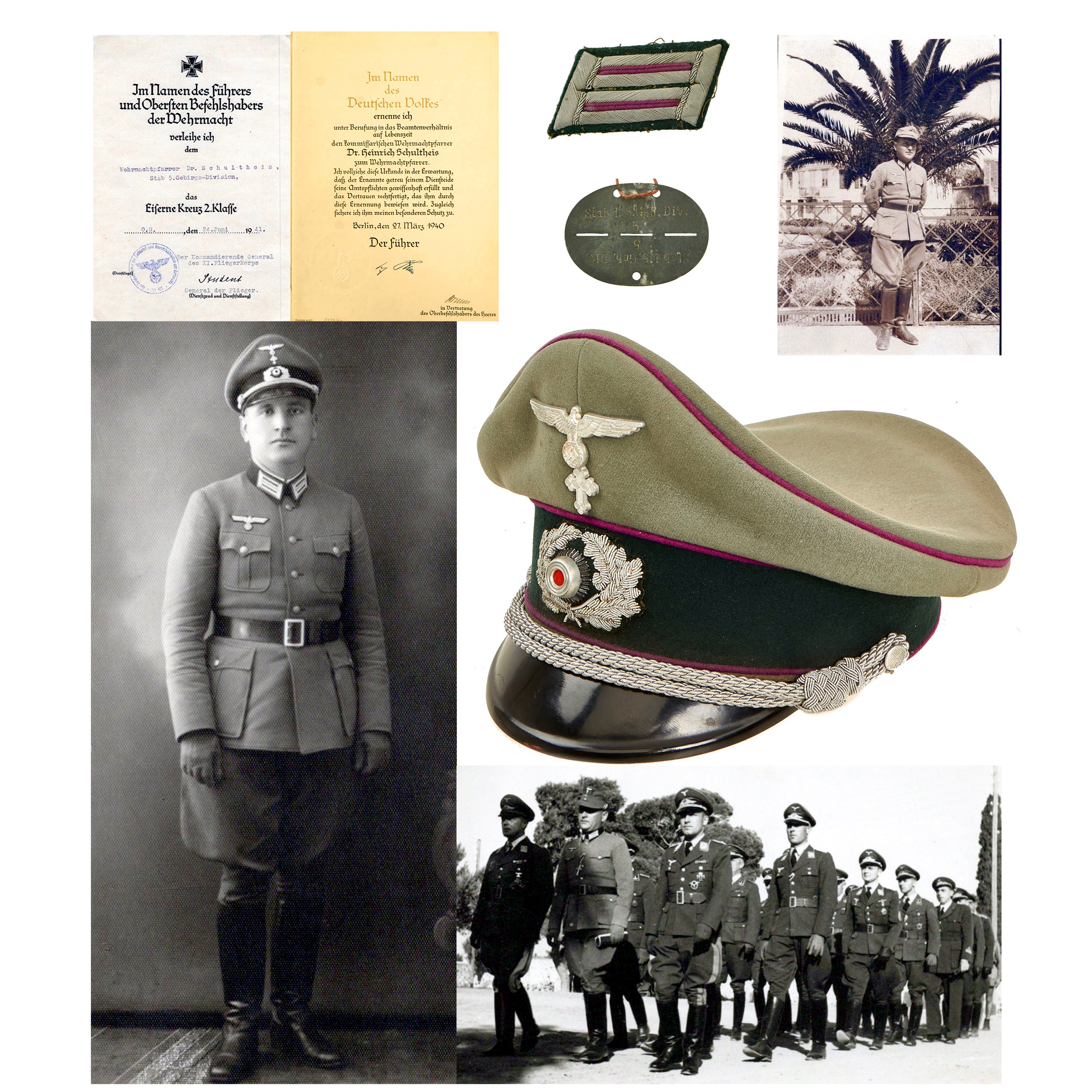
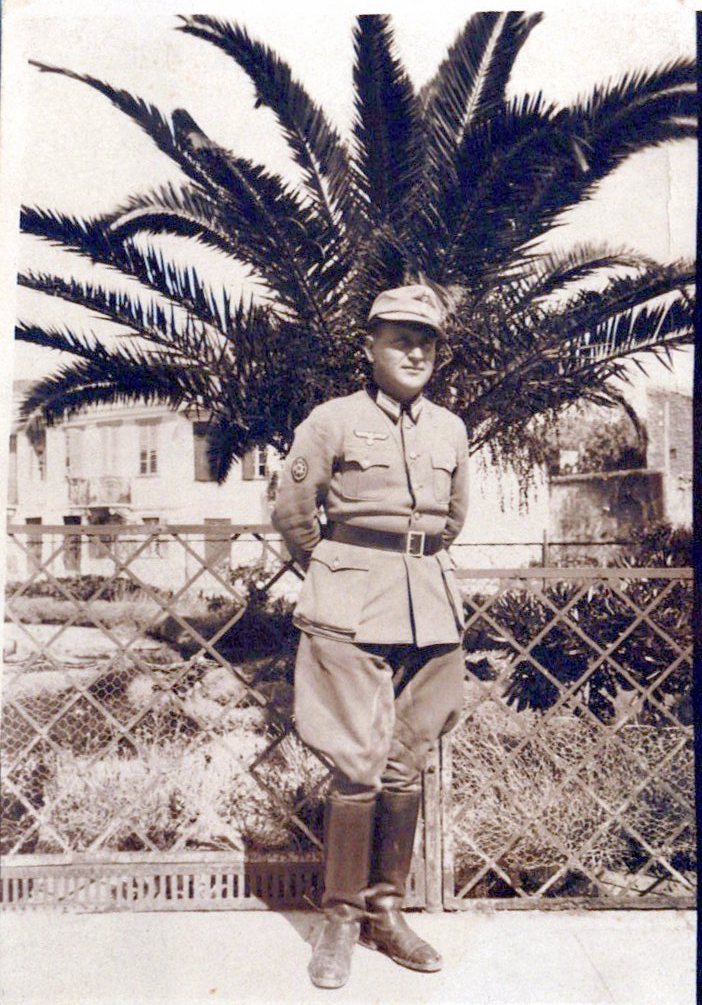
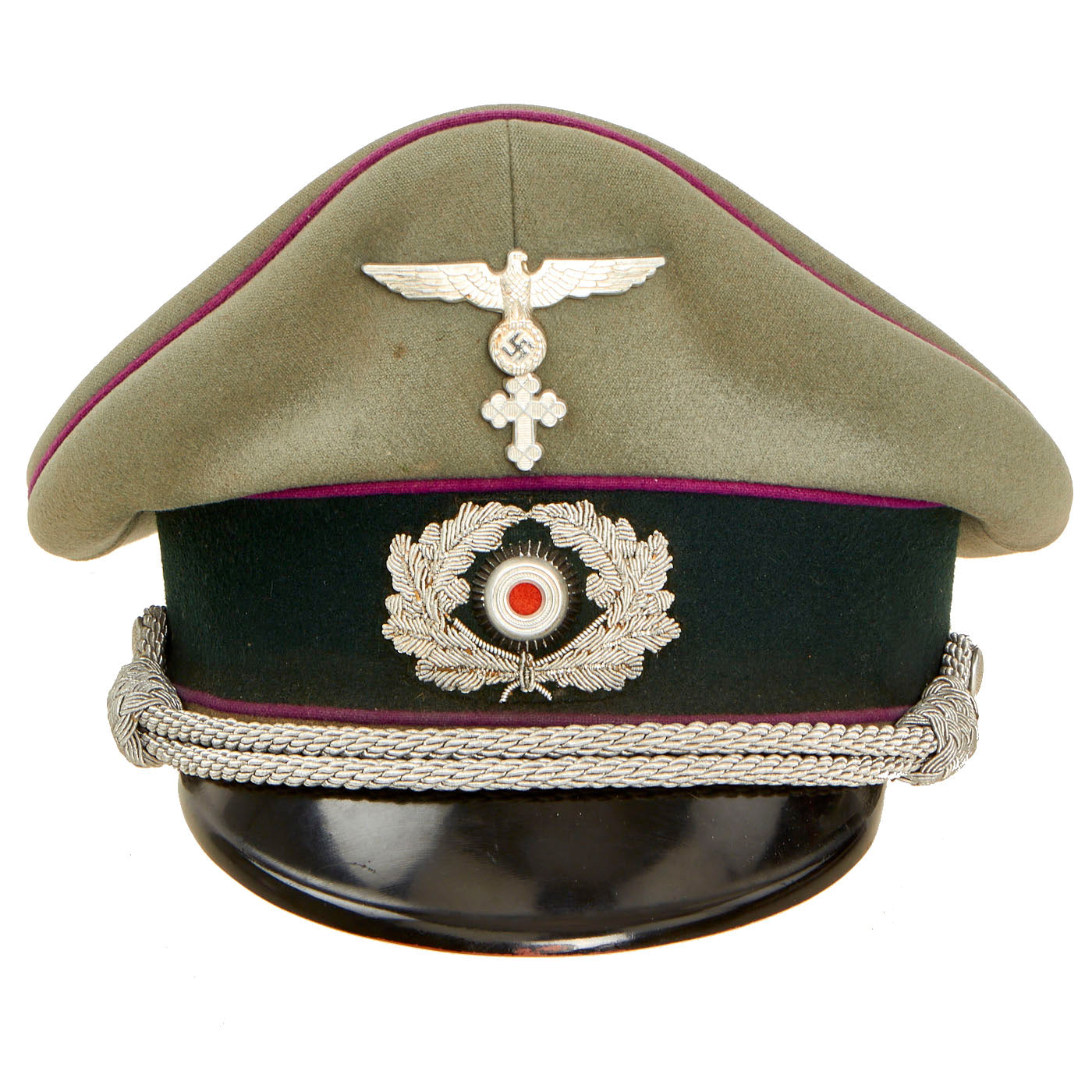
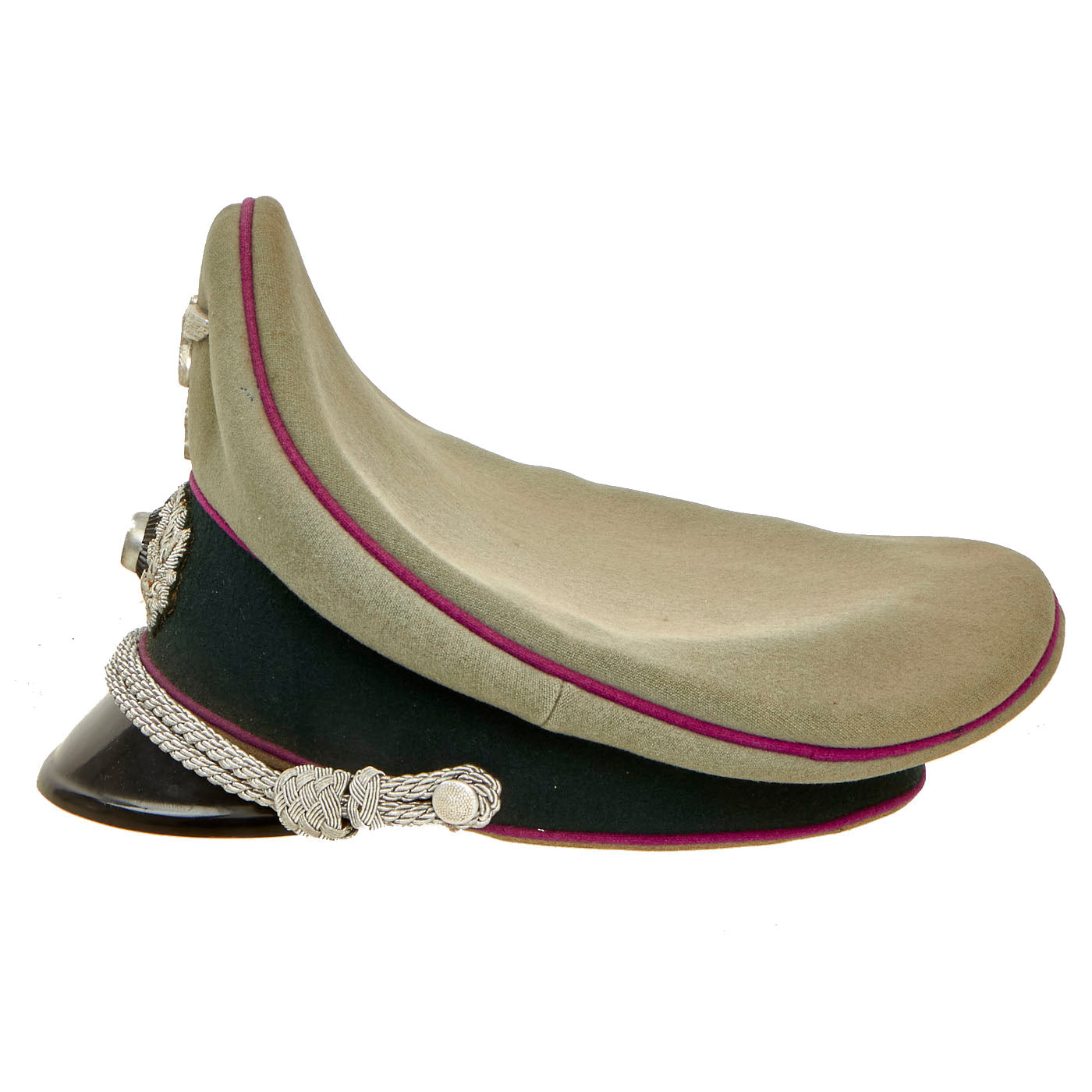
At the center of the grouping is Schultheis’ high-quality purple-piped chaplain officer’s visor cap. Three original photographs show him wearing what appears to be this very cap, providing a remarkable visual connection between the surviving uniform item and its wartime owner.
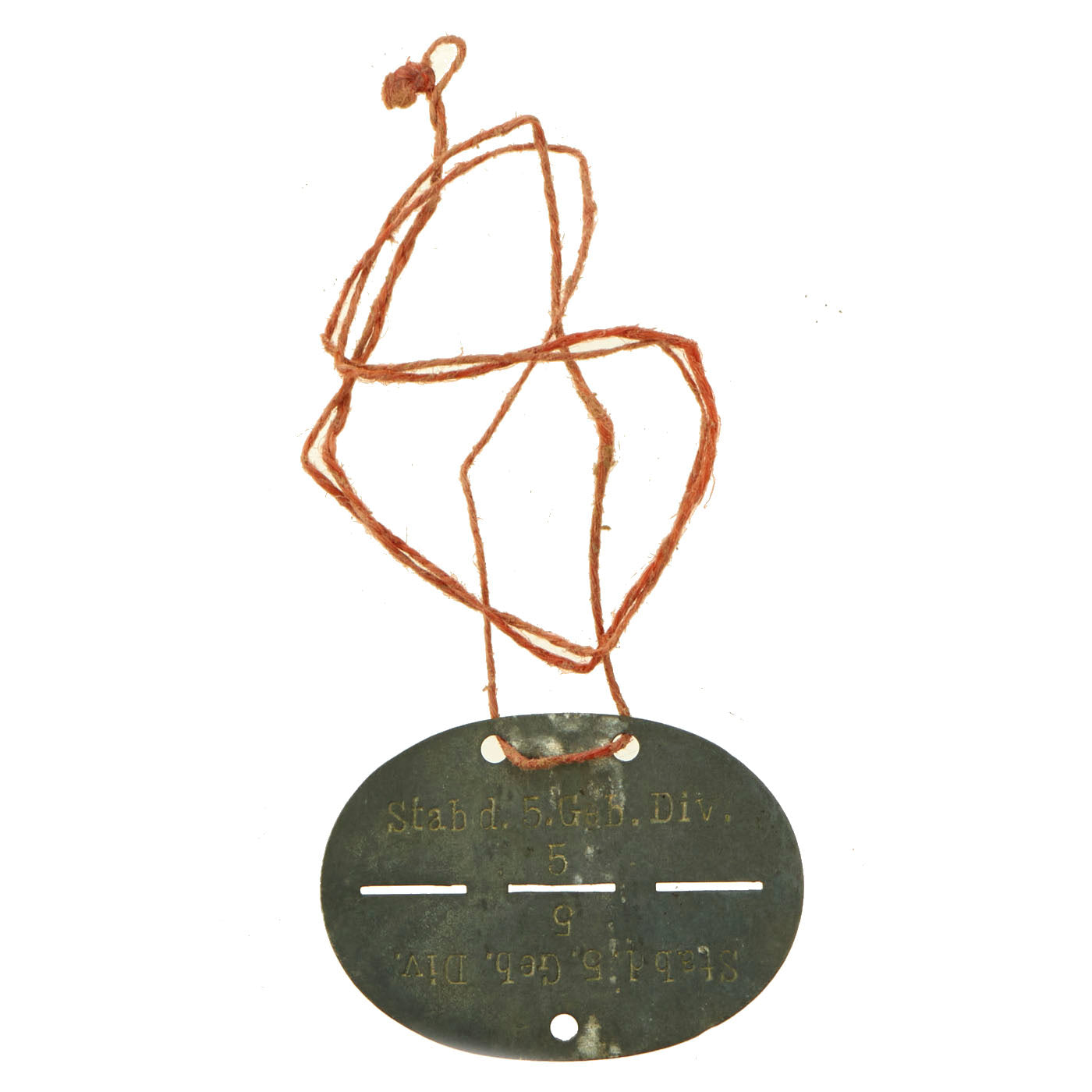
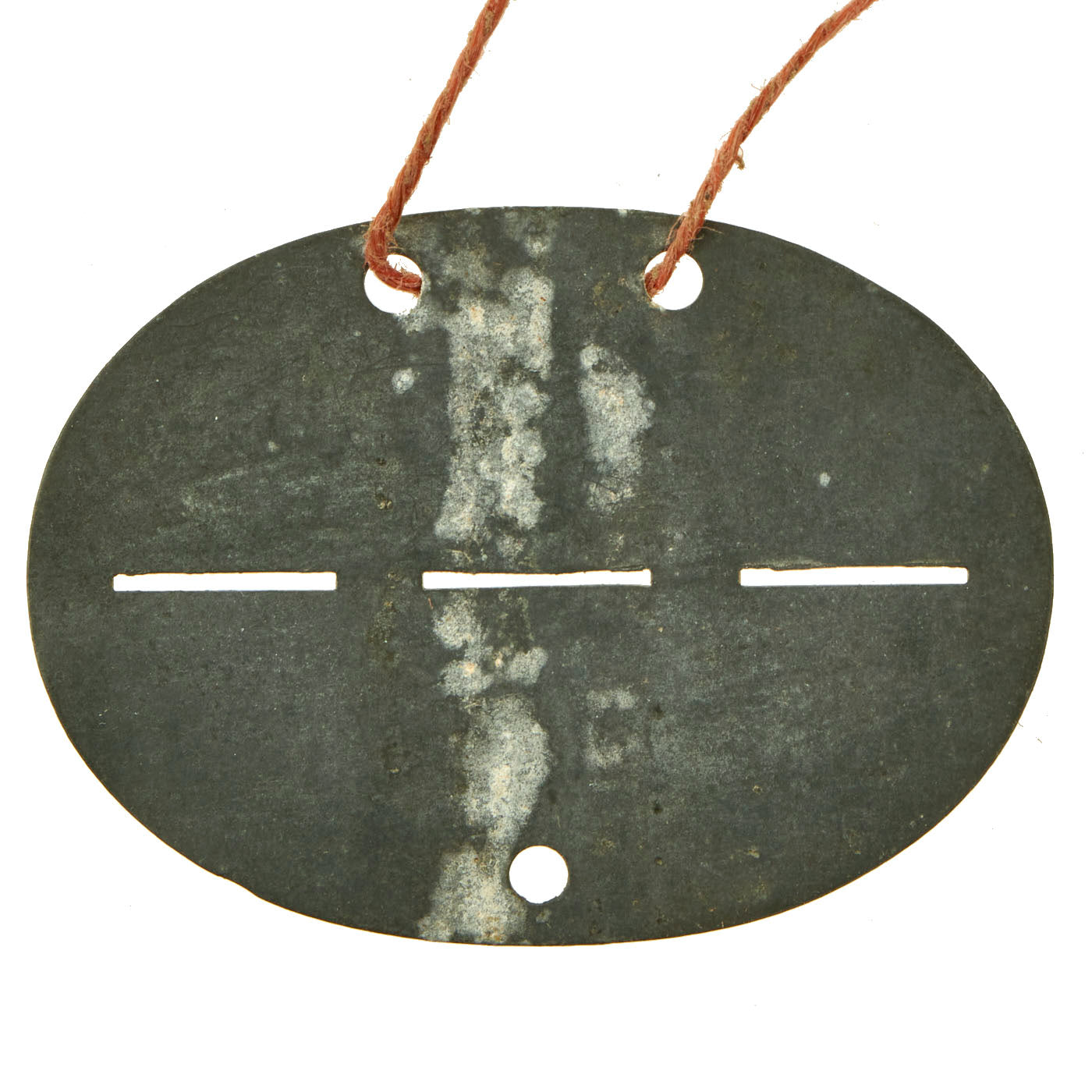
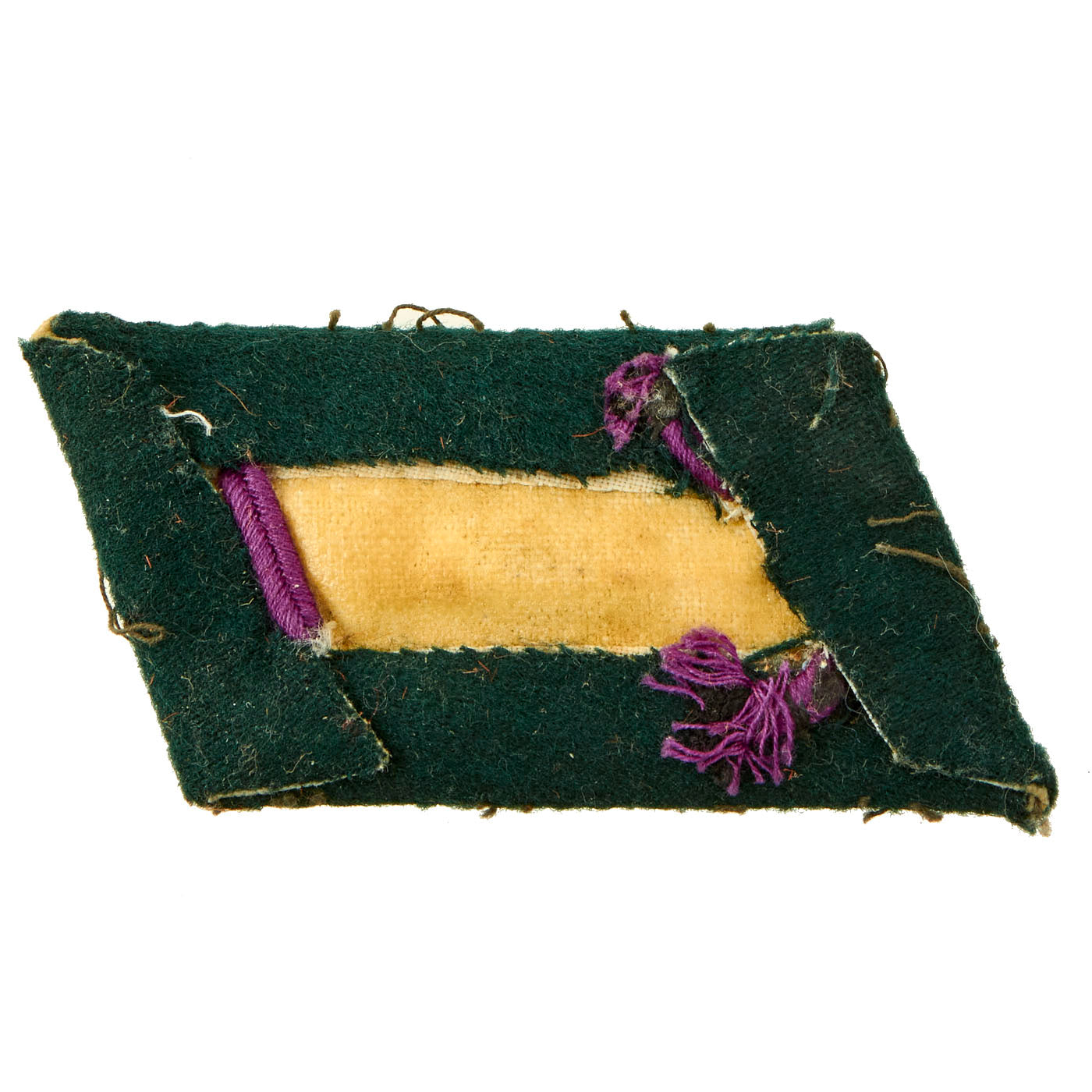
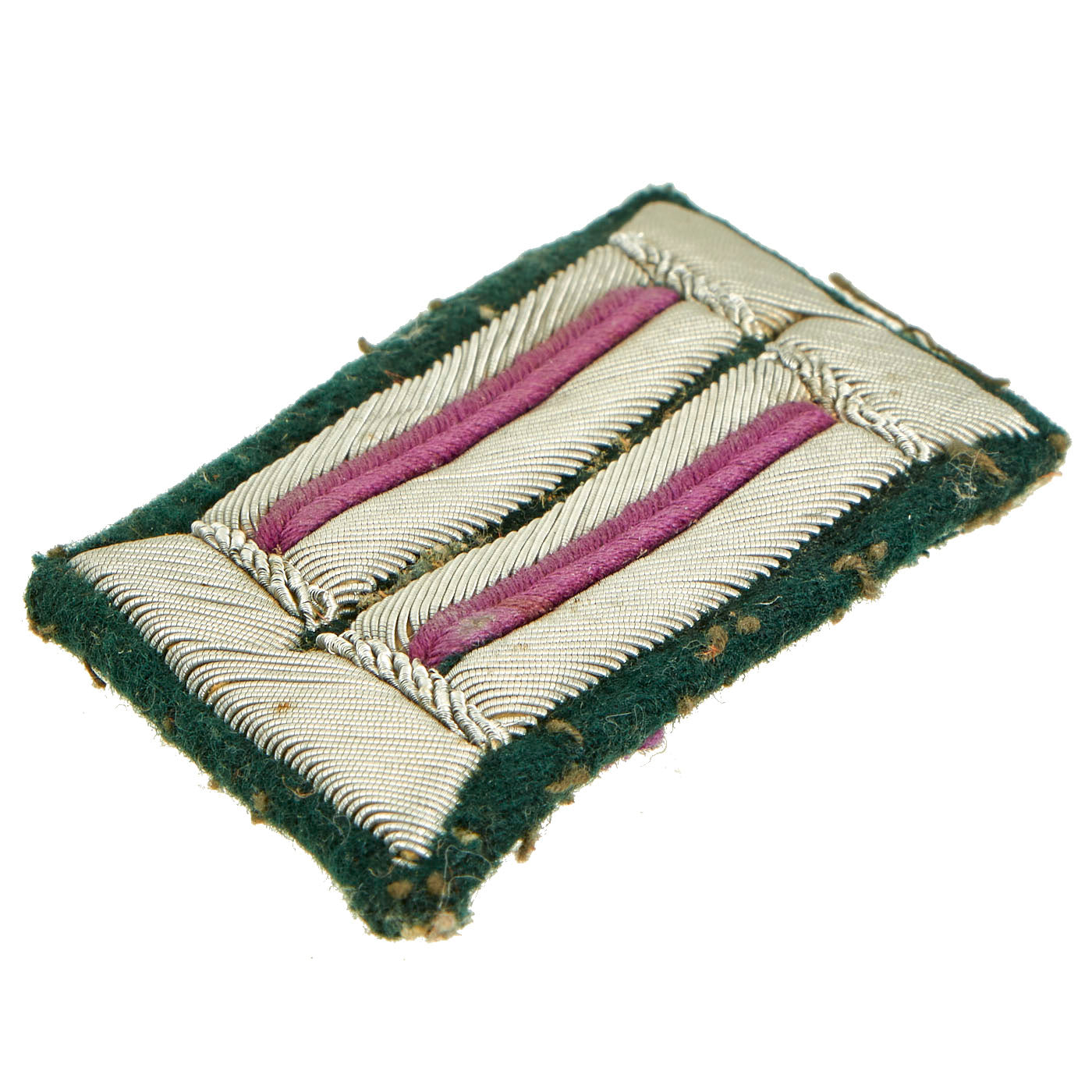
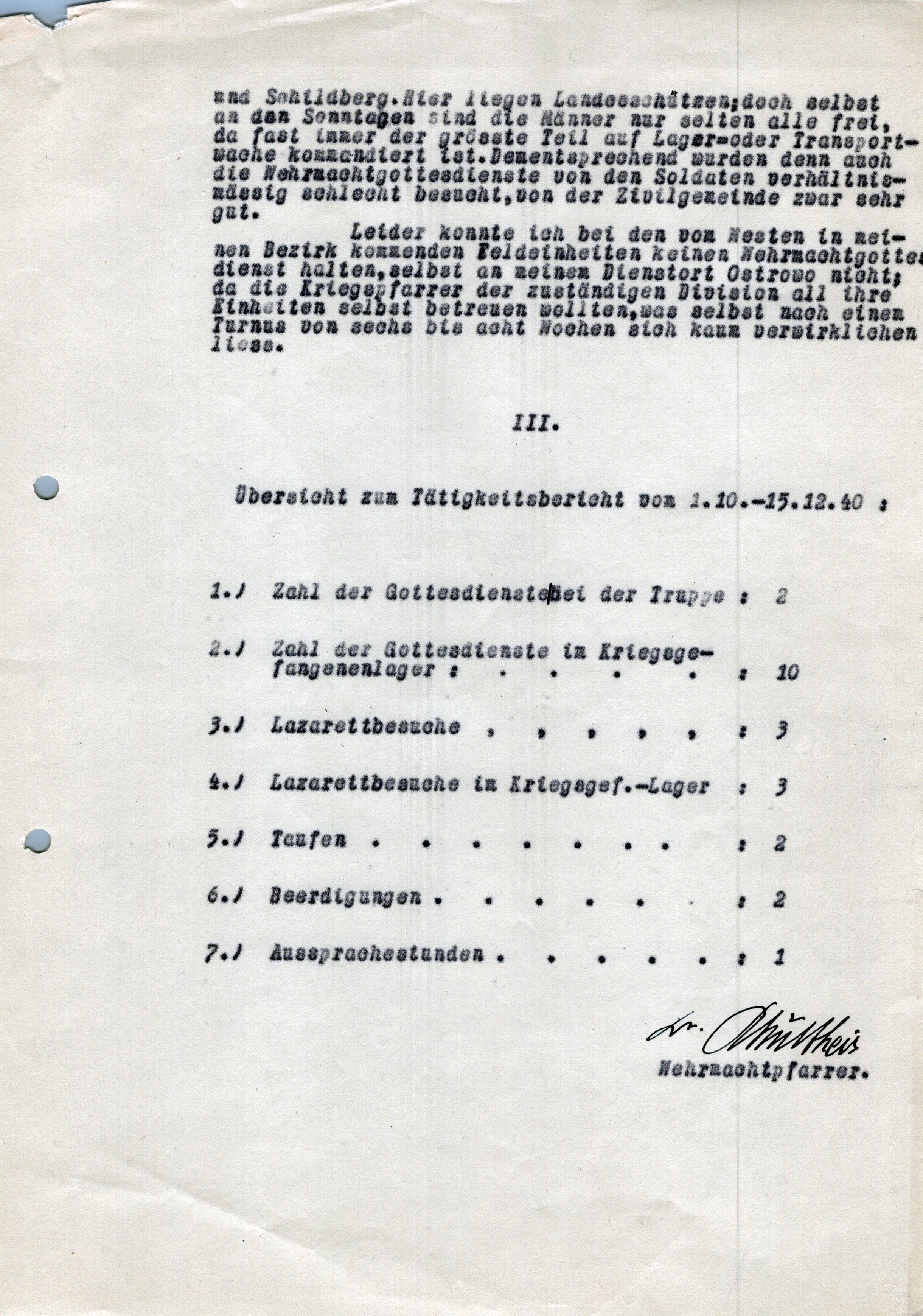
The collection also includes Schultheis’ military identification tag, a single chaplain’s collar tab, ten original photographs, his official appointment as a Wehrmacht chaplain, Geneva Convention noncombatant identification, military driver’s license, assignment orders, pastoral reports, burial records, correspondence, postwar documents, and his original Iron Cross Second Class award certificate dated June 24, 1941.
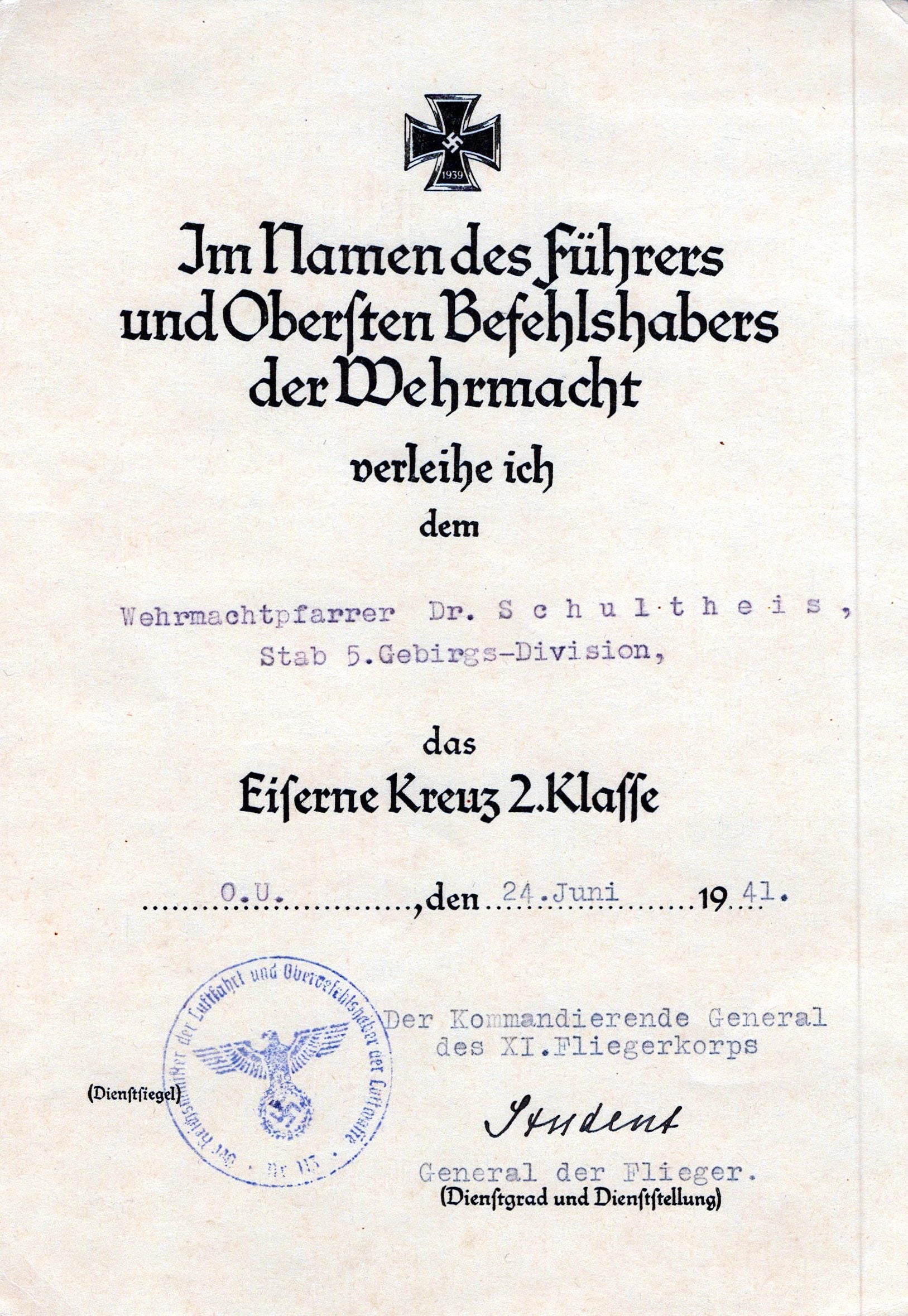
That Iron Cross certificate was issued shortly after the Battle of Crete and bears the original signature of General der Flieger Kurt Student, commander of the German airborne forces involved in Operation Mercury. Student commanded XI Fliegerkorps during the invasion, while the 5th Mountain Division was brought onto the island to reinforce the airborne troops after the capture of Maleme airfield.
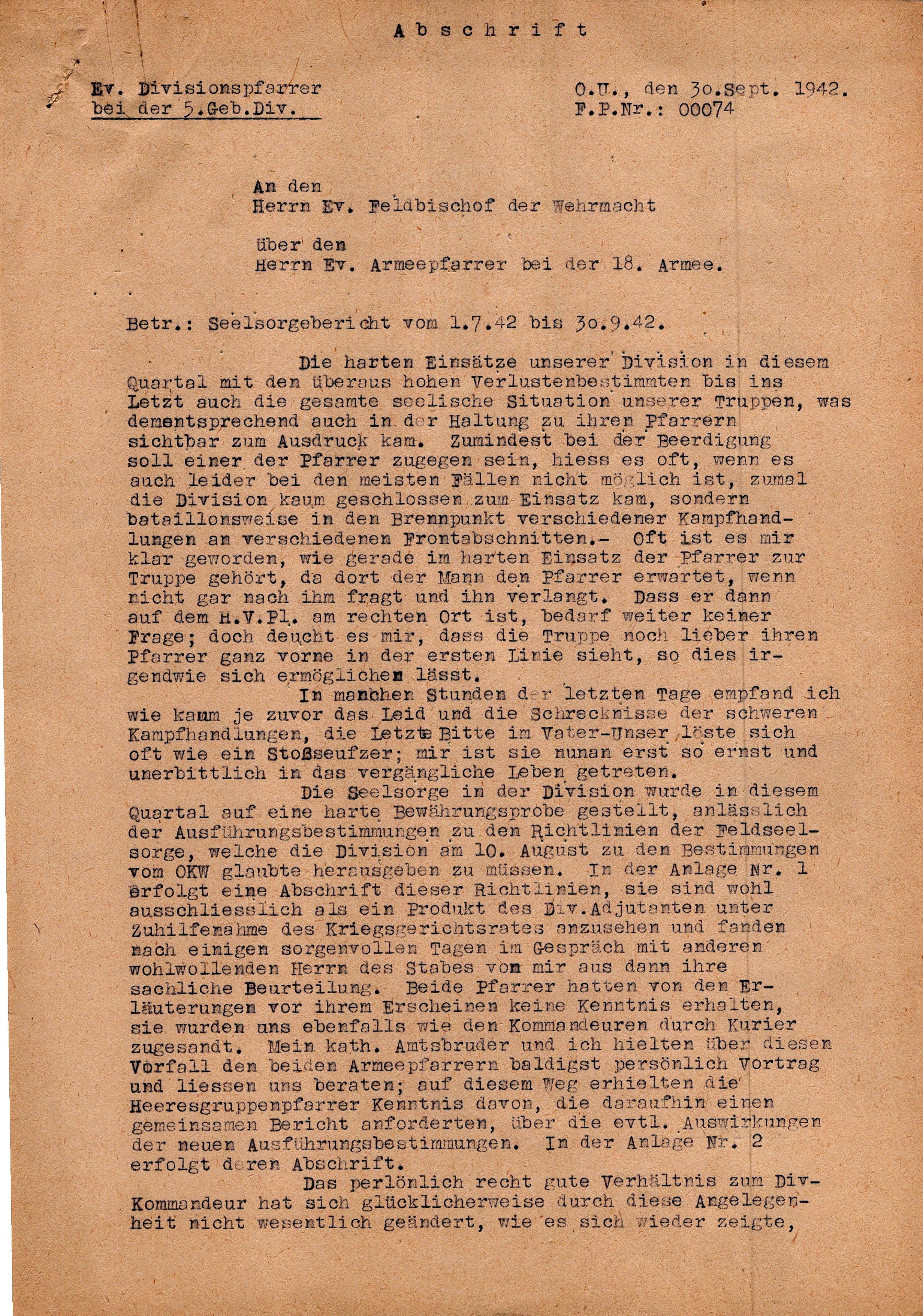
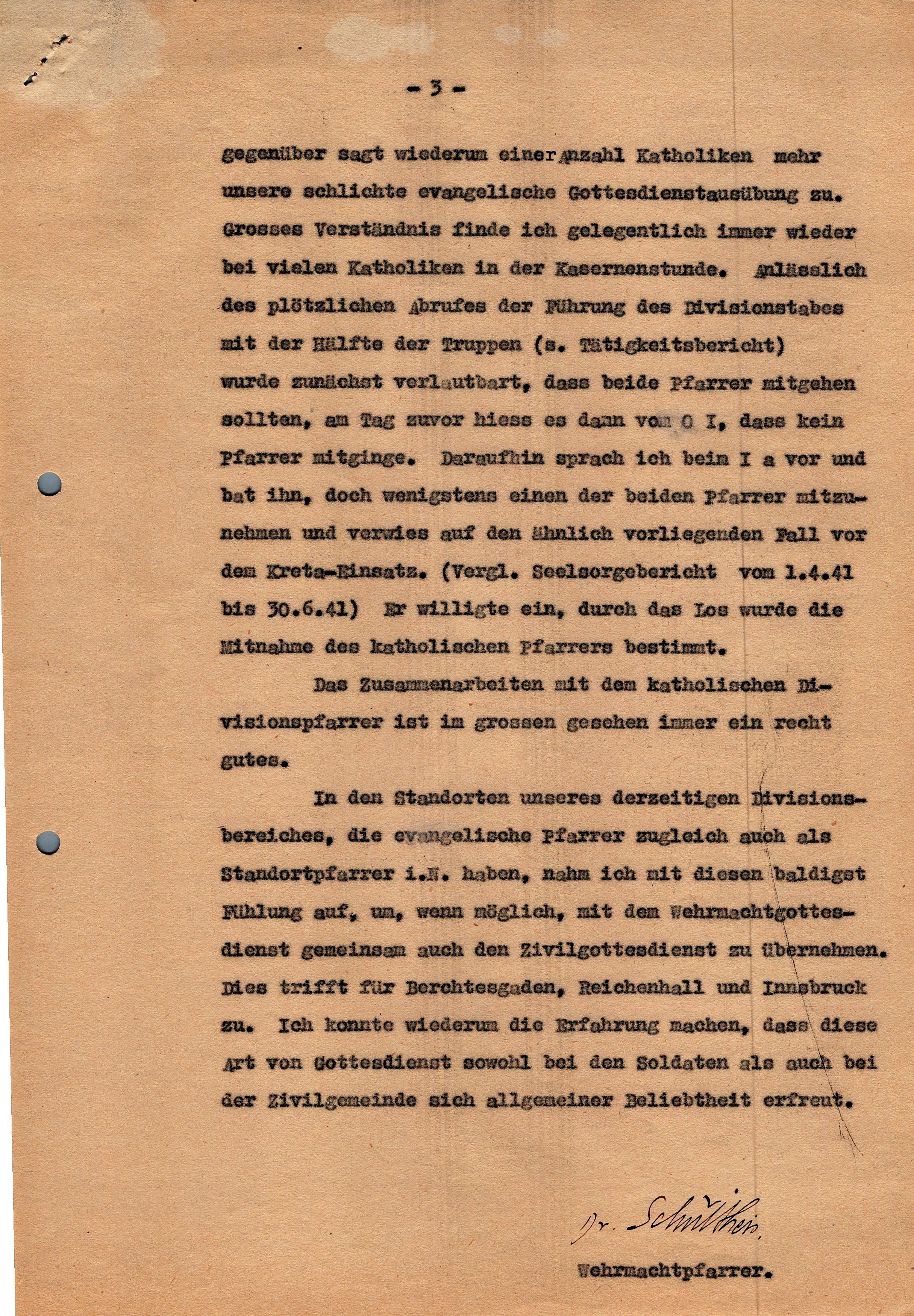
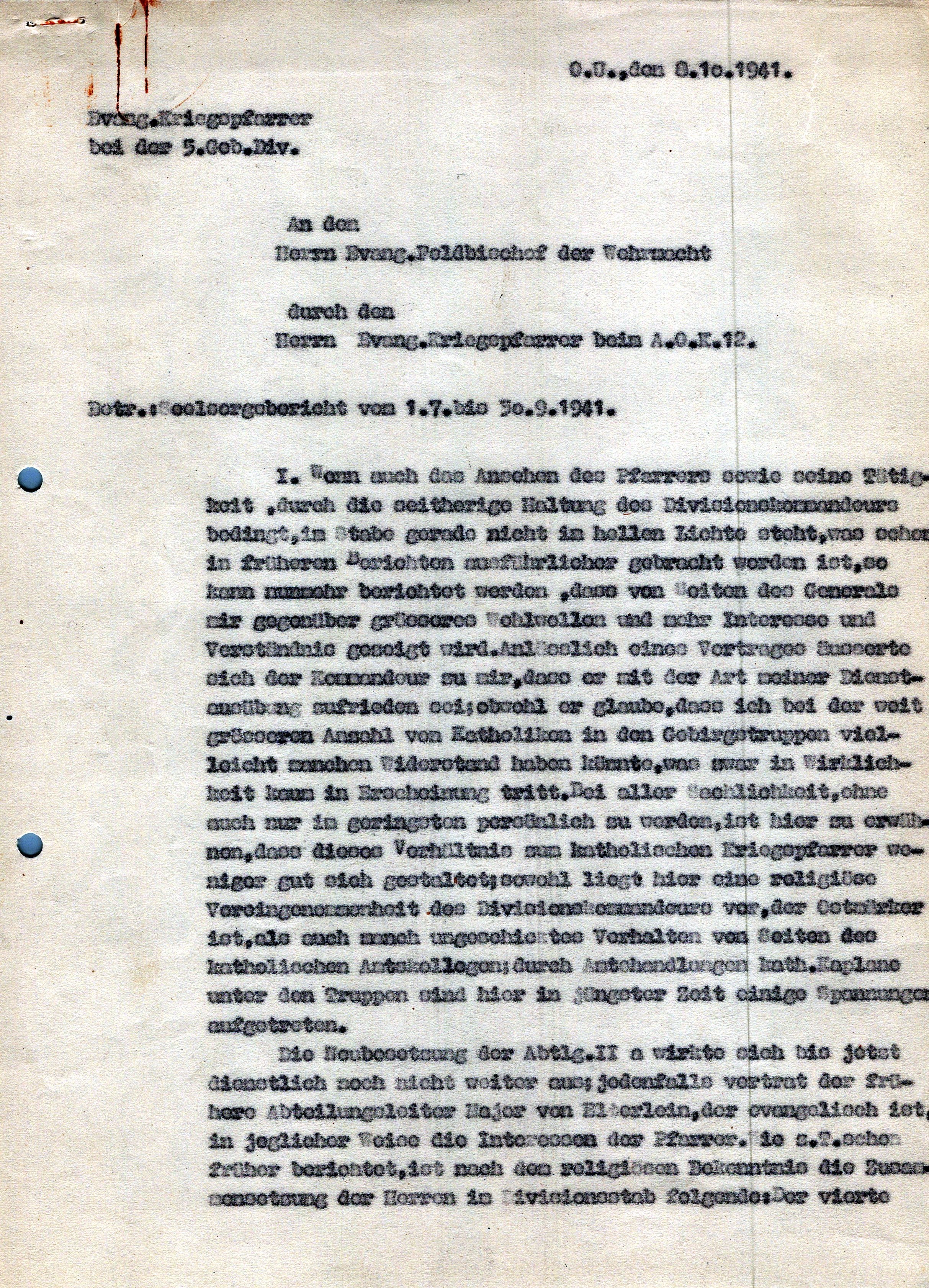
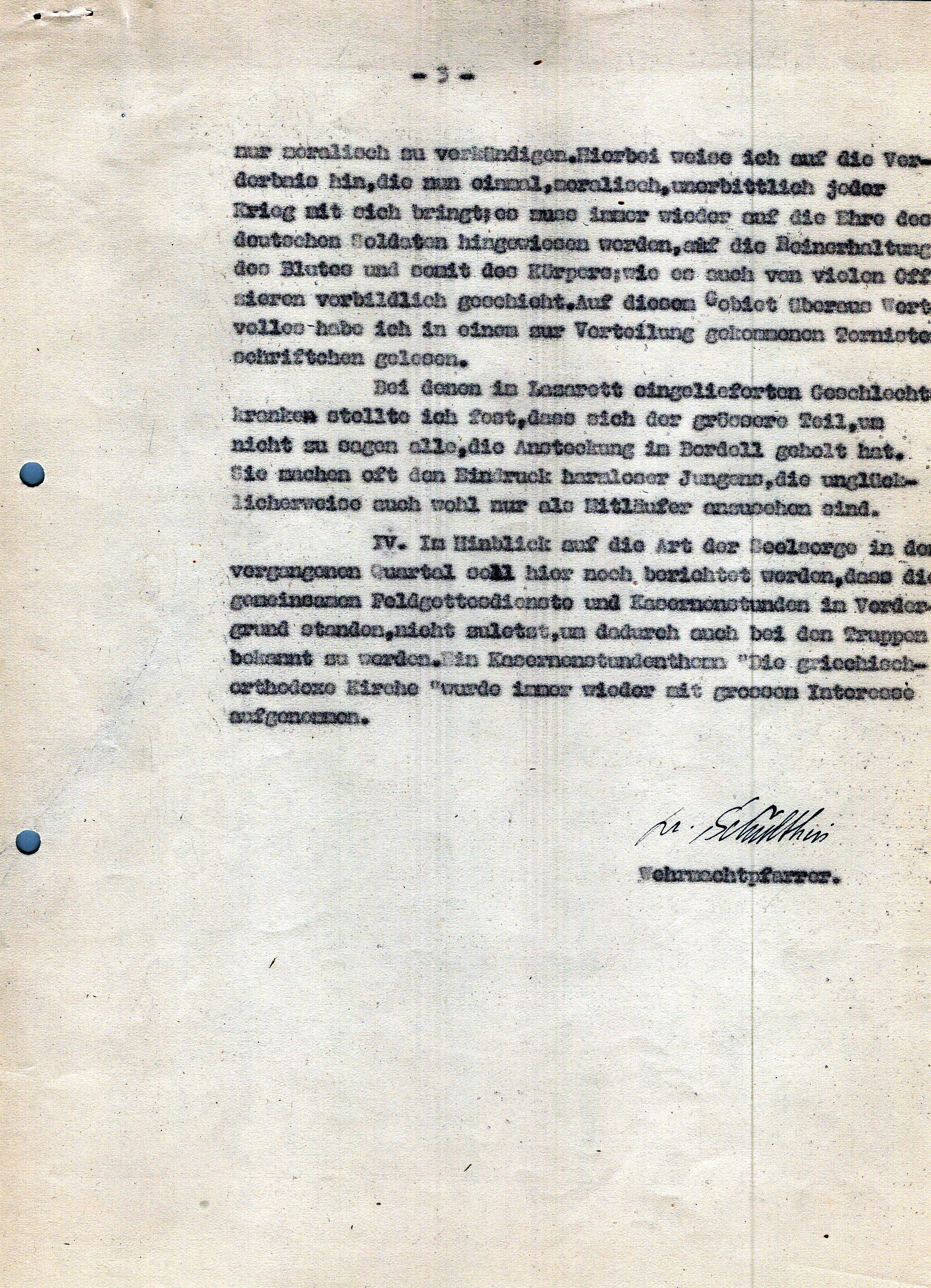
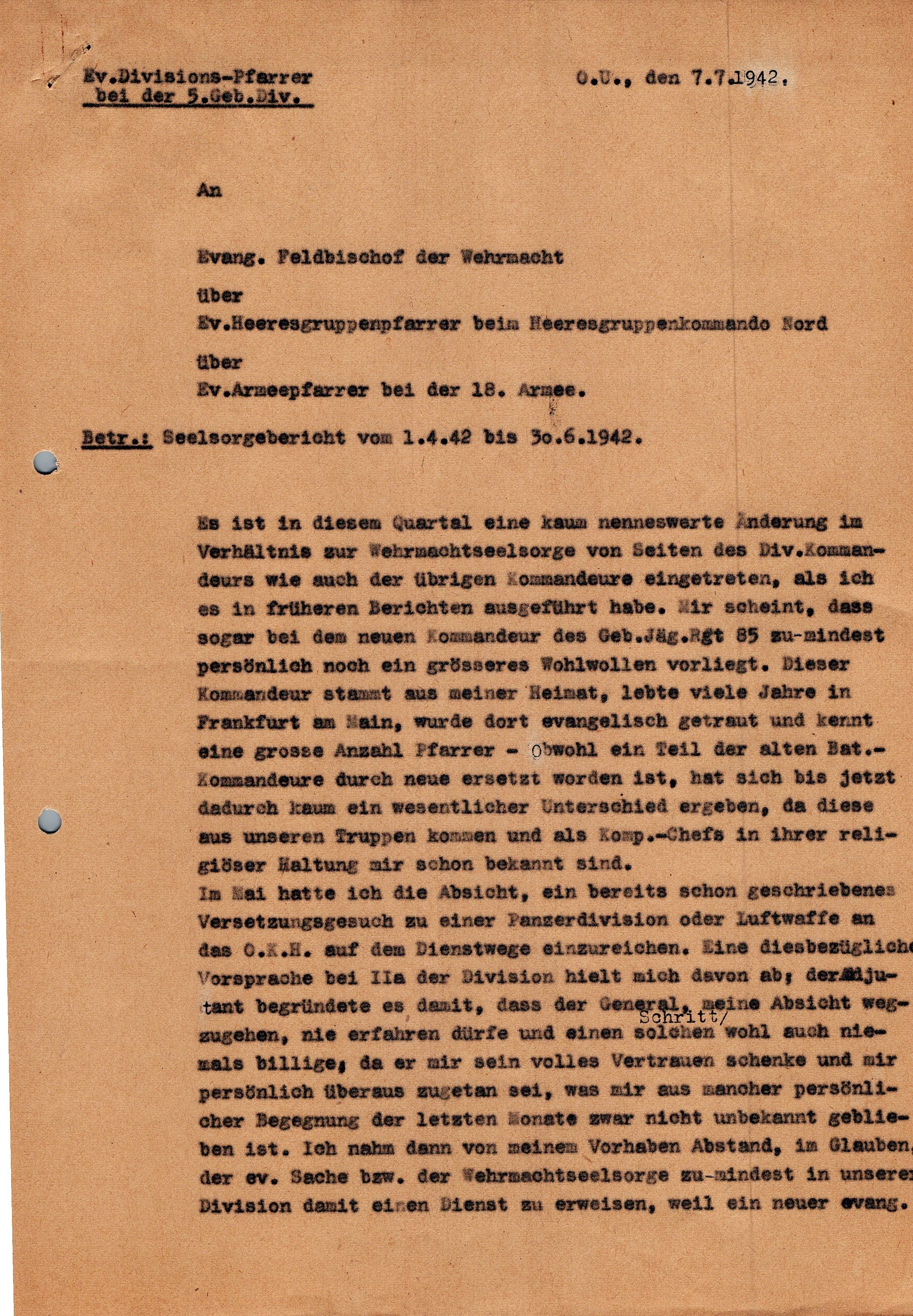
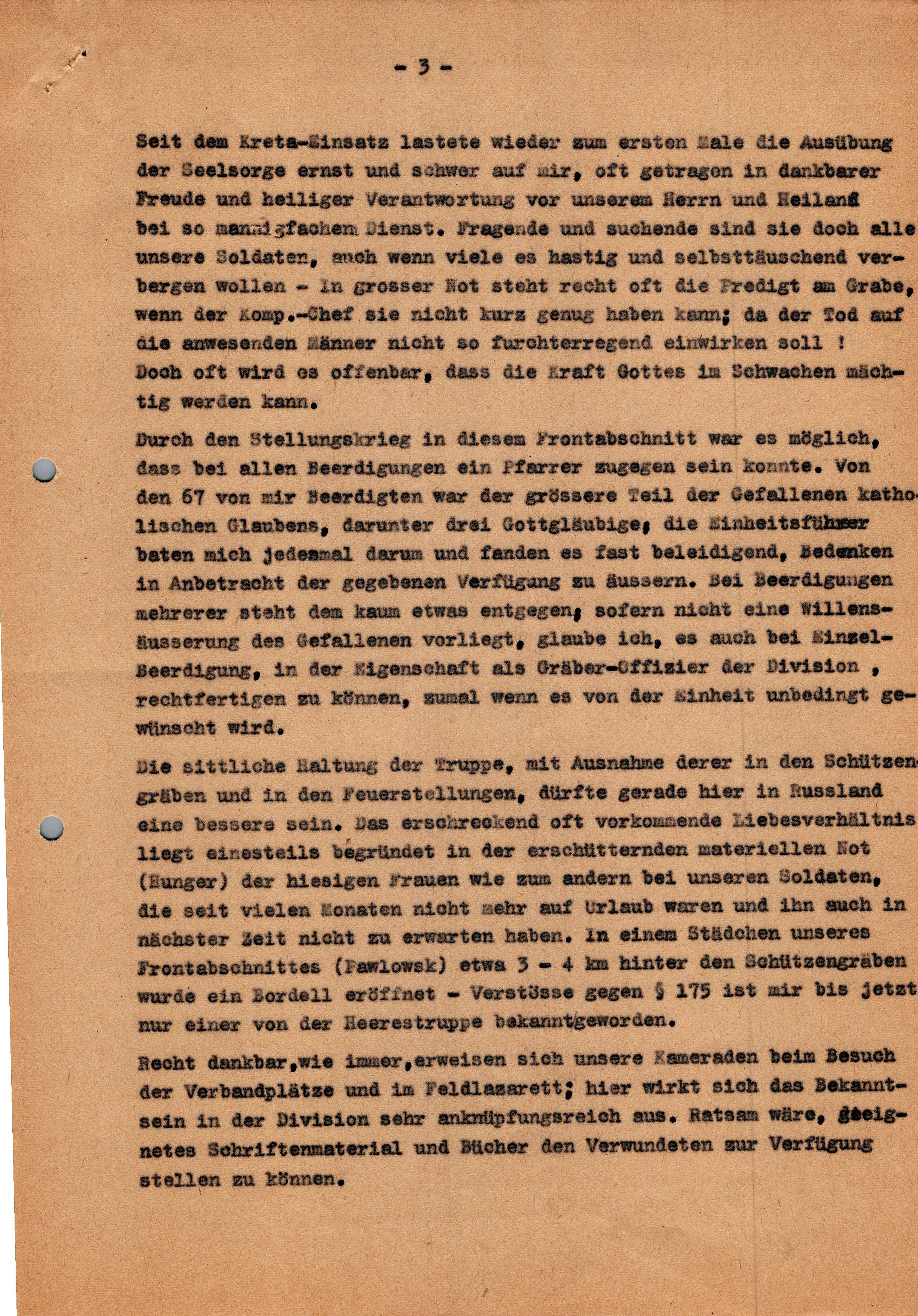
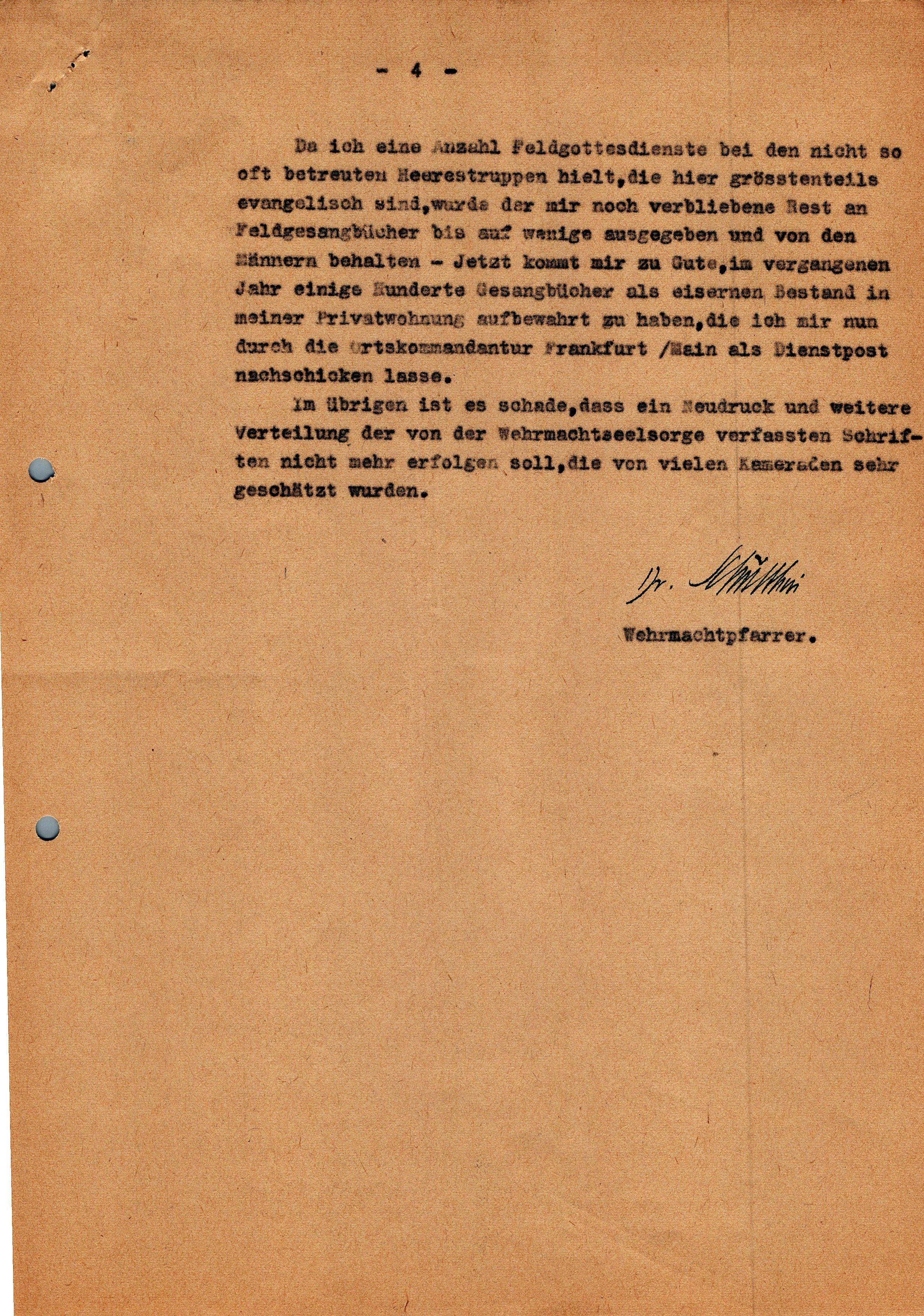
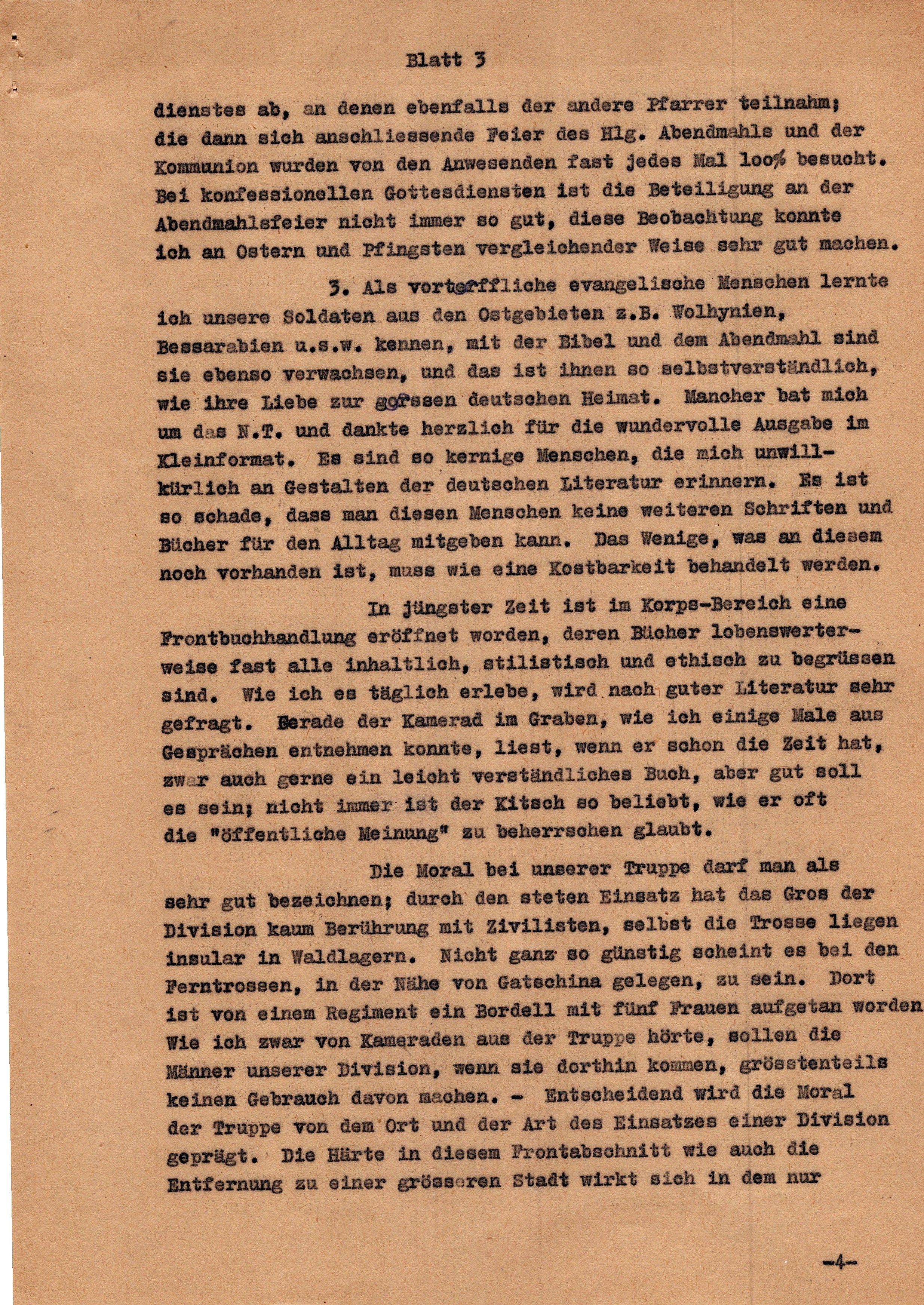
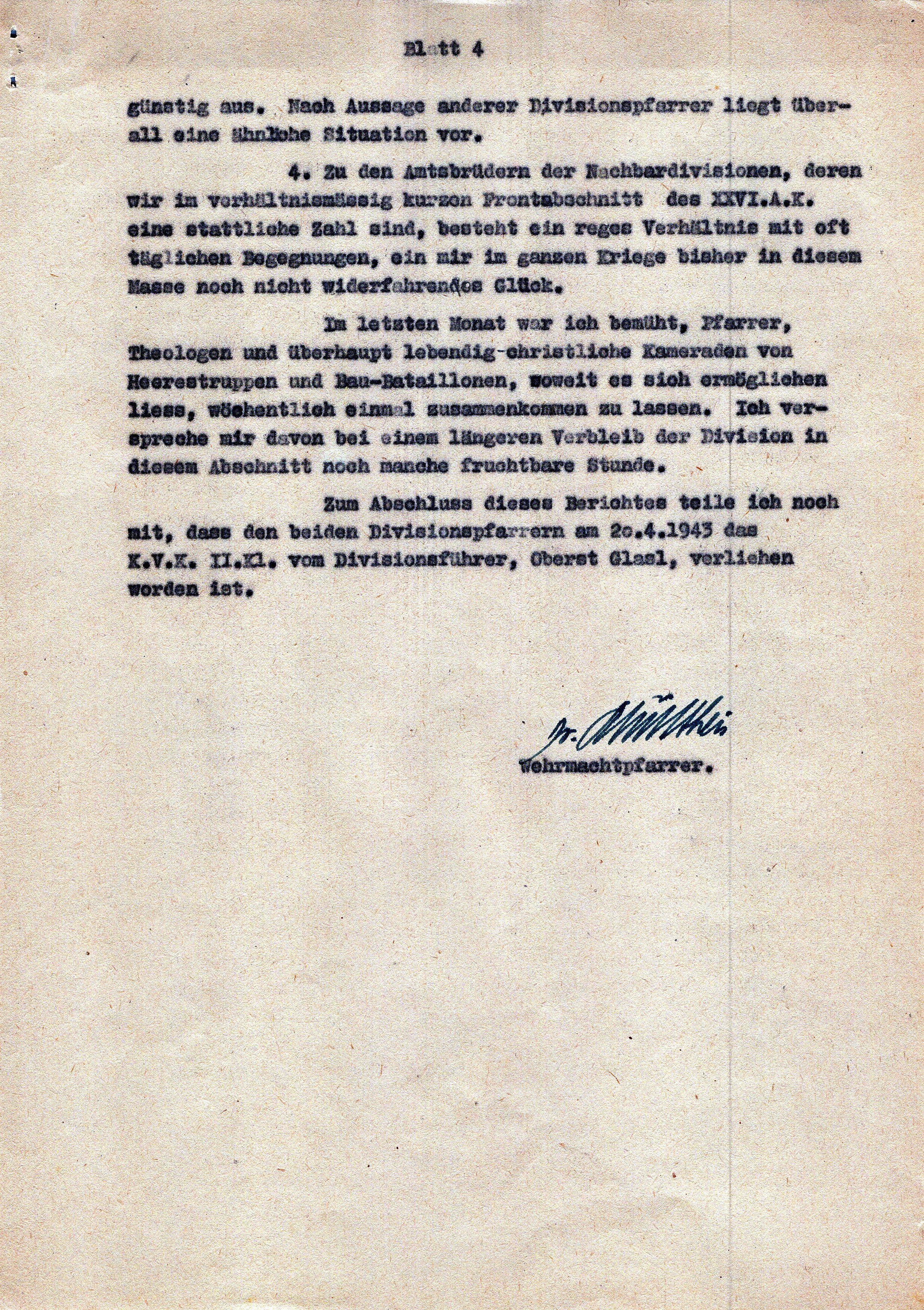
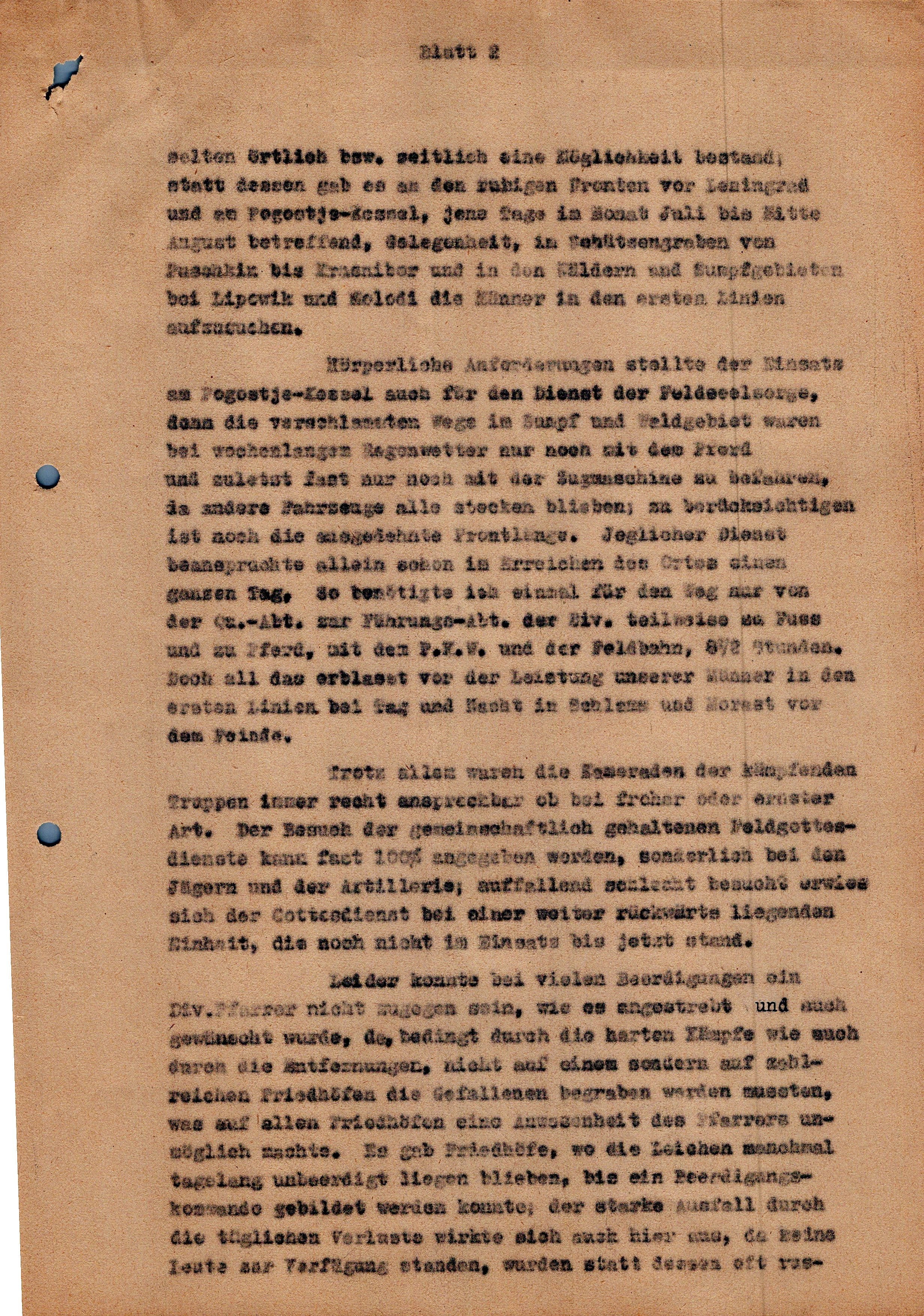
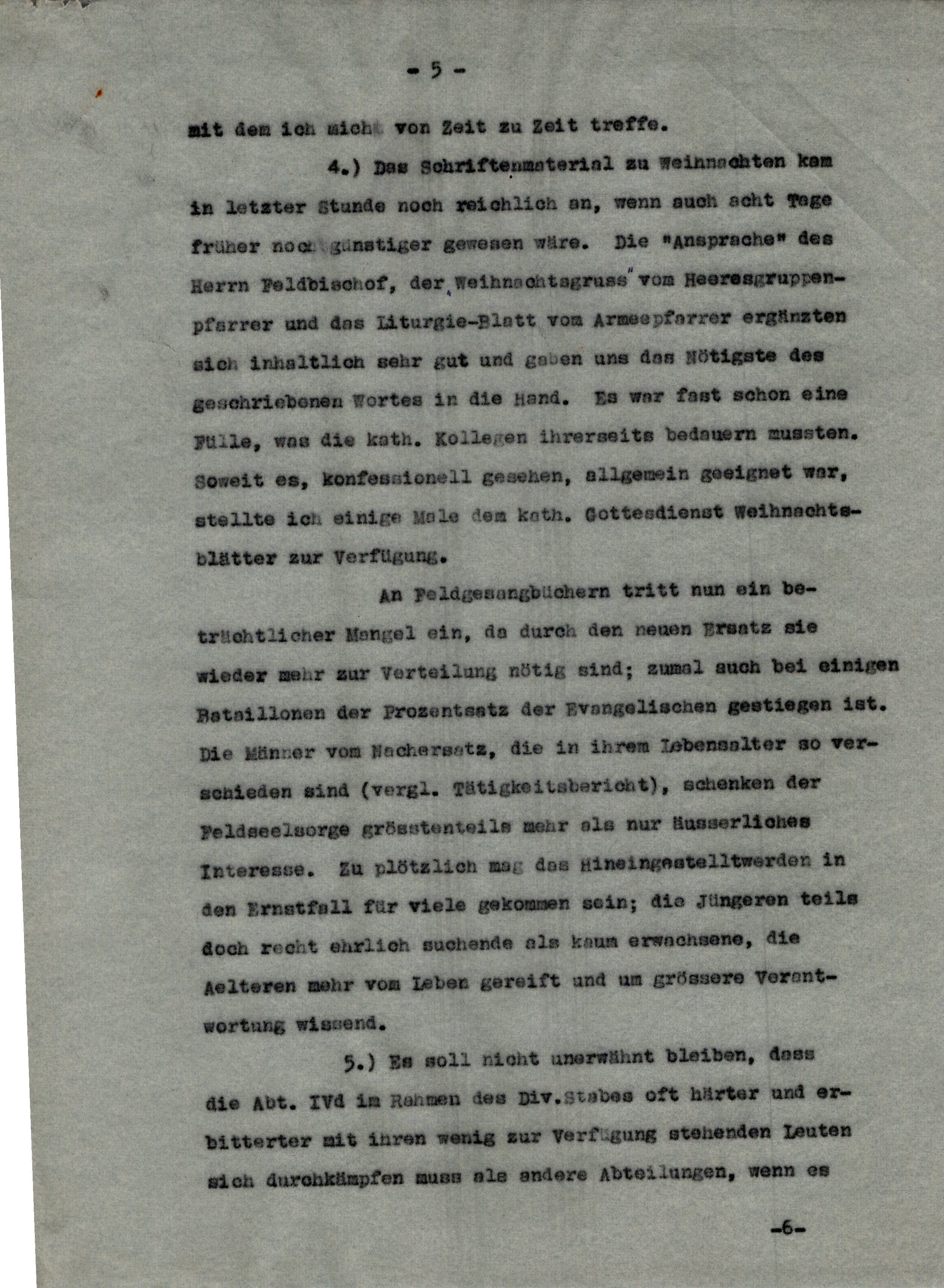
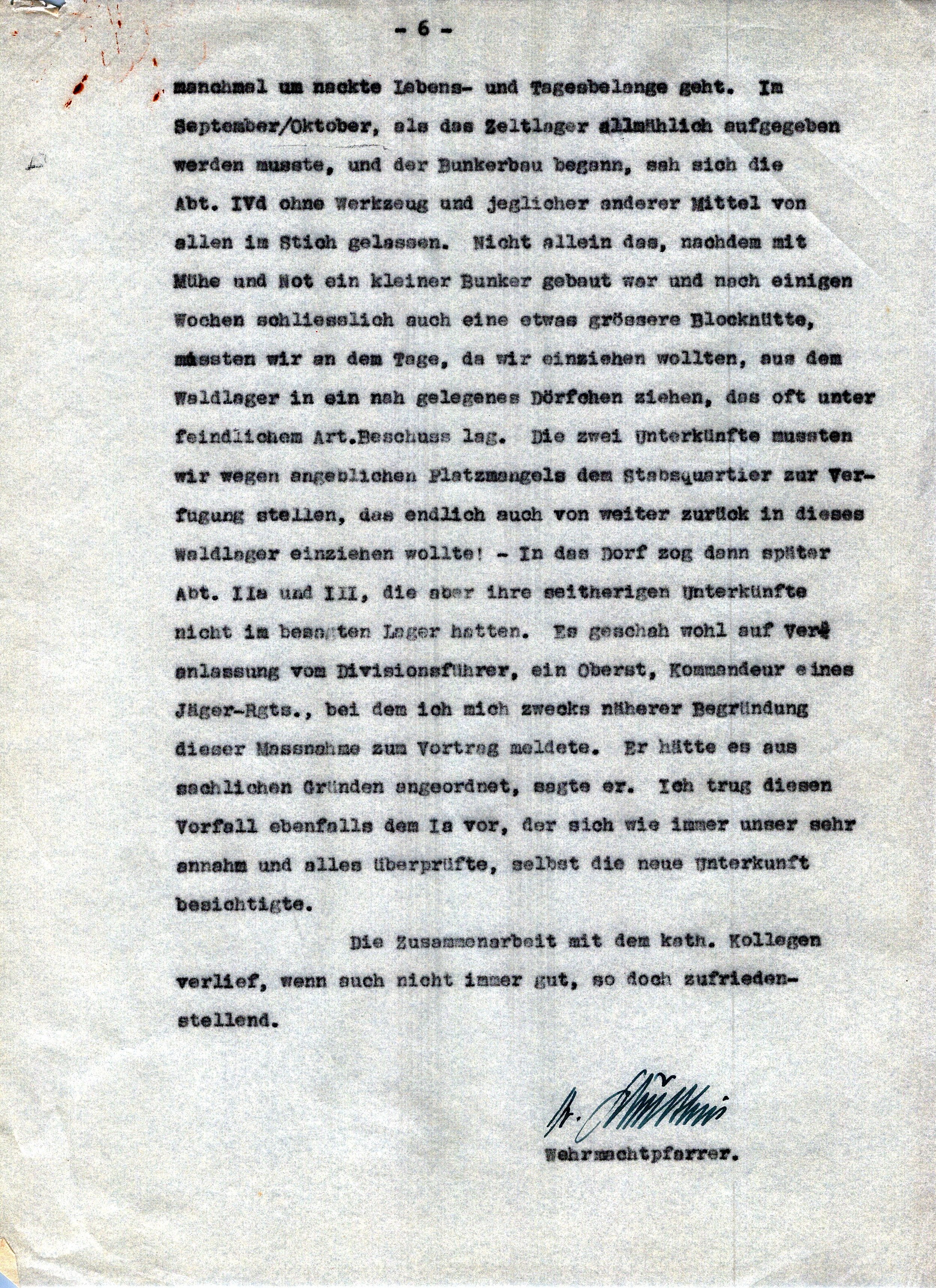
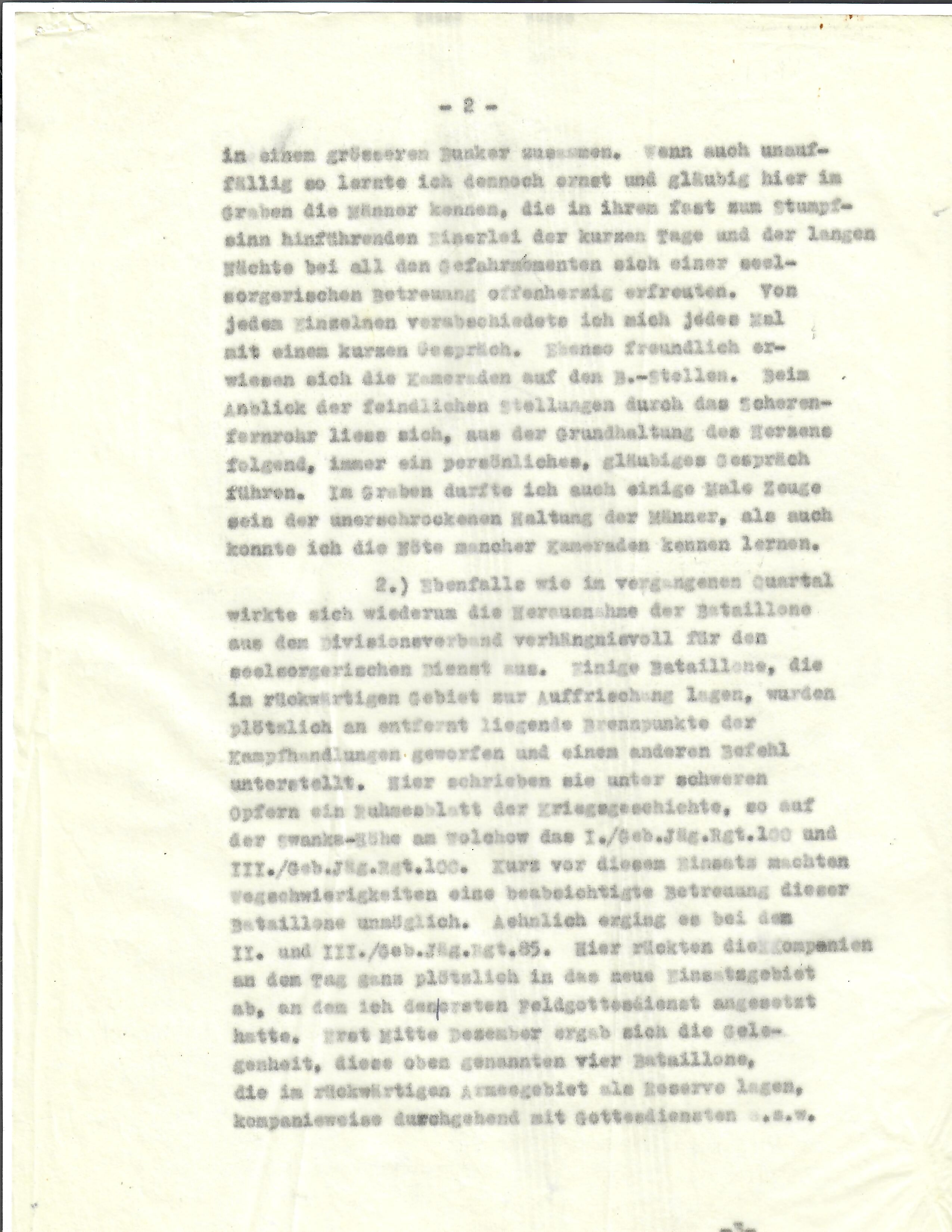
Few military collections preserve such a detailed and personal record of a chaplain’s daily experiences. Schultheis’ extensive reports describe religious services, frontline burials, disagreements with senior officers, the moral condition of soldiers, ministry to prisoners of war, combat in Greece and Crete, static warfare near Leningrad, and his duties as the division’s graves registration officer.
The archive offers an unusually candid firsthand account of the complex position occupied by a Christian clergyman serving inside the German wartime military system.
Dr. Heinrich Schultheis
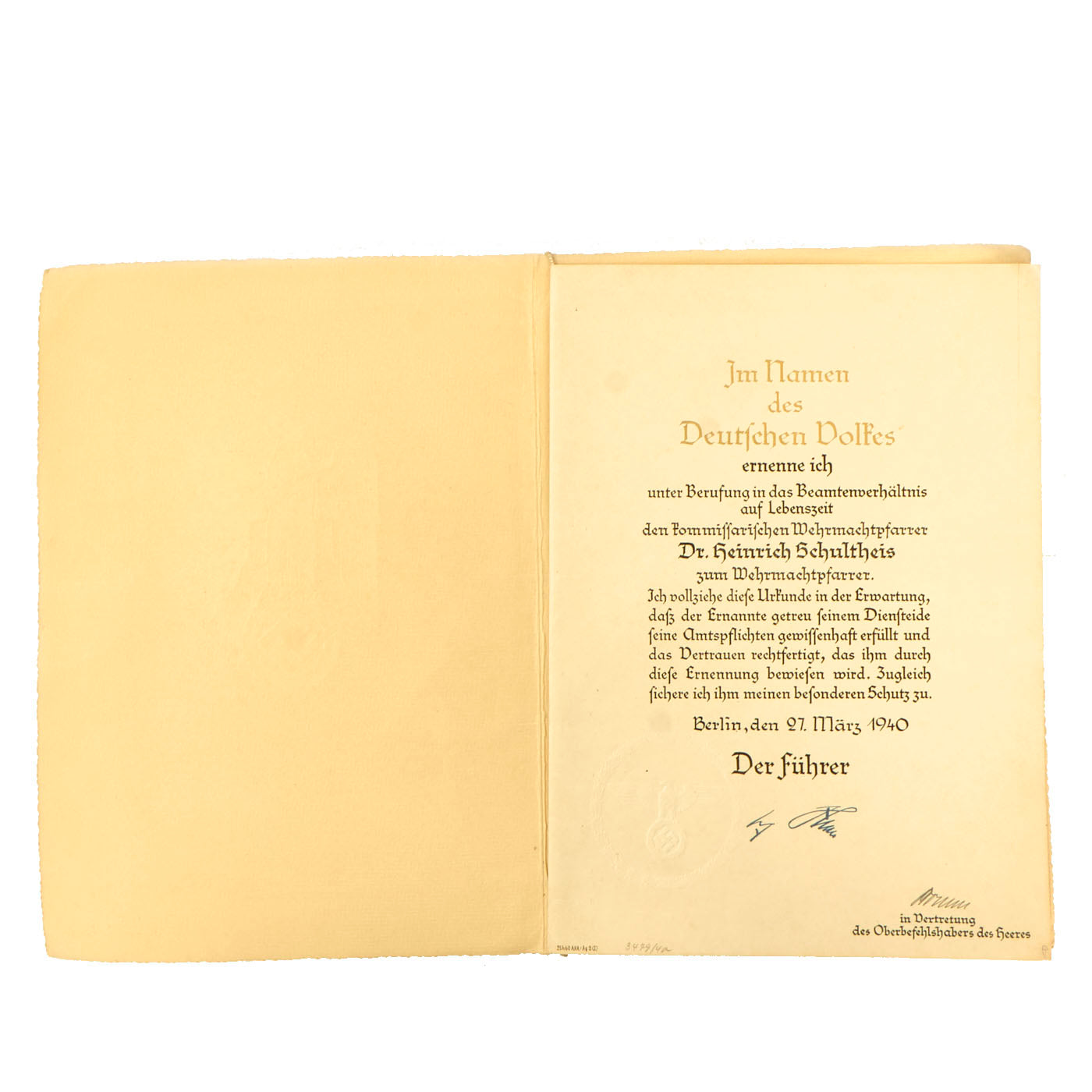
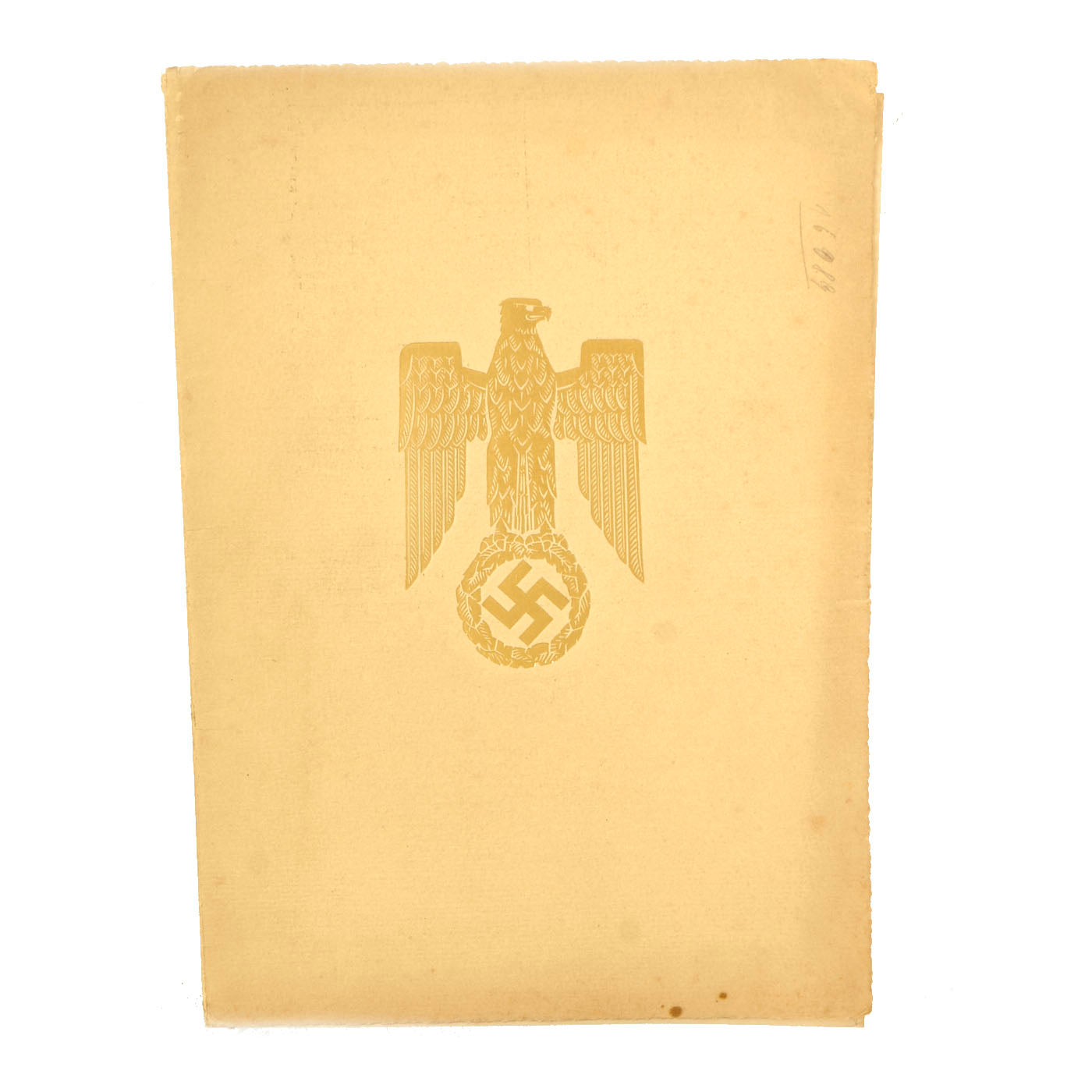
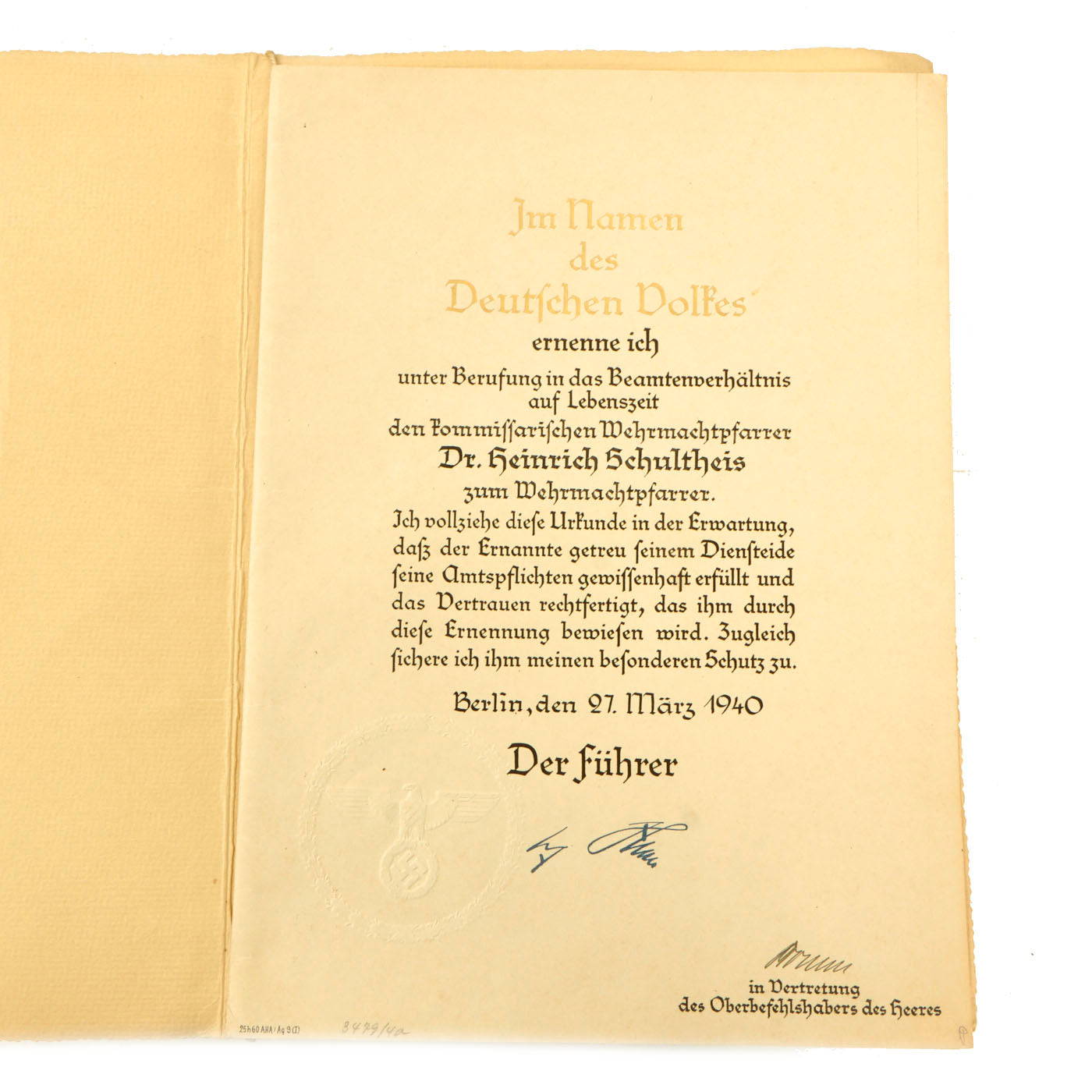
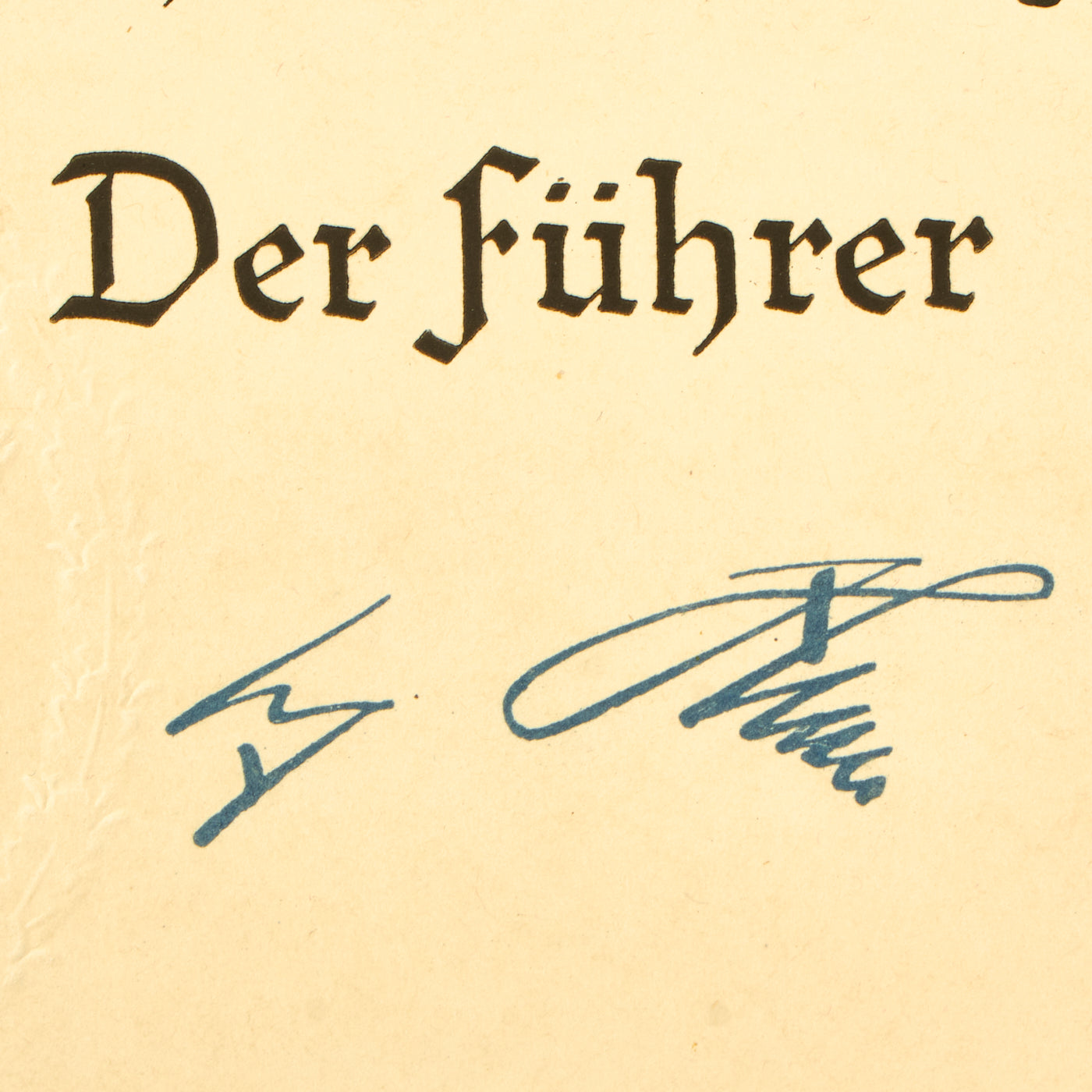
Dr. Heinrich Schultheis began his documented service as a military chaplain in 1940. Included is his formal “Im Namen des Deutschen Volkes” appointment document naming him as a provisional Wehrmacht chaplain, a position broadly equivalent in status to a military officer appointment. The document appears to bear a facsimile Führer signature.
Schultheis initially ministered to British and French prisoners of war in Germany. In late 1940 he was assigned to the newly formed 5th Mountain Division, which had been established that October using personnel from the 1st Mountain Division and the 10th Infantry Division.
His reports reveal that the division was composed predominantly of Catholic soldiers from Bavaria and Austria, while only a relatively small percentage were Lutheran. Schultheis openly described the difficulty of serving as a Lutheran chaplain within this environment and expressed frustration over what he viewed as insufficient support from portions of the divisional command.
The division commander, General Julius Ringel, was described by Schultheis as skeptical of organized Christianity and more committed to the development of an NSDAP-centered culture. Their professional disagreements appear repeatedly in the correspondence and pastoral reports preserved in this archive.
These tensions eventually led Schultheis to write to the command of Army Group North, complaining that official Army directives concerning the work of military chaplains were not being fully supported within the division.
Campaign in Greece and the Battle of Crete
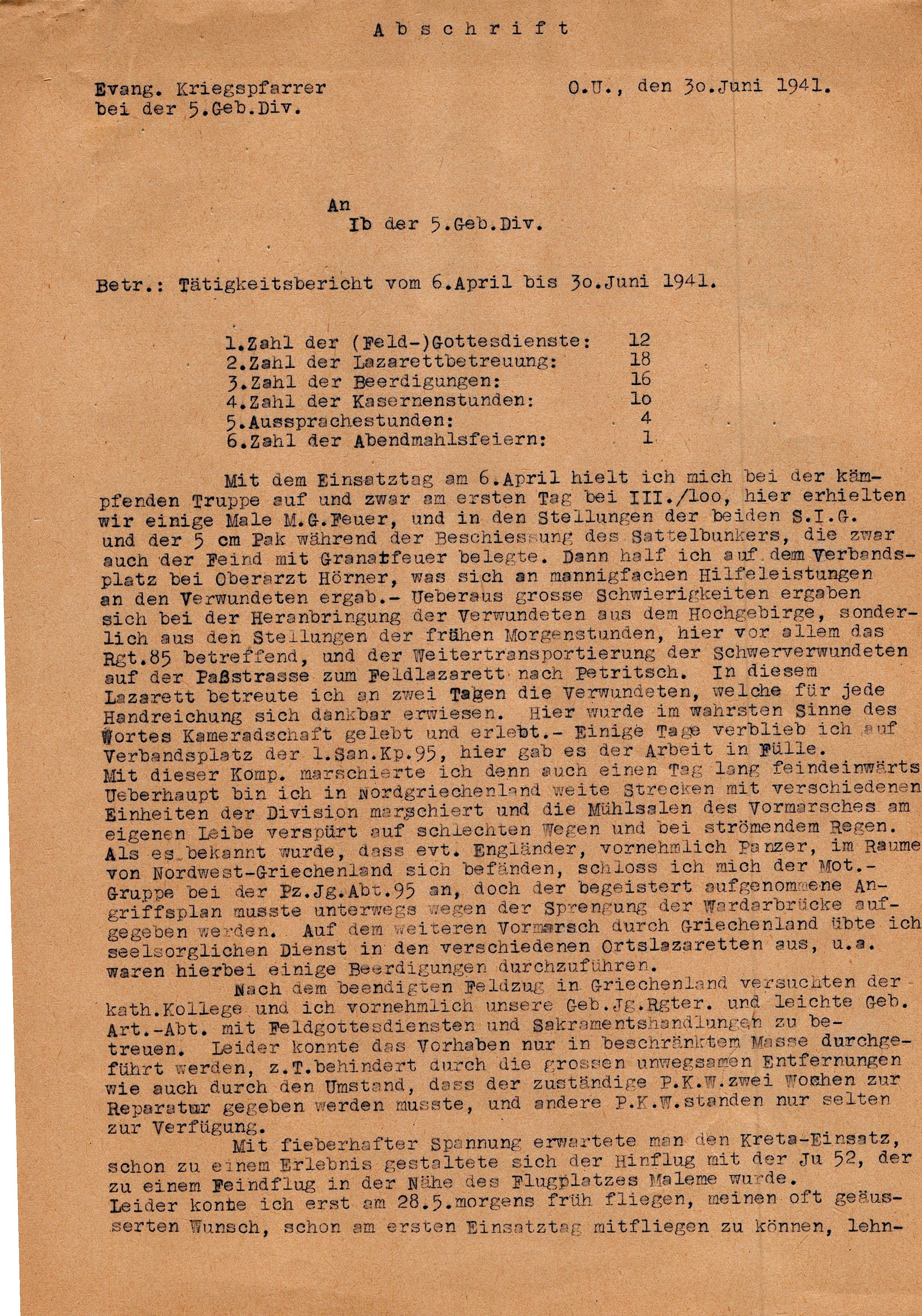
Schultheis first experienced combat during the German invasion of Greece in April 1941. In one report he described coming under machine-gun fire near the Rupel Pass in Macedonia before assisting wounded soldiers at a field aid station. As the division advanced farther into Greece, he ministered in military hospitals and conducted burial services for soldiers killed during the campaign.
The 5th Mountain Division subsequently participated in the Battle of Crete, the major German airborne and air-landing operation conducted from May 20 through June 1, 1941. The battle was the first predominantly airborne invasion in military history and involved large-scale use of Fallschirmjäger forces supported by air-landed mountain troops.
Schultheis was part of the division’s air-transported element and landed on Crete while the fighting was still underway. His reports indicate that he ministered to troops scattered across the mountainous island and struggled with limited transportation and fuel while attempting to reach widely dispersed units.
For his actions during the operation, Schultheis was awarded the Iron Cross Second Class.
The original award certificate is included and reads:
IM NAMEN DES FÜHRERS
It is named to Dr. Heinrich Schultheis, dated June 24, 1941, and signed by General der Flieger Kurt Student.
Student was one of the principal architects of Germany’s airborne forces and commanded XI Fliegerkorps during Operation Mercury. Although the capture of Crete was successful, German airborne formations suffered extremely heavy losses, and the campaign became one of the defining operations in the history of the Fallschirmjäger.
The survival of Schultheis’ original Iron Cross certificate with Student’s signature is one of the most important features of the grouping.
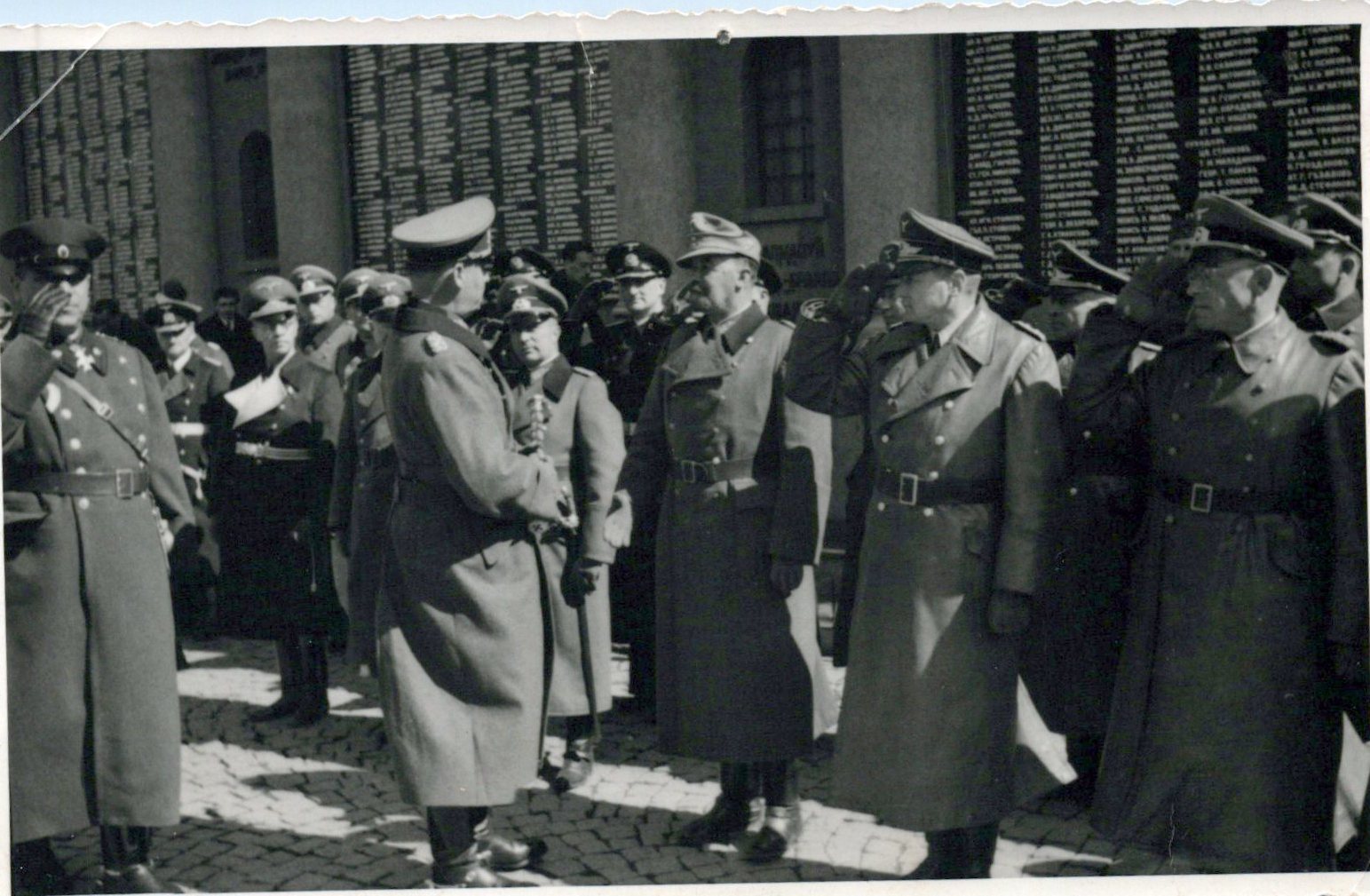
An original photograph dated August 13, 1941, shows Schultheis marching in procession beside General Student. This remarkable image directly connects the chaplain, the awarding general, and the surviving award document.
Service on Crete
Schultheis remained with the 5th Mountain Division during its occupation duties in Greece and Crete. His quarterly reports document the practical challenges of ministering to soldiers spread throughout Crete, mainland Greece, and various detached formations.
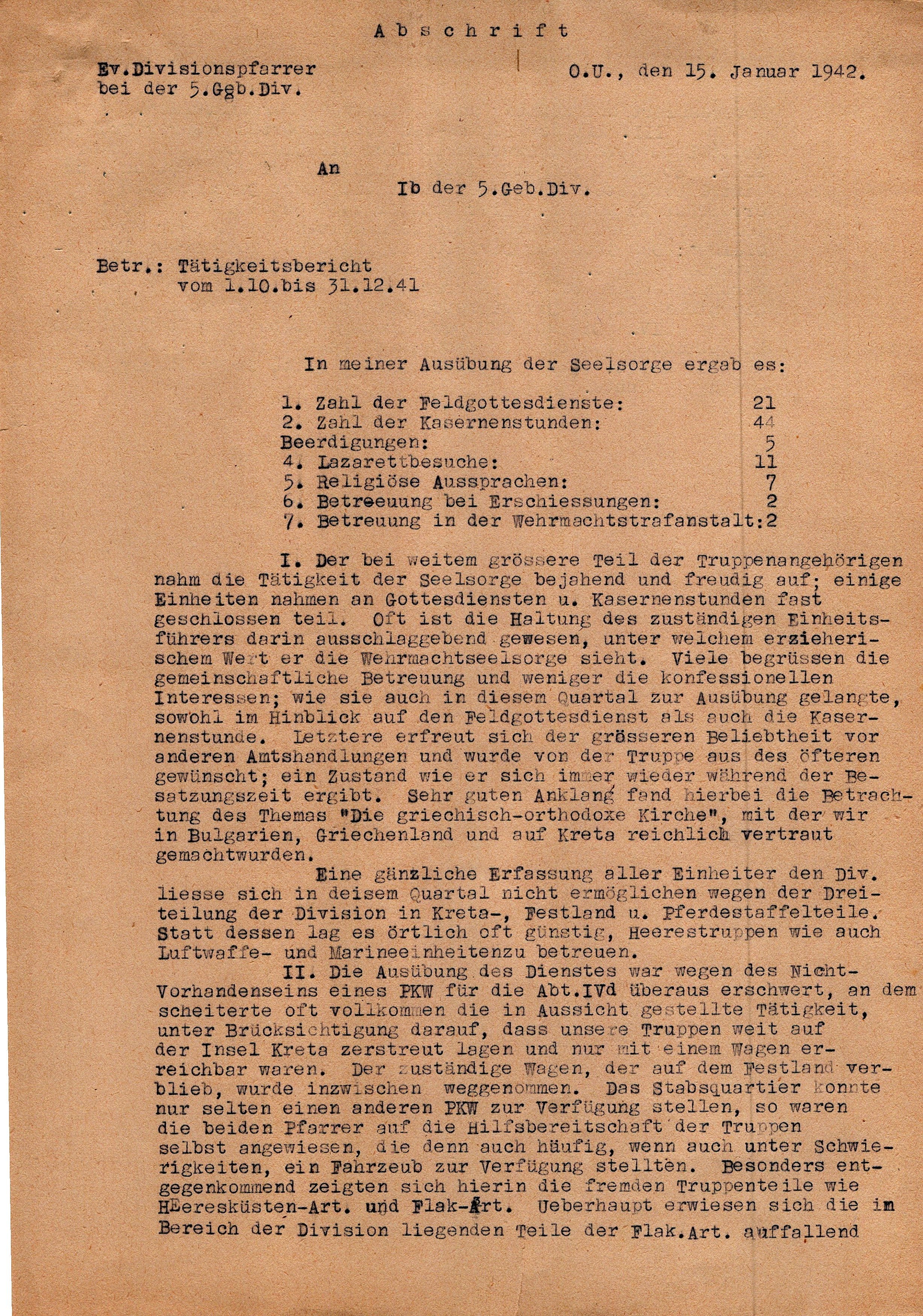
He worked with members of the Heer, Kriegsmarine, and Luftwaffe and maintained cordial relationships with Catholic chaplains and members of the Greek Orthodox clergy. He recorded the numbers of religious services, communion services, funerals, and pastoral meetings he conducted during each reporting period.
His writing also addressed disciplinary and moral issues among soldiers. These included the operation of military brothels, soldiers hospitalized with venereal disease, and relationships between military personnel and local women.
The reports are unusually direct and provide a perspective rarely encountered in standard military records.
Eastern Front Service
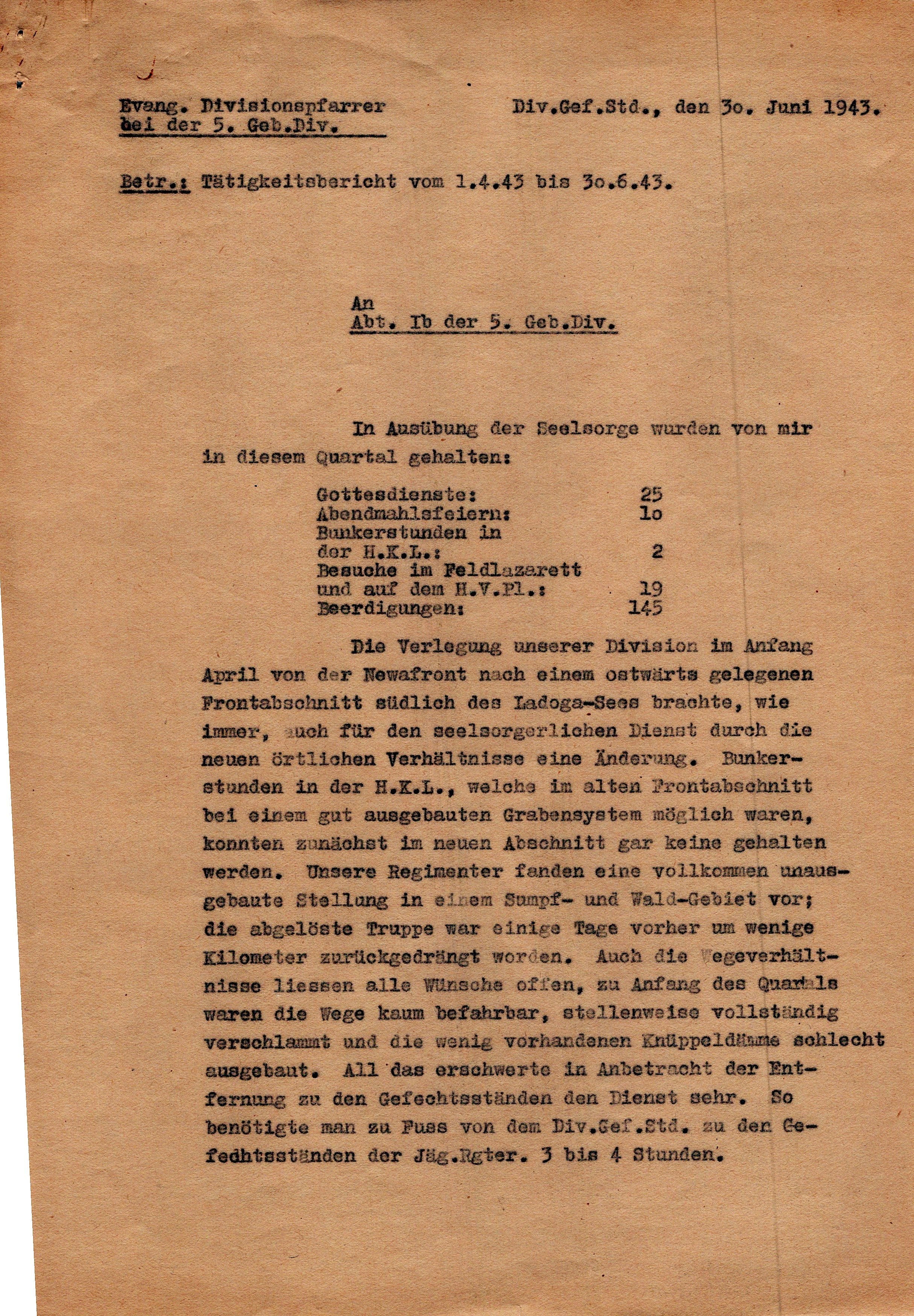
Schultheis left Greece in early 1942 and rejoined the 5th Mountain Division near Leningrad, where it occupied positions along the Neva River.
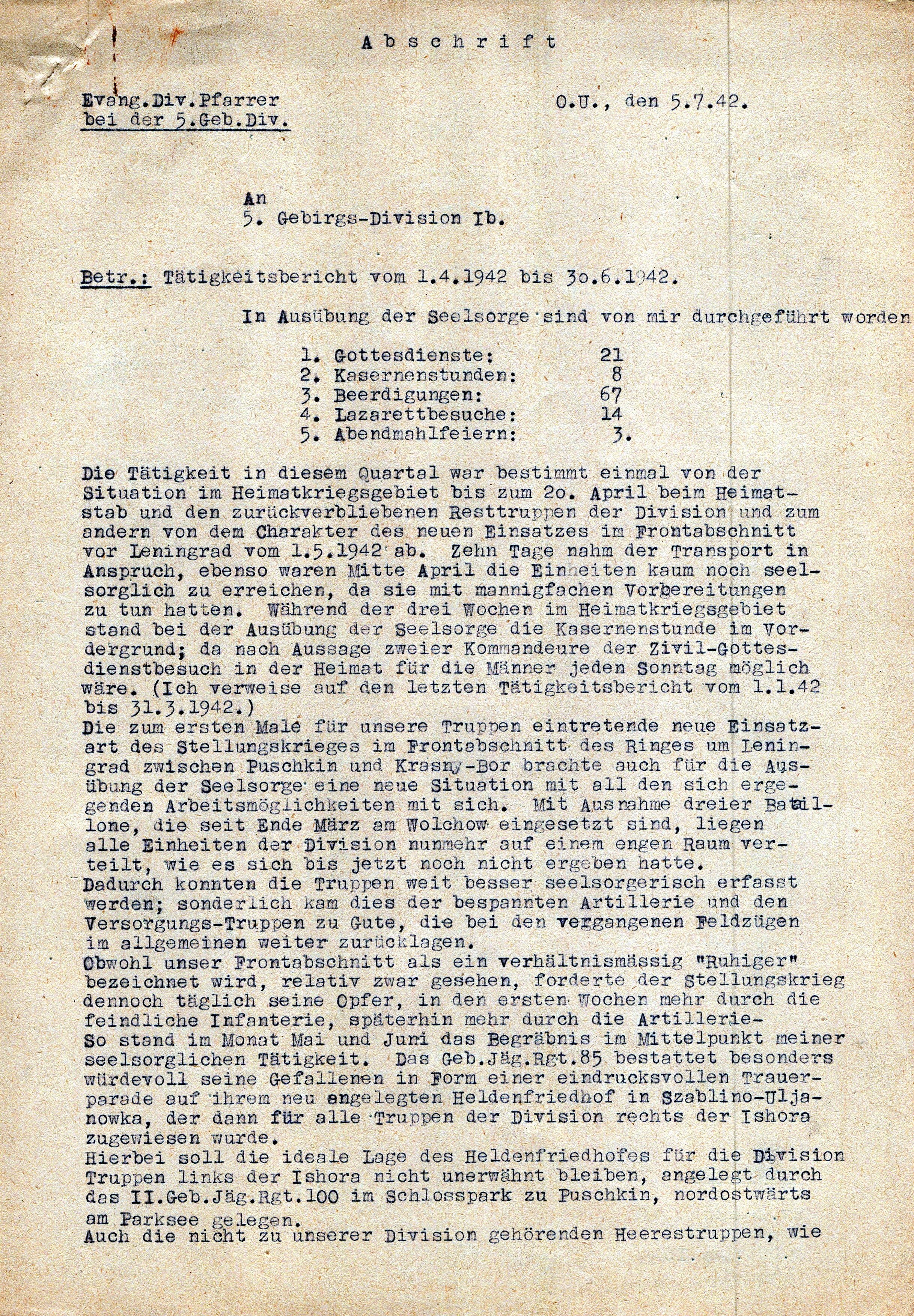
The fighting had developed into Stellungskrieg, or static positional warfare, with extensive trenches, bunkers, artillery positions, and frequent casualties despite the absence of constant large-scale offensives.
Schultheis traveled between forward positions, artillery units, field hospitals, cemeteries, and divisional headquarters. Mud, poor roads, shortages of vehicles, and the dispersal of units repeatedly made his work difficult.
His reports describe praying with dying soldiers, visiting men in frontline positions, conducting almost daily burials, and ministering to wounded troops. In one report, he described sitting beside dying soldiers and praying with them during one of the division’s most costly periods of combat.
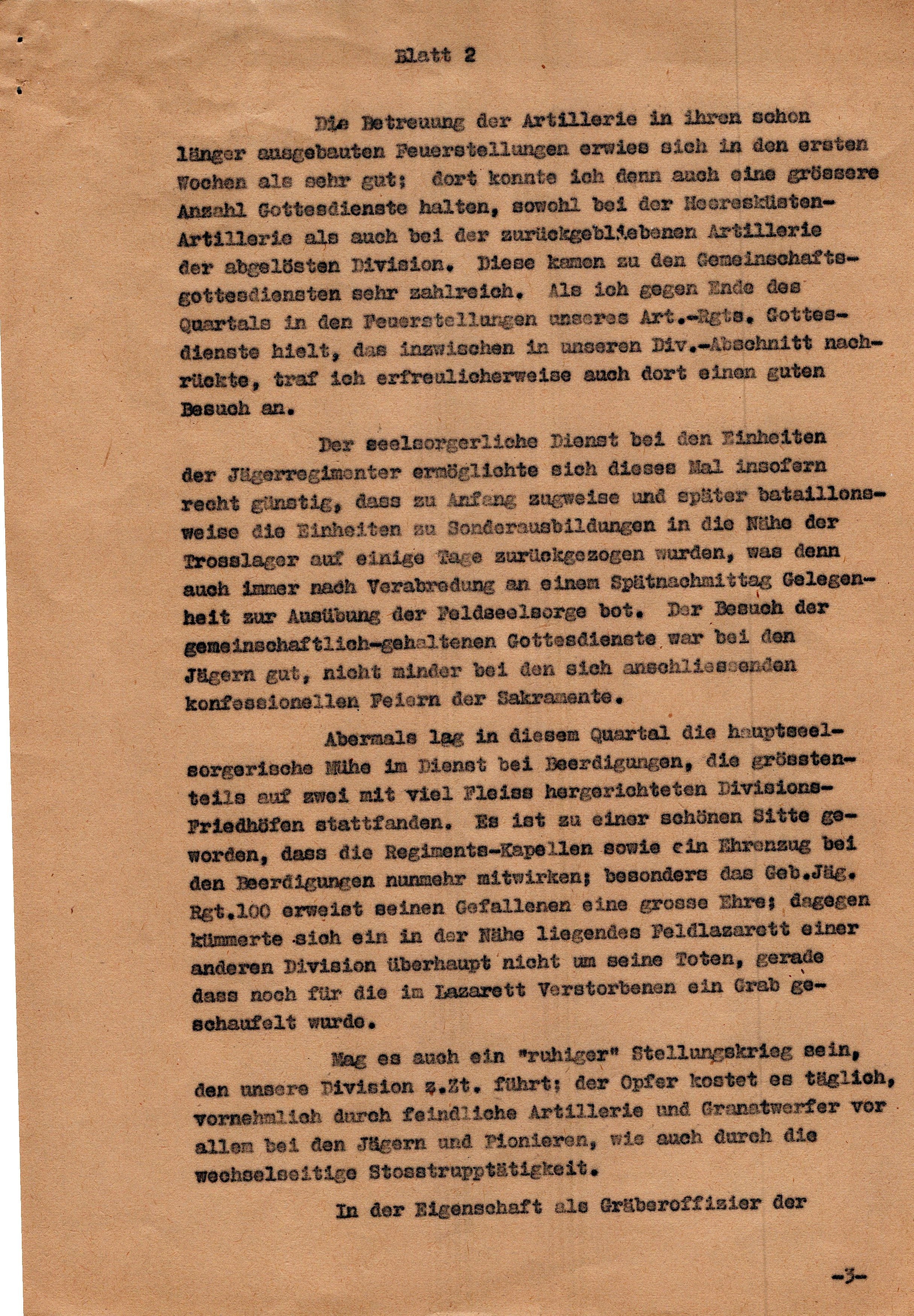
Schultheis served not only as the division’s Lutheran chaplain but also as its Gräberoffizier, or graves registration officer. In this role, he was responsible for selecting and organizing military cemetery sites, recording burials, conducting funeral services, and preparing official lists of the dead.
A surviving report notes that the division’s recorded dead had exceeded 1,000 and that approximately 300 additional burials might be added after the records were fully reconciled.
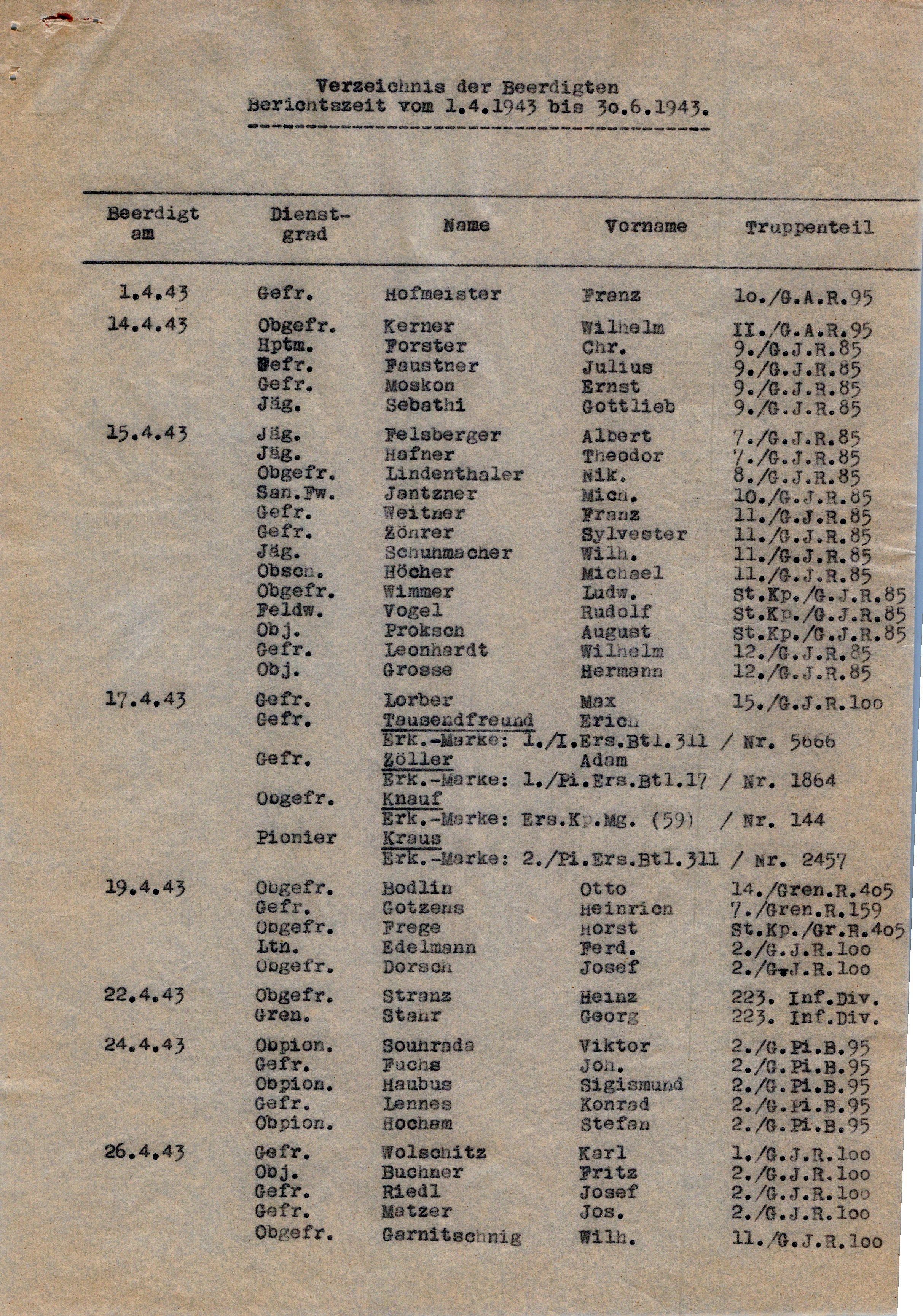
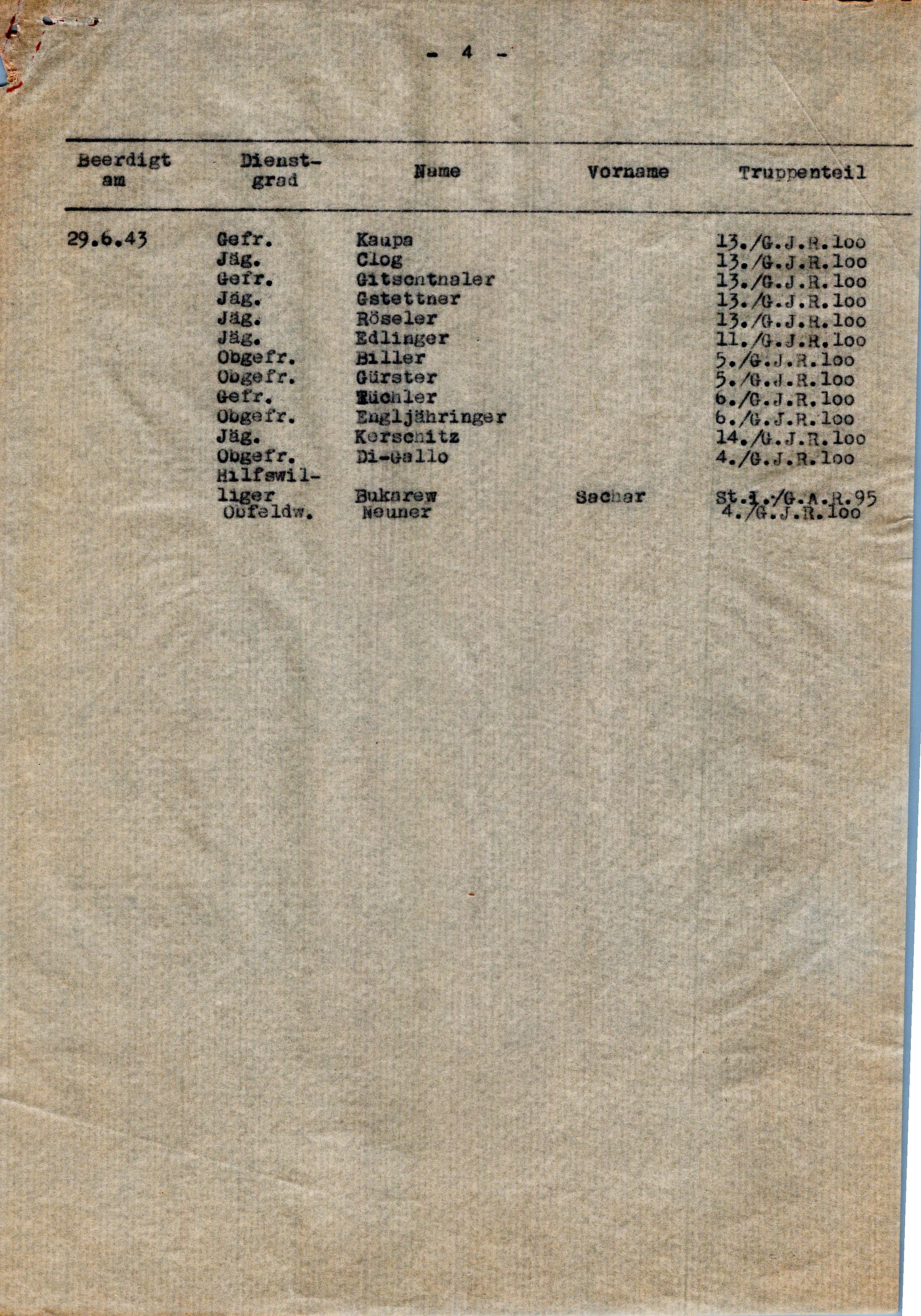
Included is a multi-page Verzeichnis der Beerdigten listing soldiers buried by Schultheis between April 1 and June 30, 1943. This roster formed part of his quarterly report and provides an important primary record of casualties within the division.
Schultheis was also awarded the War Merit Cross Second Class for his Eastern Front service.
Postwar Religious Work
Schultheis continued his religious and commemorative work after the war.
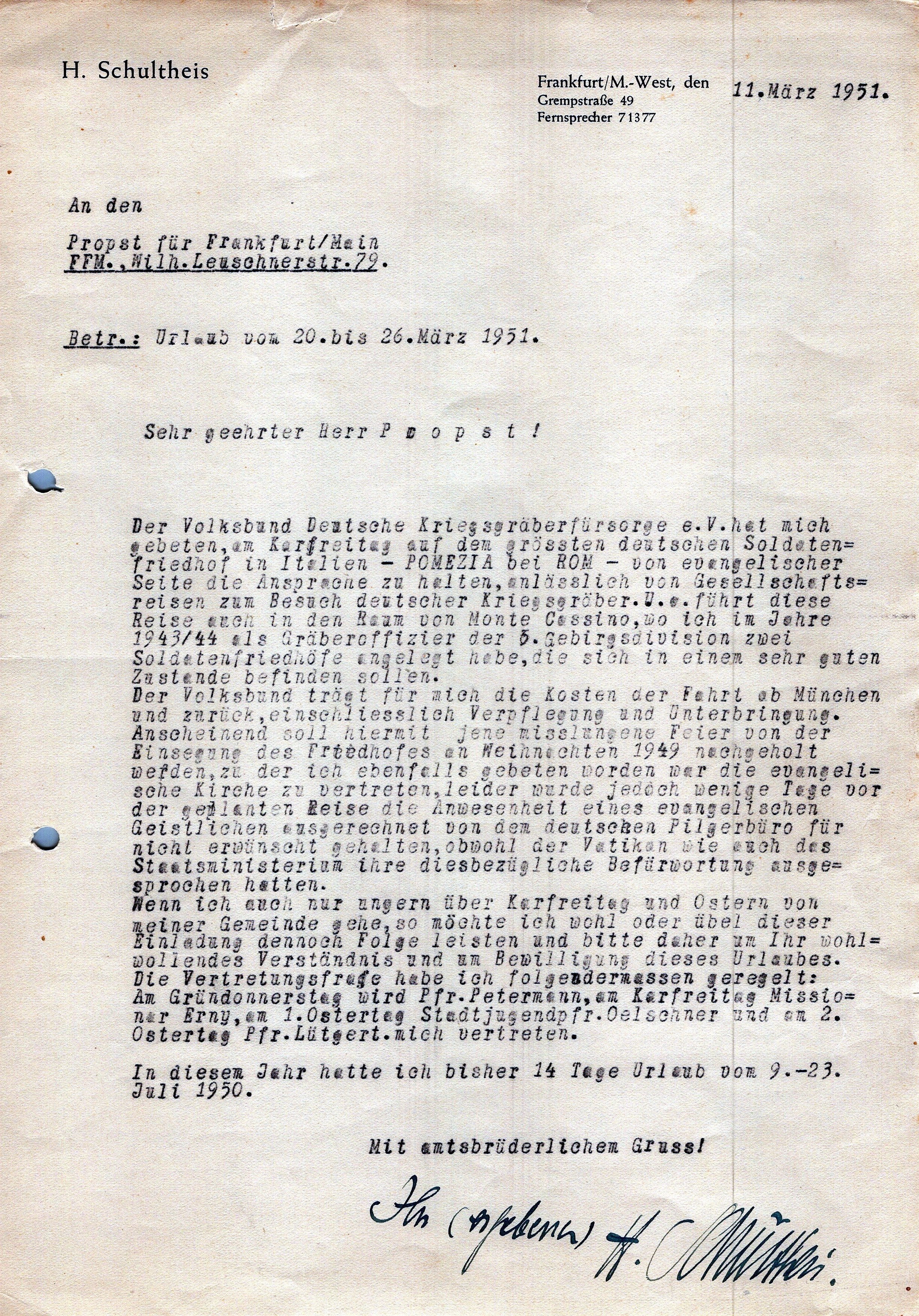
A 1951 letter discusses a planned Good Friday visit to the German military cemetery at Pomezia near Rome on behalf of the Volksbund Deutsche Kriegsgräberfürsorge, the German War Graves Commission.
He also referred to his wartime experience establishing military cemeteries while serving as divisional chaplain.
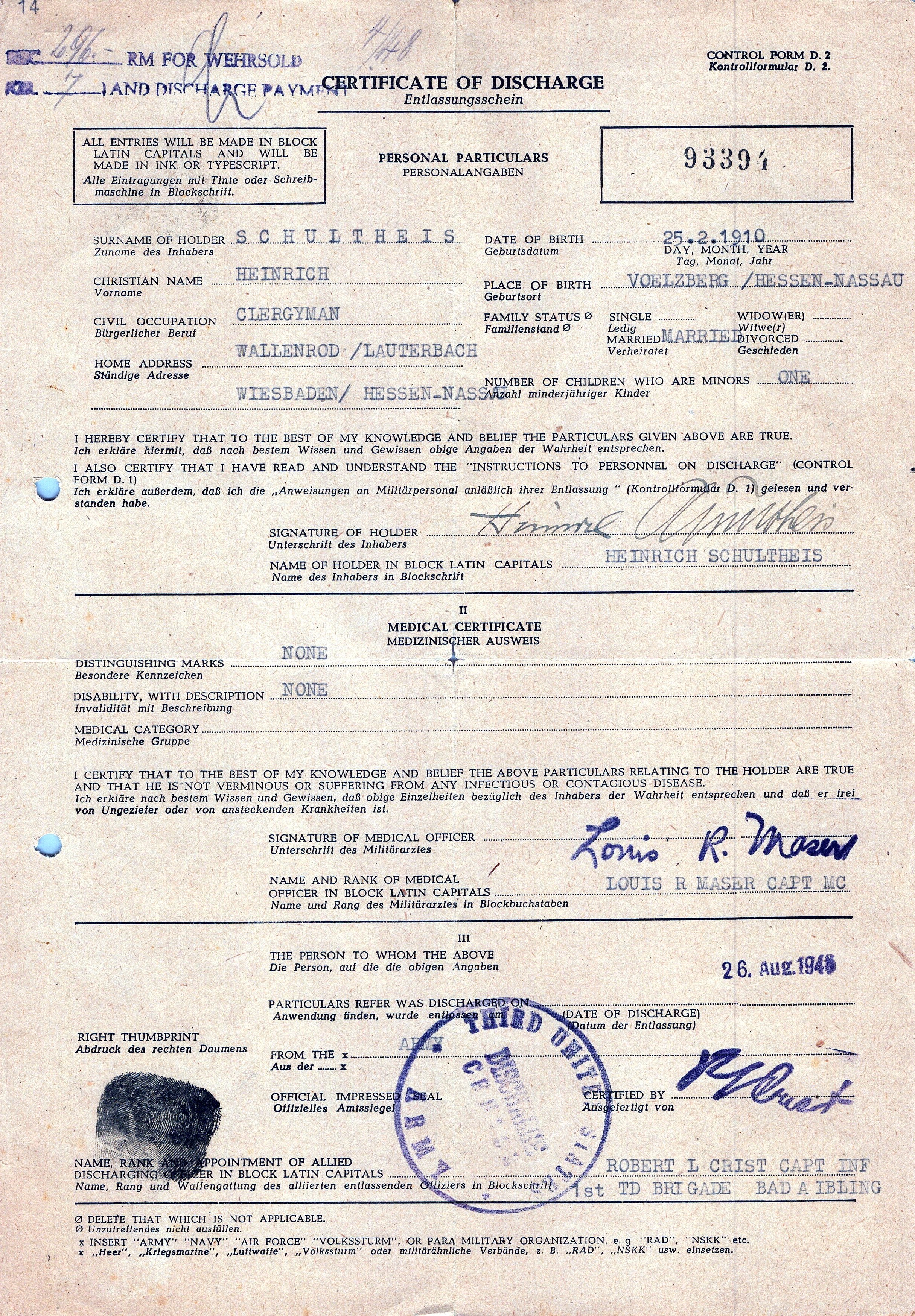
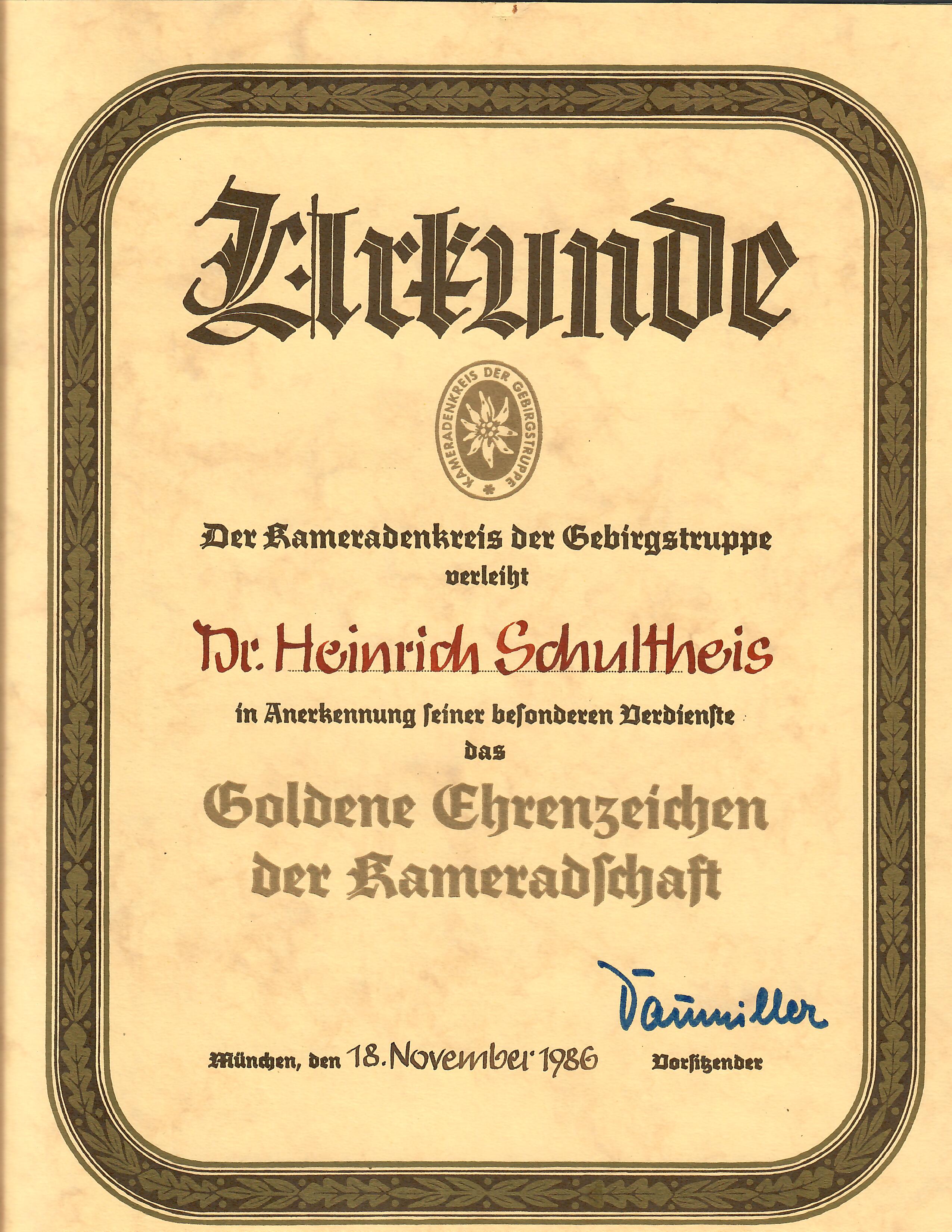
Another postwar document honors the Lutheran military chaplains who had served during the war. The collection also includes Schultheis’ release from prisoner-of-war status and a later veterans’ association award certificate.
Named Chaplain Officer’s Visor Cap
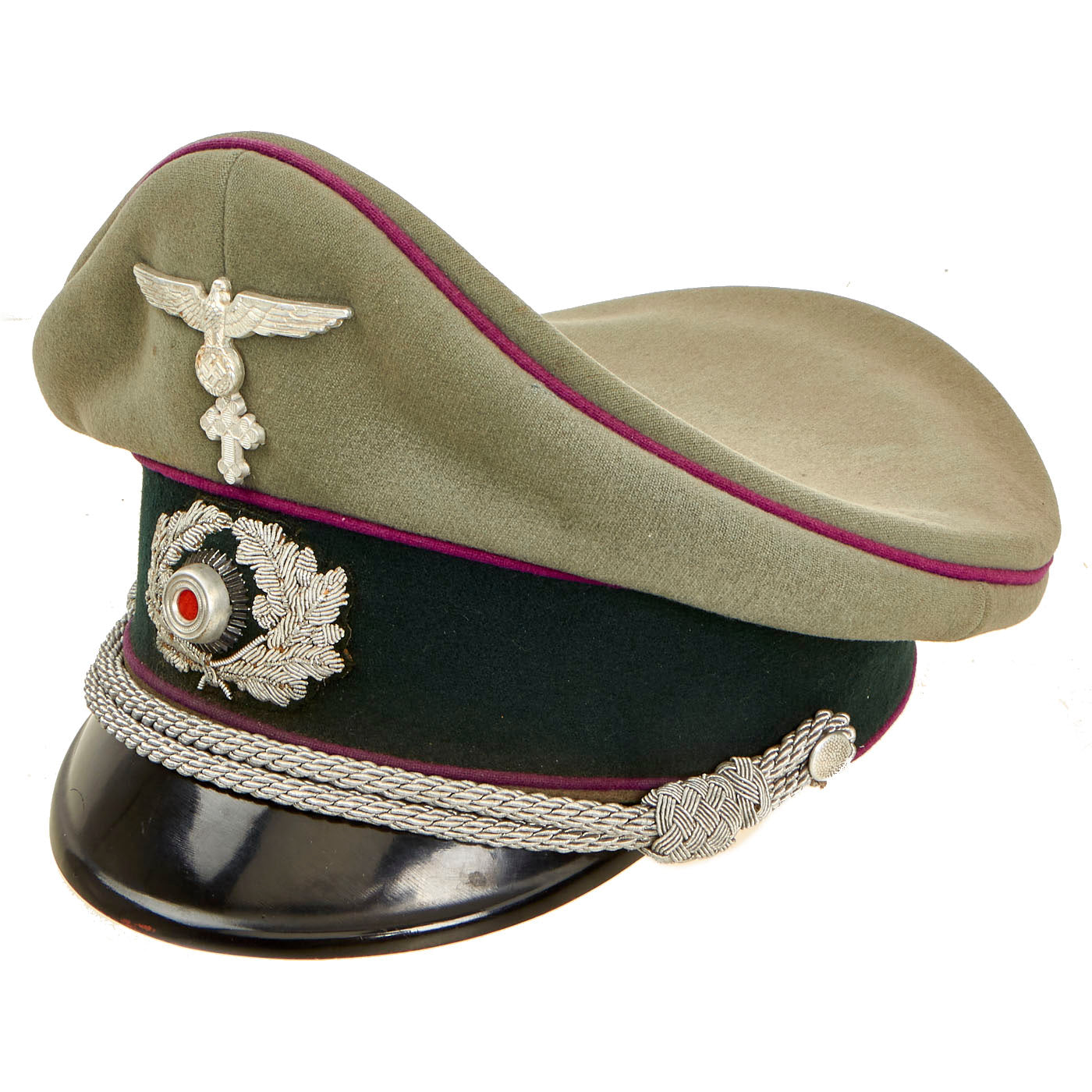
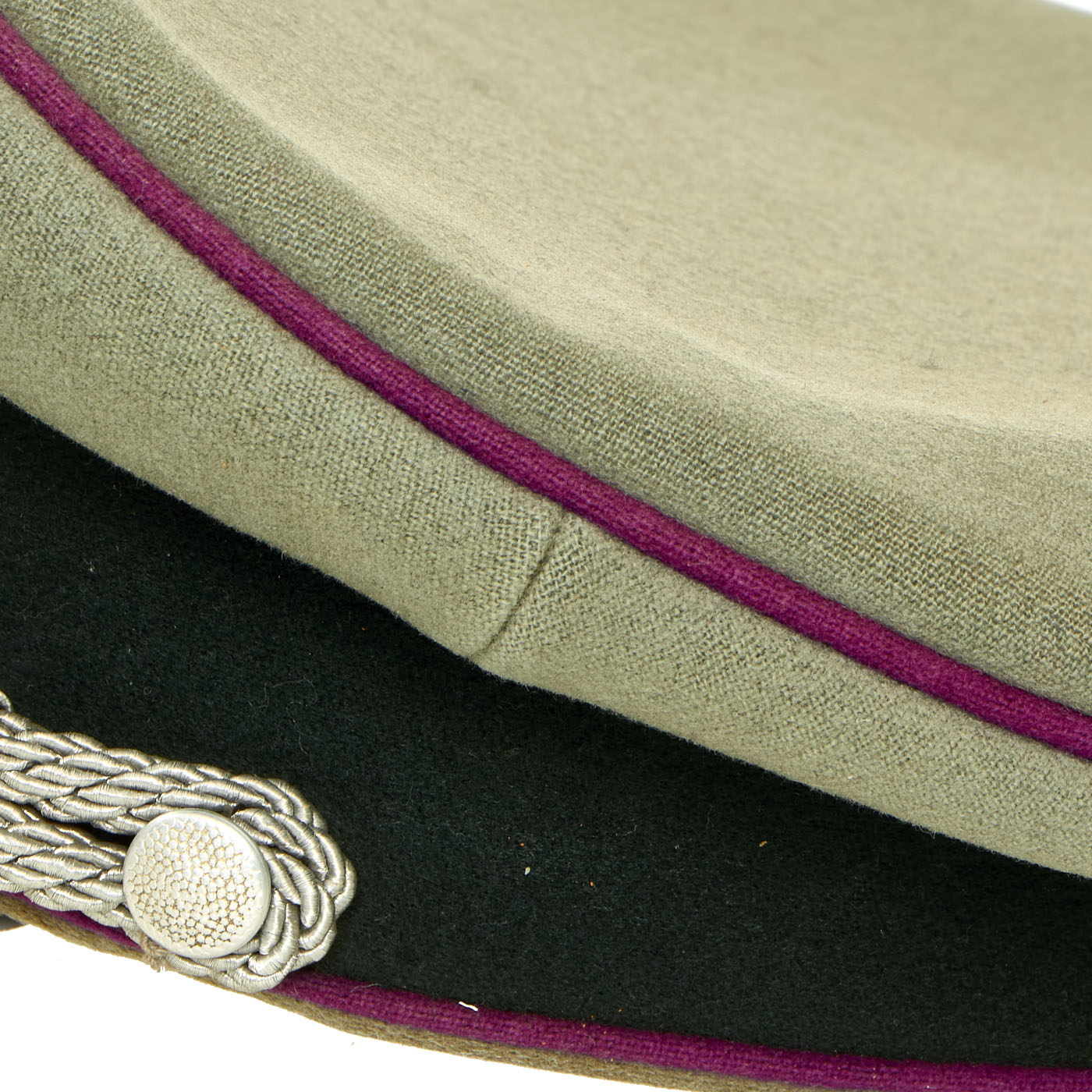
The most visually striking component of the collection is Schultheis’ high-quality Heer chaplain officer’s visor cap.
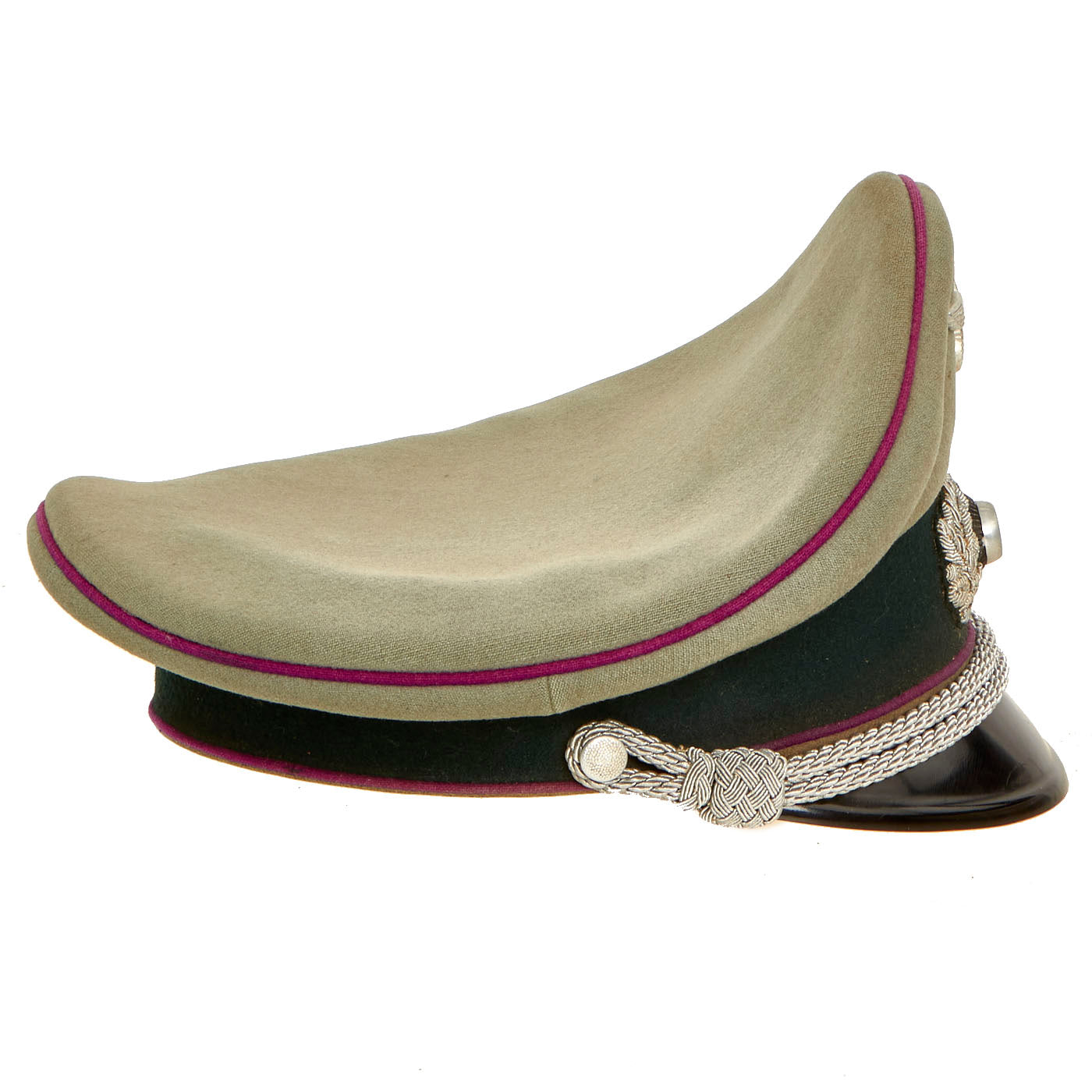
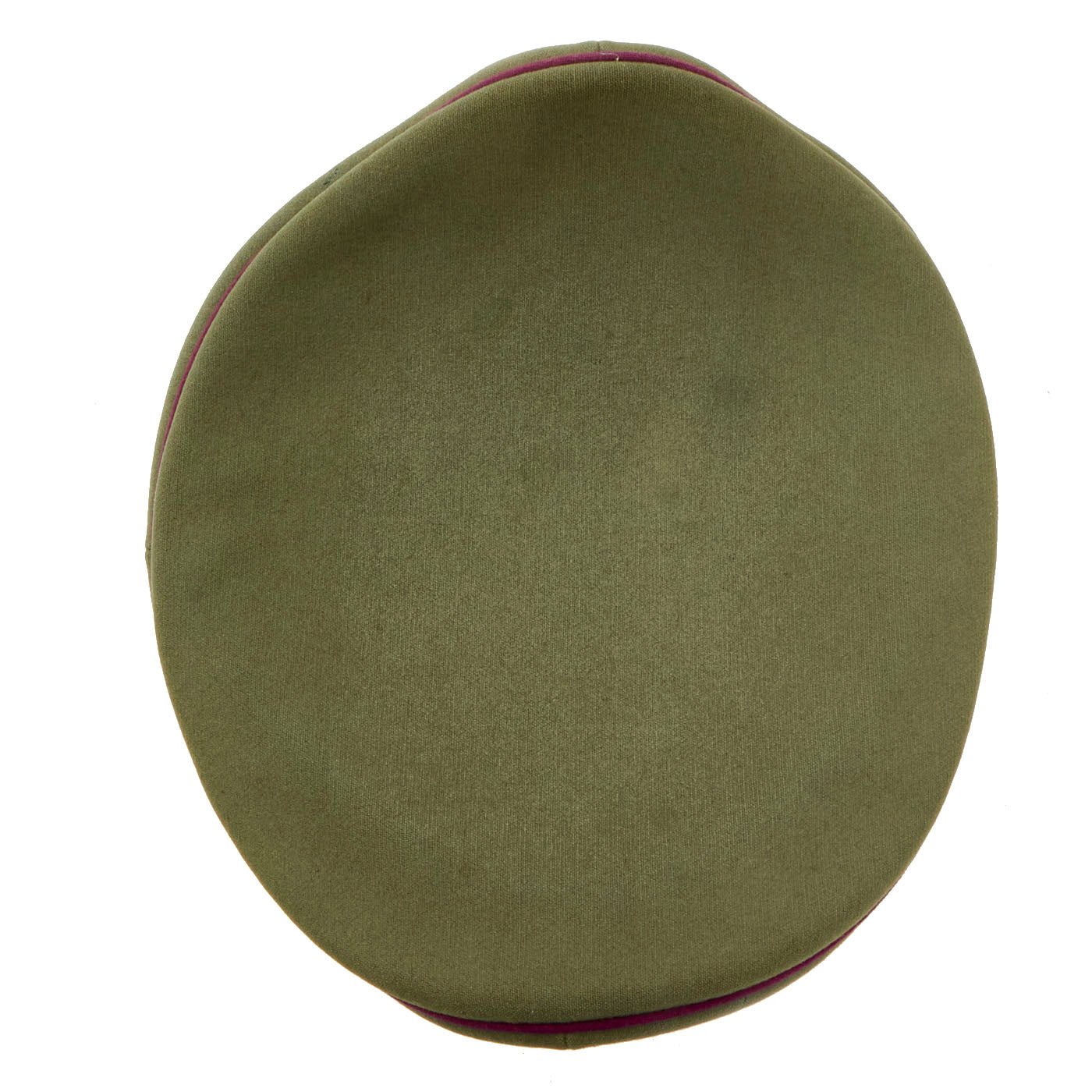
It is approximately a size 59 and has developed an especially attractive saddle shape, giving it the distinctive profile highly prized by visor-cap collectors.
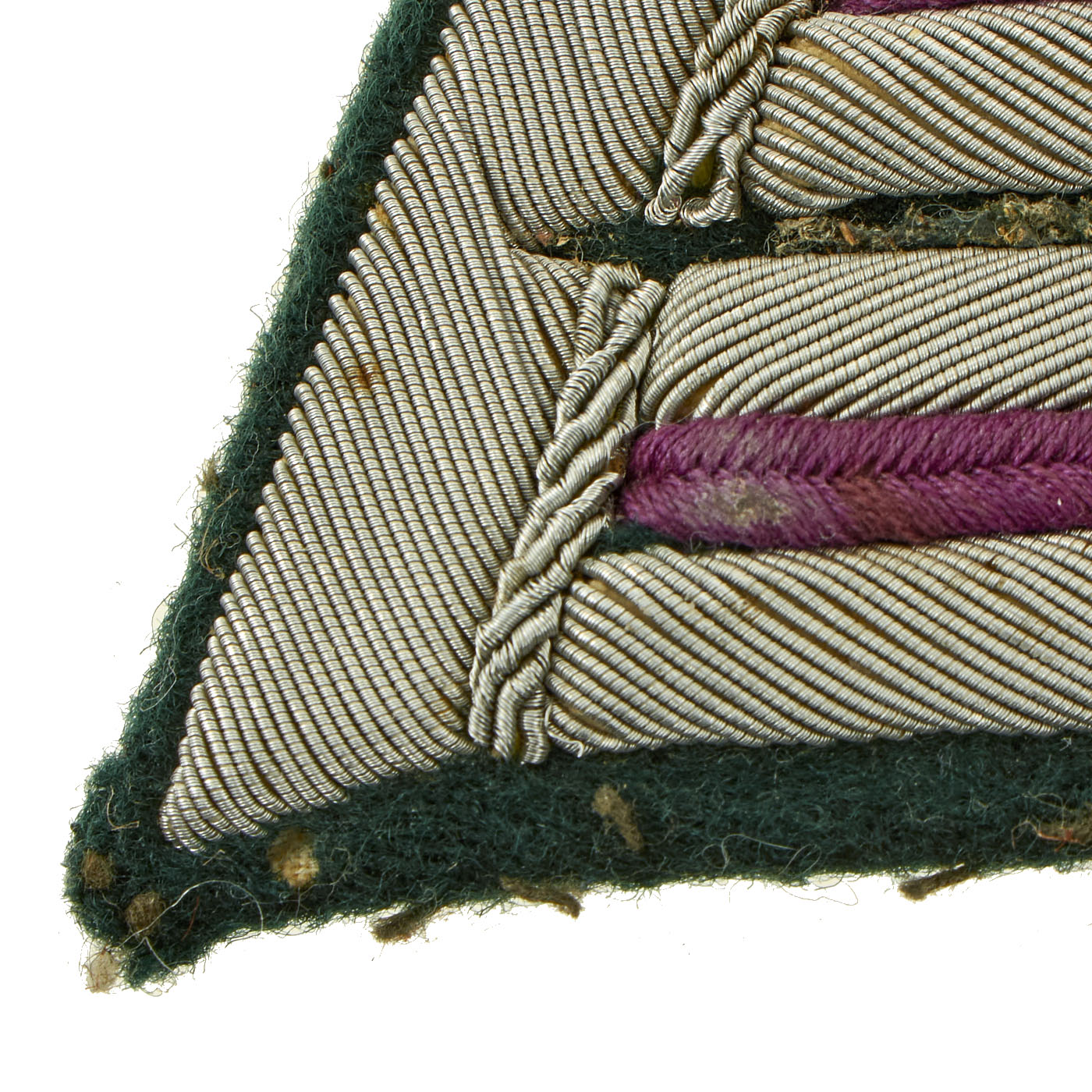
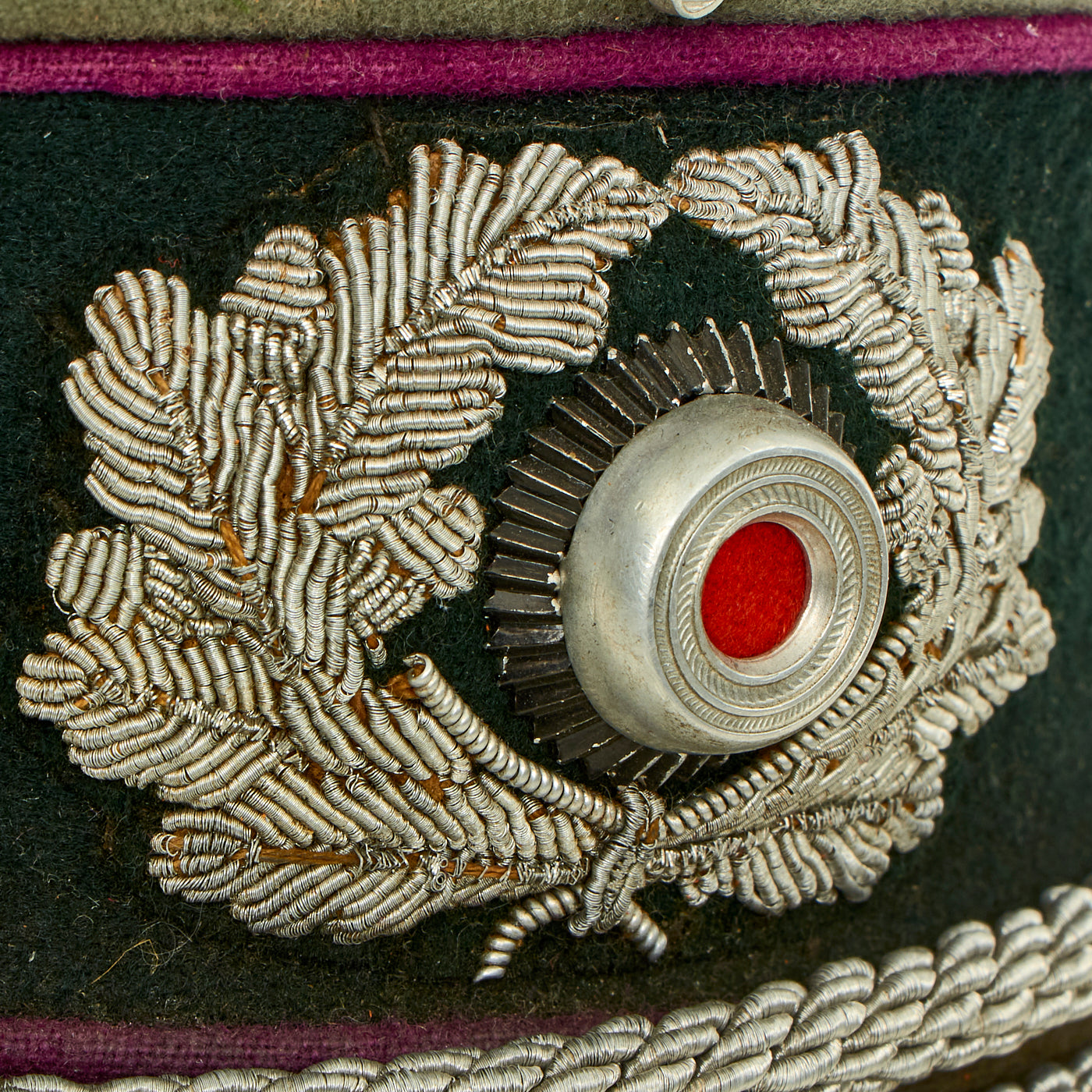
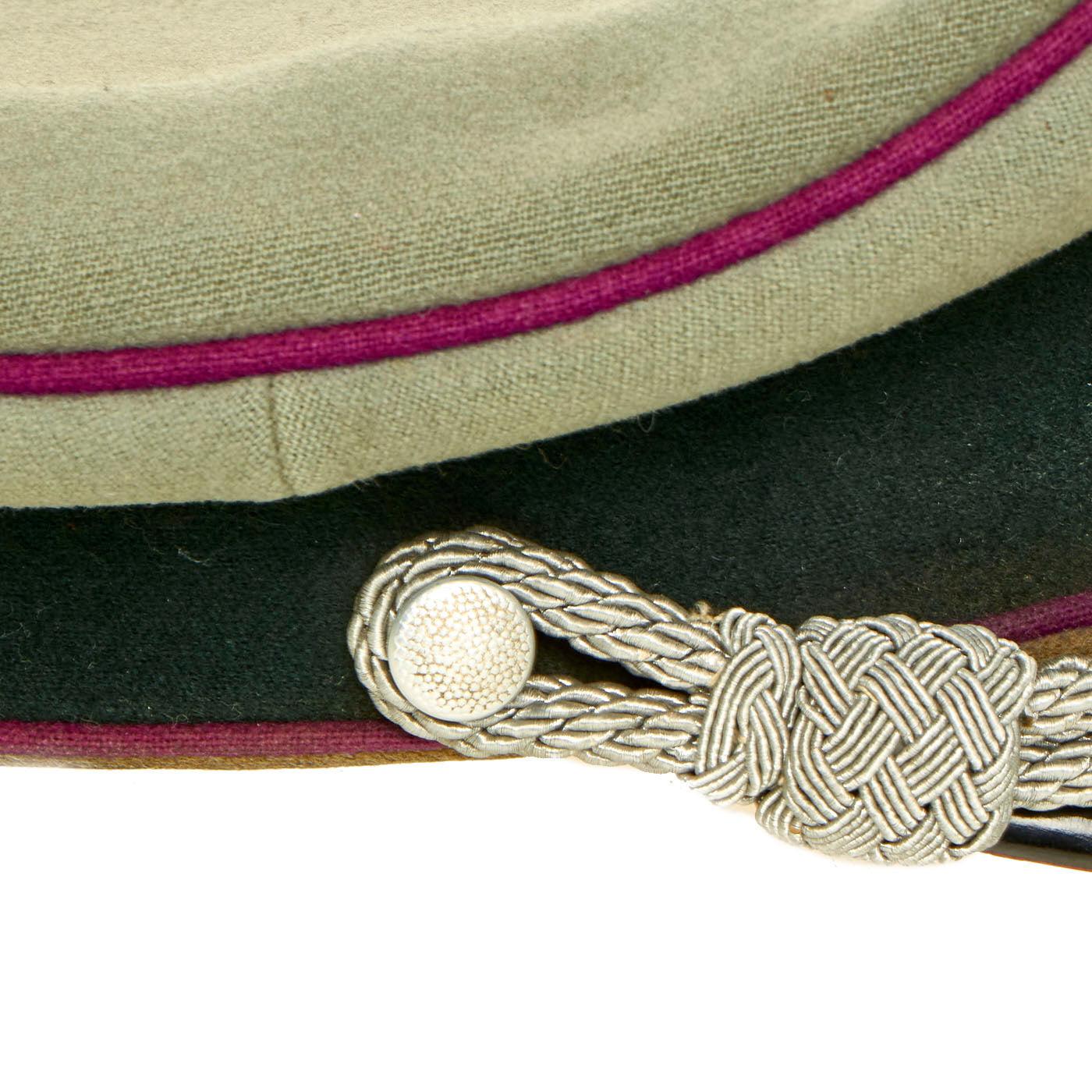
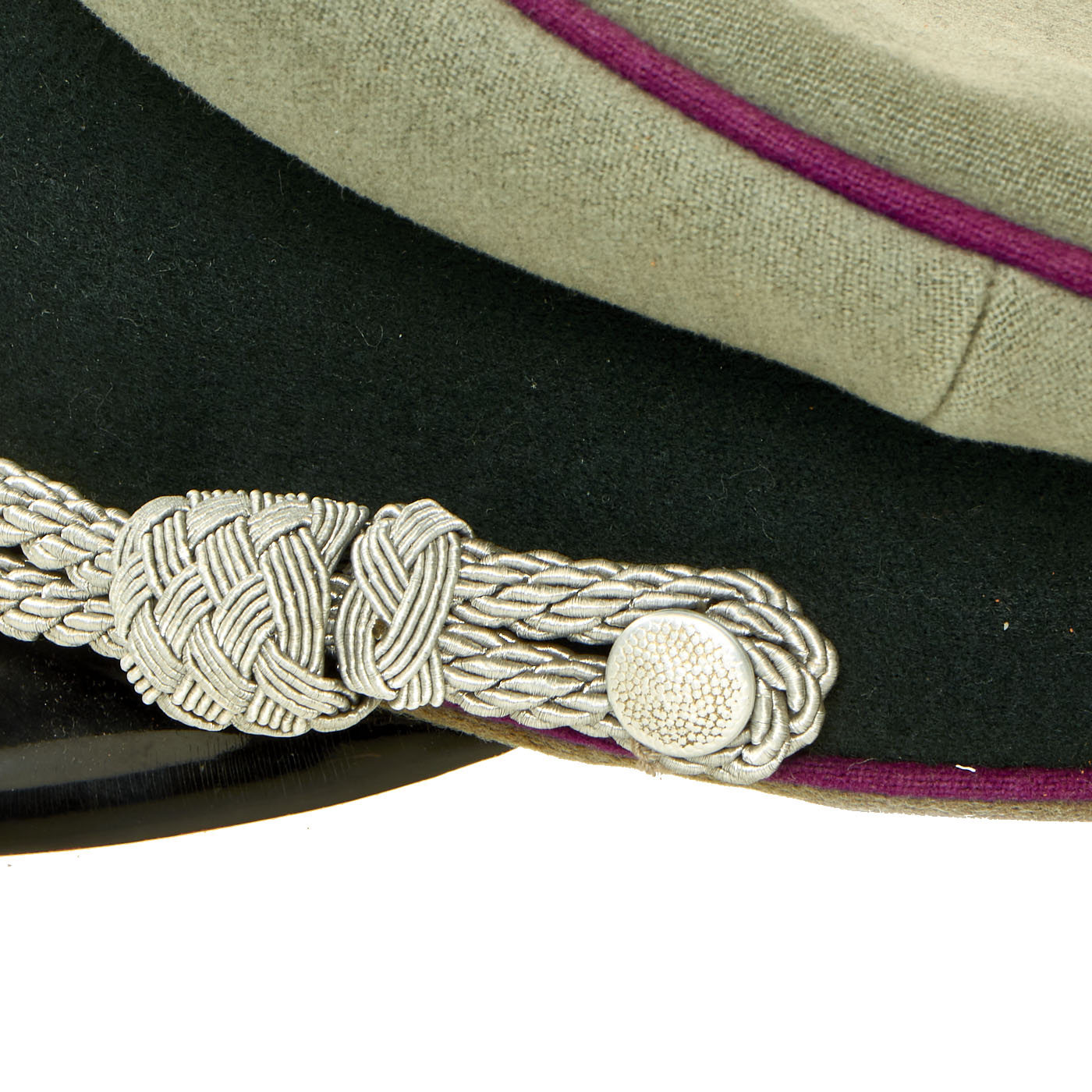
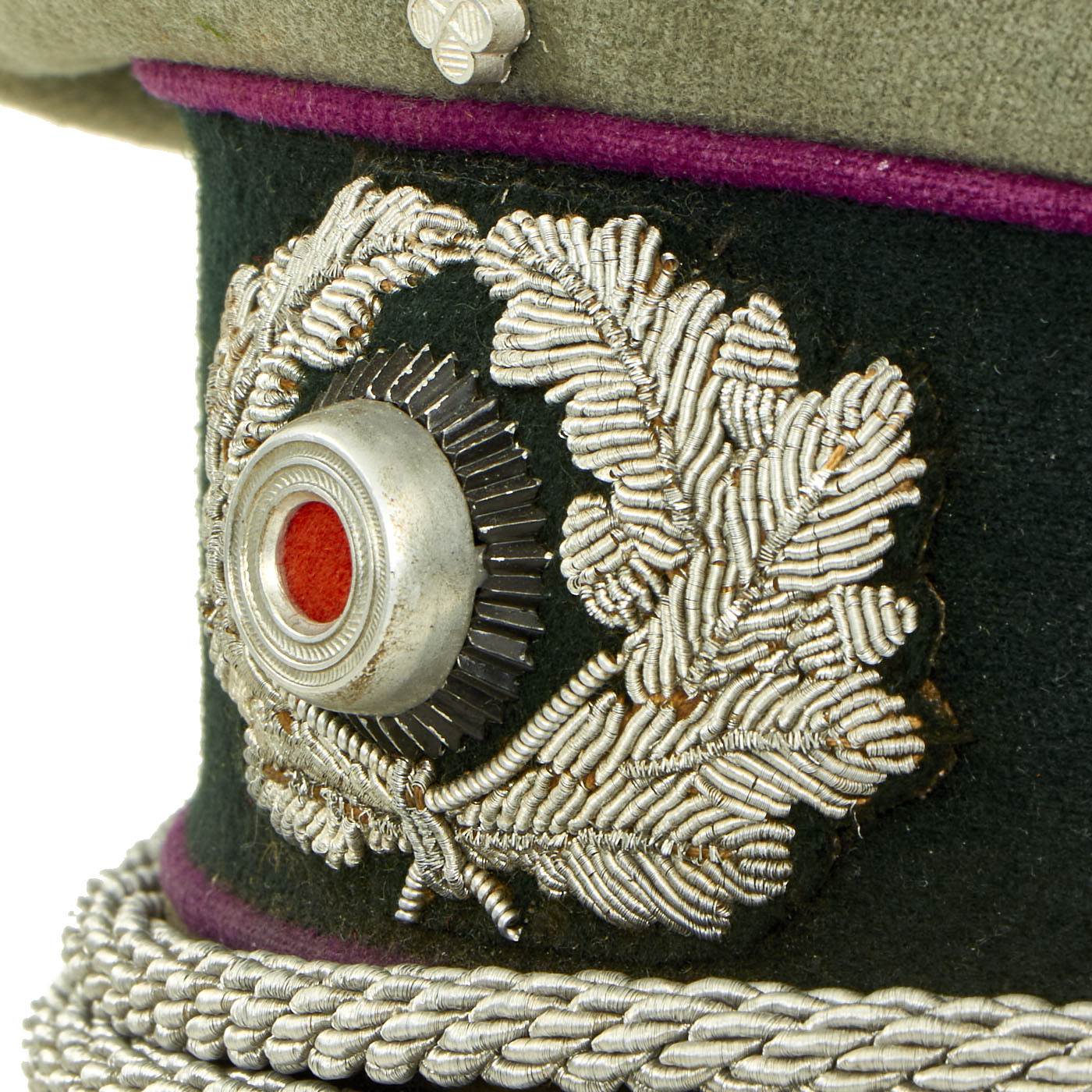
The crown is made from fine light field-gray doeskin wool. A wide dark bottle-green wool band encircles the cap, while three rows of purple branch piping identify the wearer as a military chaplain.
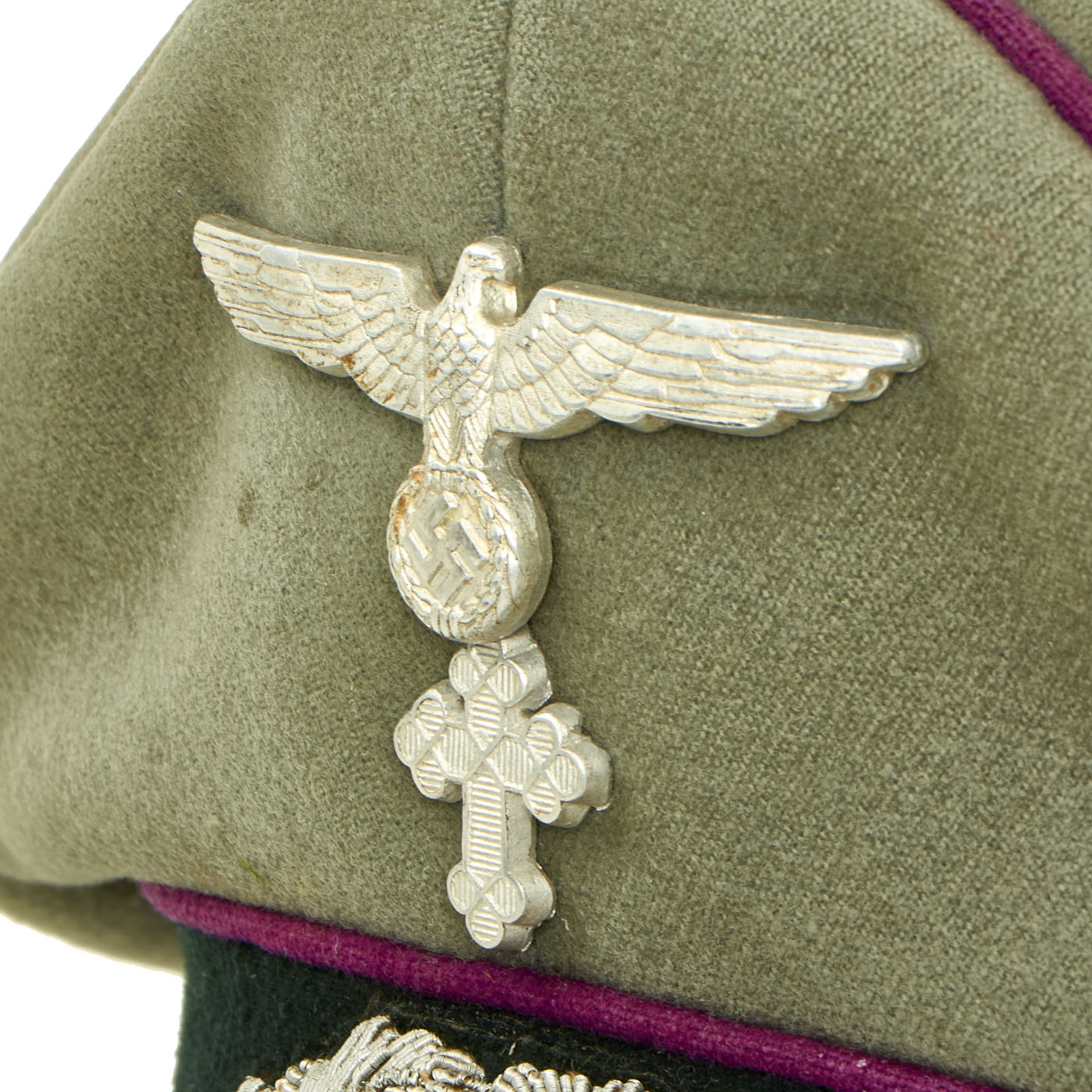
Purple was the recognized branch color associated with Heer chaplains. Chaplain visor caps were also distinguished by a small Christian cross positioned between the national eagle and the wreath and cockade.
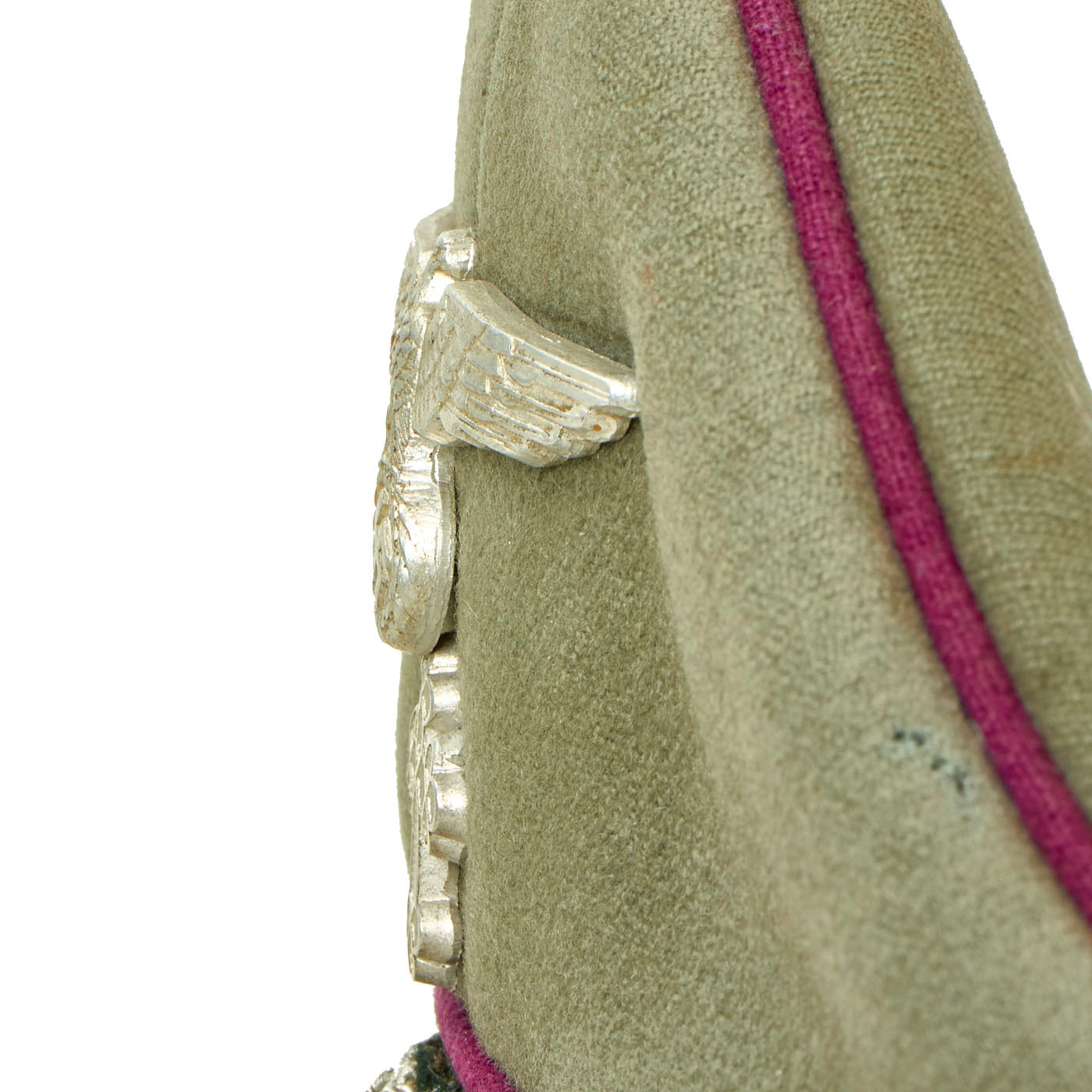
The cap retains a high-quality hand-embroidered silver-aluminum wreath and oak-leaf arrangement surrounding a metal cockade with a red felt center. An aluminum national eagle is mounted above, with the distinctive chaplain’s cross positioned beneath it.
Careful movement of the cross reveals darker, protected fabric underneath. This indicates that the cross has remained in the same location for many decades and was not recently added.
The visor is the black fiber type and retains the correct officer-quality silver chin cord secured by pebbled aluminum side buttons.
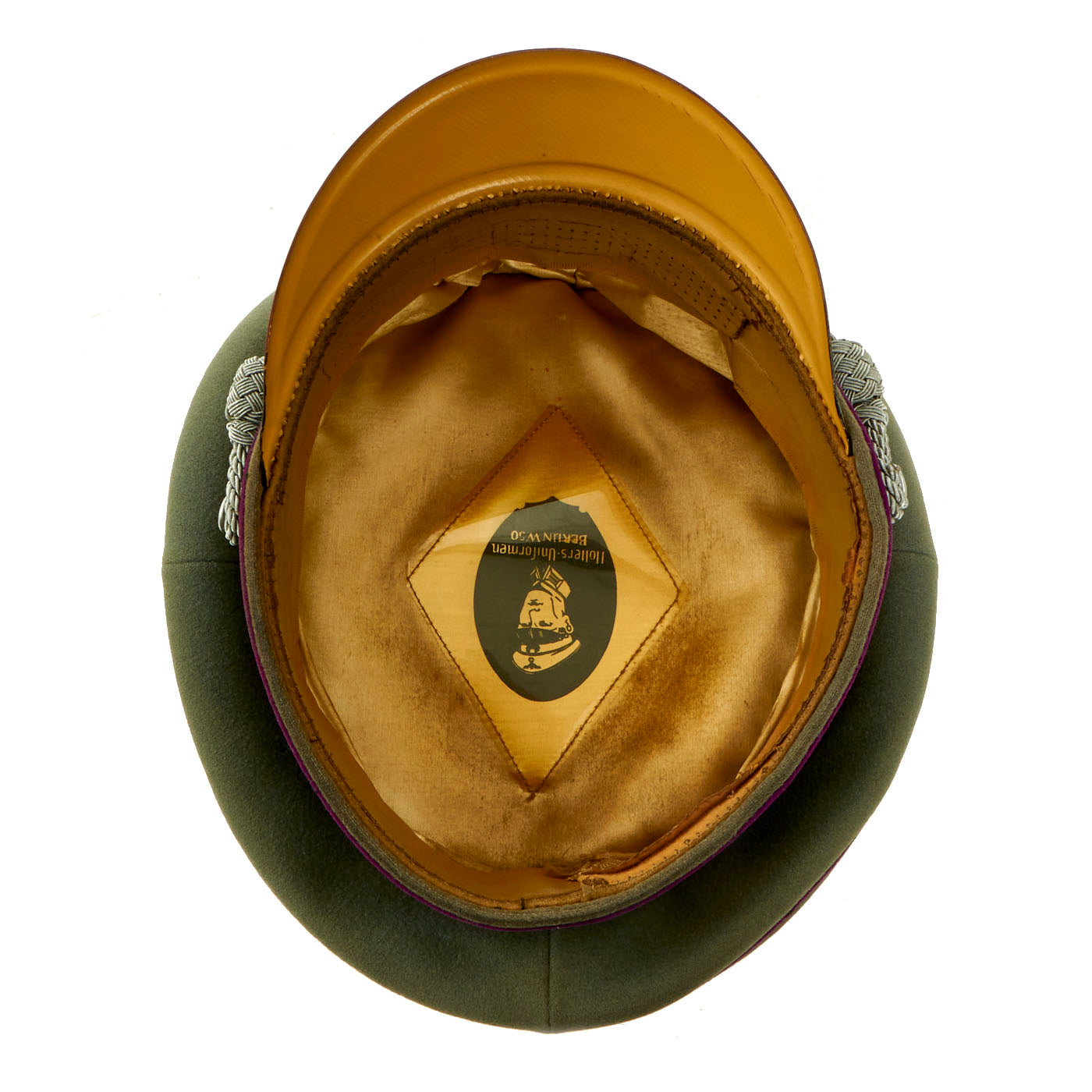
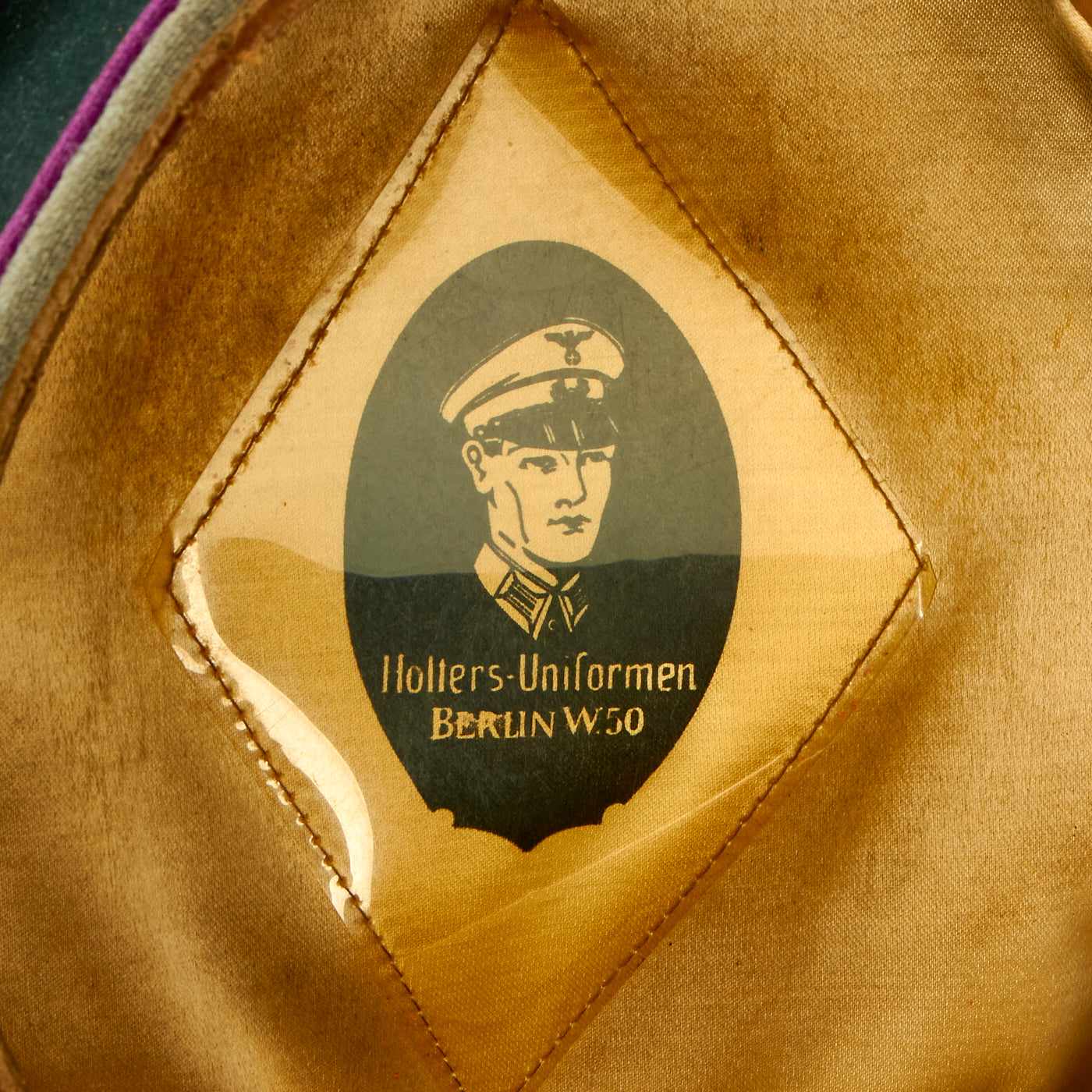
The interior is lined in deep golden-yellow silk and retains a full celluloid sweat diamond bearing the maker’s name and logo:
HOLTERS-UNIFORMEN
BERLIN W.50
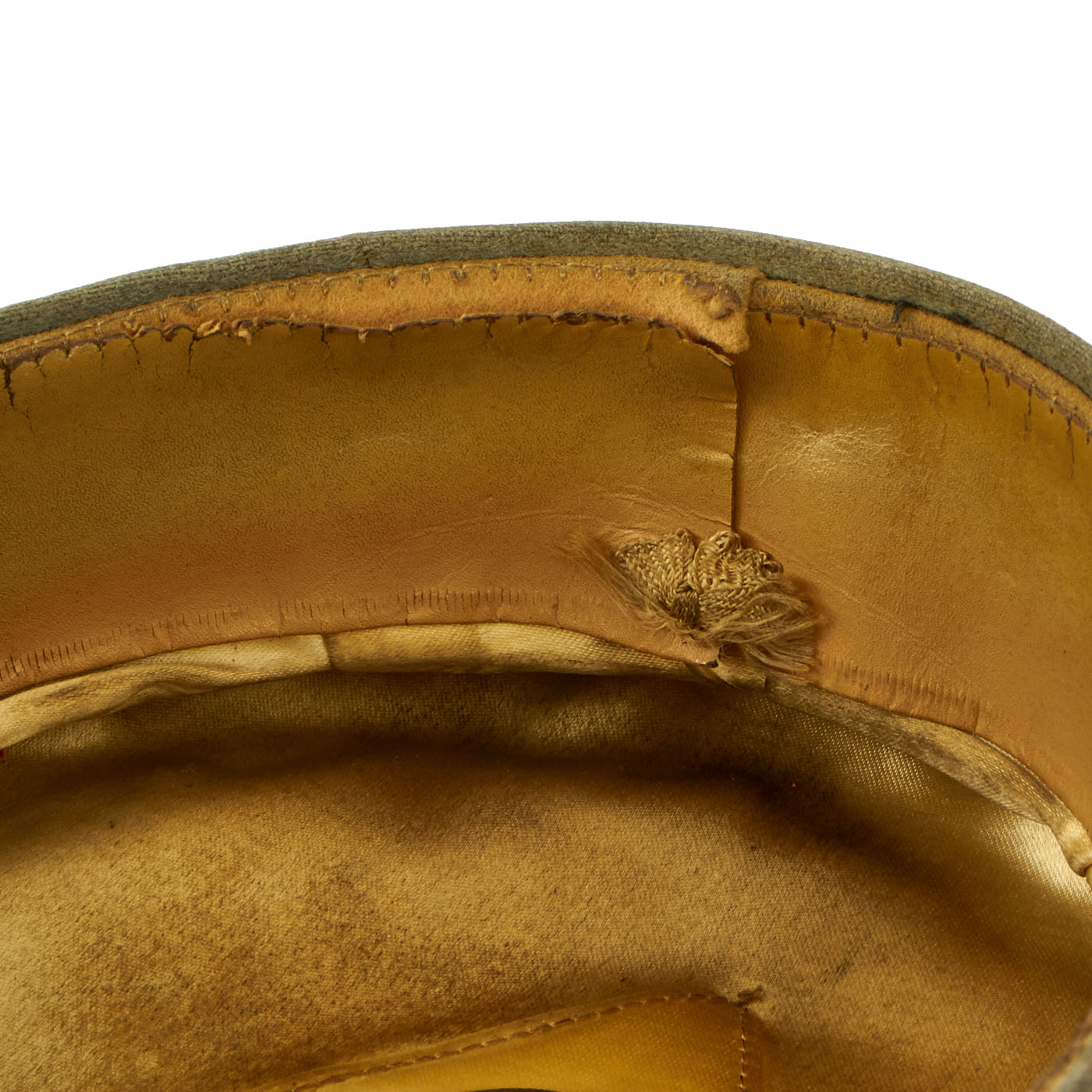
The leather sweatband has a ventilated front section and remains in good condition with visible signs of genuine wear and use.
The cap is in near-excellent overall condition. The wool remains clean and presents beautifully, with no significant moth damage or staining observed.
Three of the included wartime photographs show Schultheis wearing what appears to be this visor cap. The combination of the distinctive shape, insignia placement, proportions, and direct provenance provides a compelling photographic comparison, although no claim is made that photographic analysis can prove the identification with absolute certainty.
Original Photograph Collection
Ten original photographs are included, all depicting Dr. Heinrich Schultheis.
Three show him wearing what appears to be the included chaplain’s visor cap.
The photographs have handwritten dates, locations, or notations on their reverse sides and span both the prewar and wartime periods.
One particularly important photograph, dated August 13, 1941, shows Schultheis marching in a procession beside General Kurt Student.
Another photograph shows General Julius Ringel, commander of the 5th Mountain Division.
These photographs provide an invaluable visual record of Schultheis’ service and add considerable historical depth to the archive.
Identification Tag and Chaplain Insignia
The collection includes Schultheis’ military identification tag, marked: STAB D. 5. GEB. DIV.
This identifies the wearer with the staff of the 5th Mountain Division.
Also included is one original Heer chaplain’s collar tab, or Litzen. The single tab is loose and is not attached to a uniform.
Extensive Document Archive
The paperwork forms the historical core of this collection. It was translated and summarized for IMA by fluent German speaker and military historian John Capasso.
The documents extend from Schultheis’ prewar military service through his wartime chaplaincy and into his postwar religious and veterans’ activities. Together, they provide an unusually complete account of the administrative, spiritual, personal, and practical responsibilities of a German divisional chaplain.
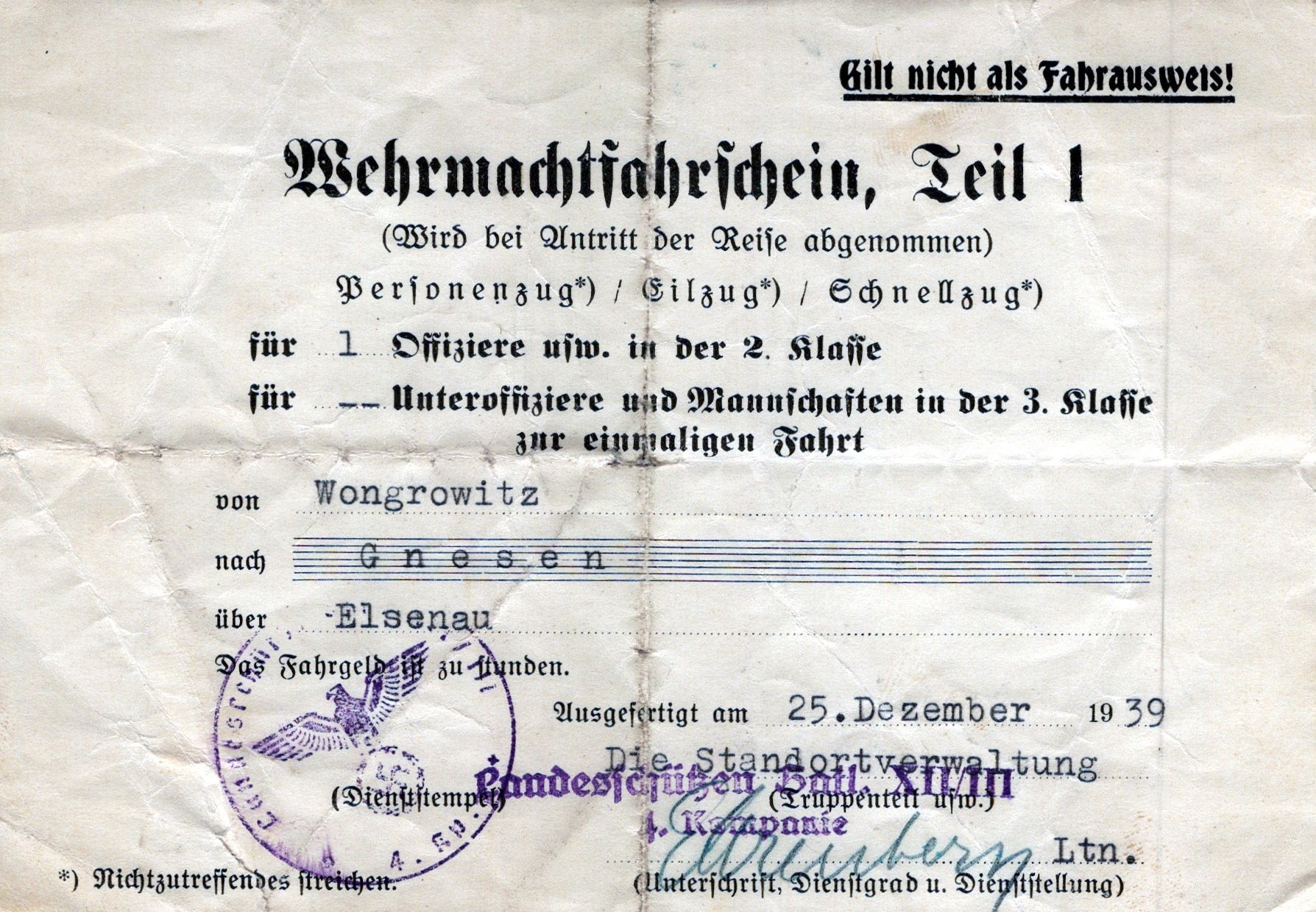
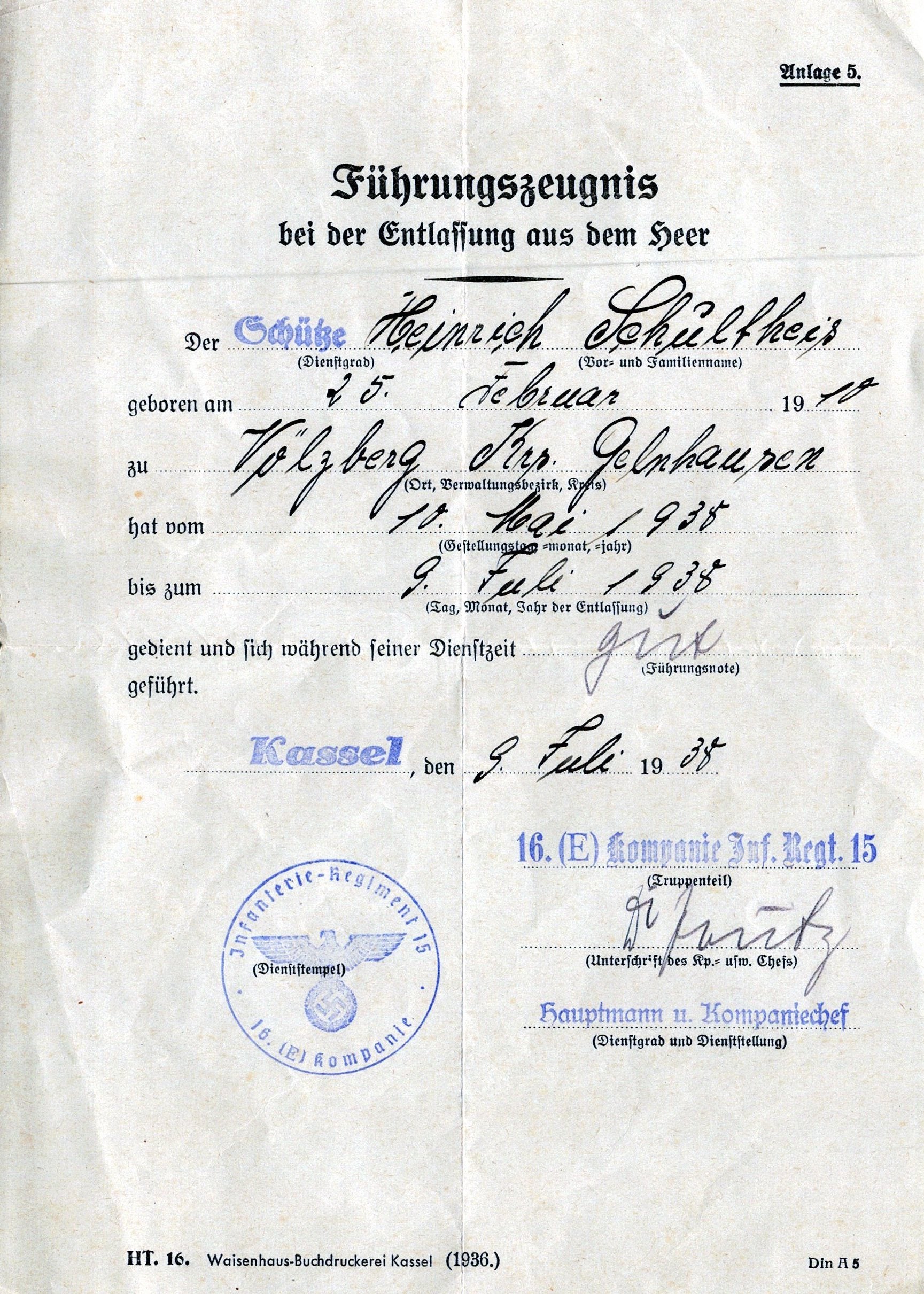
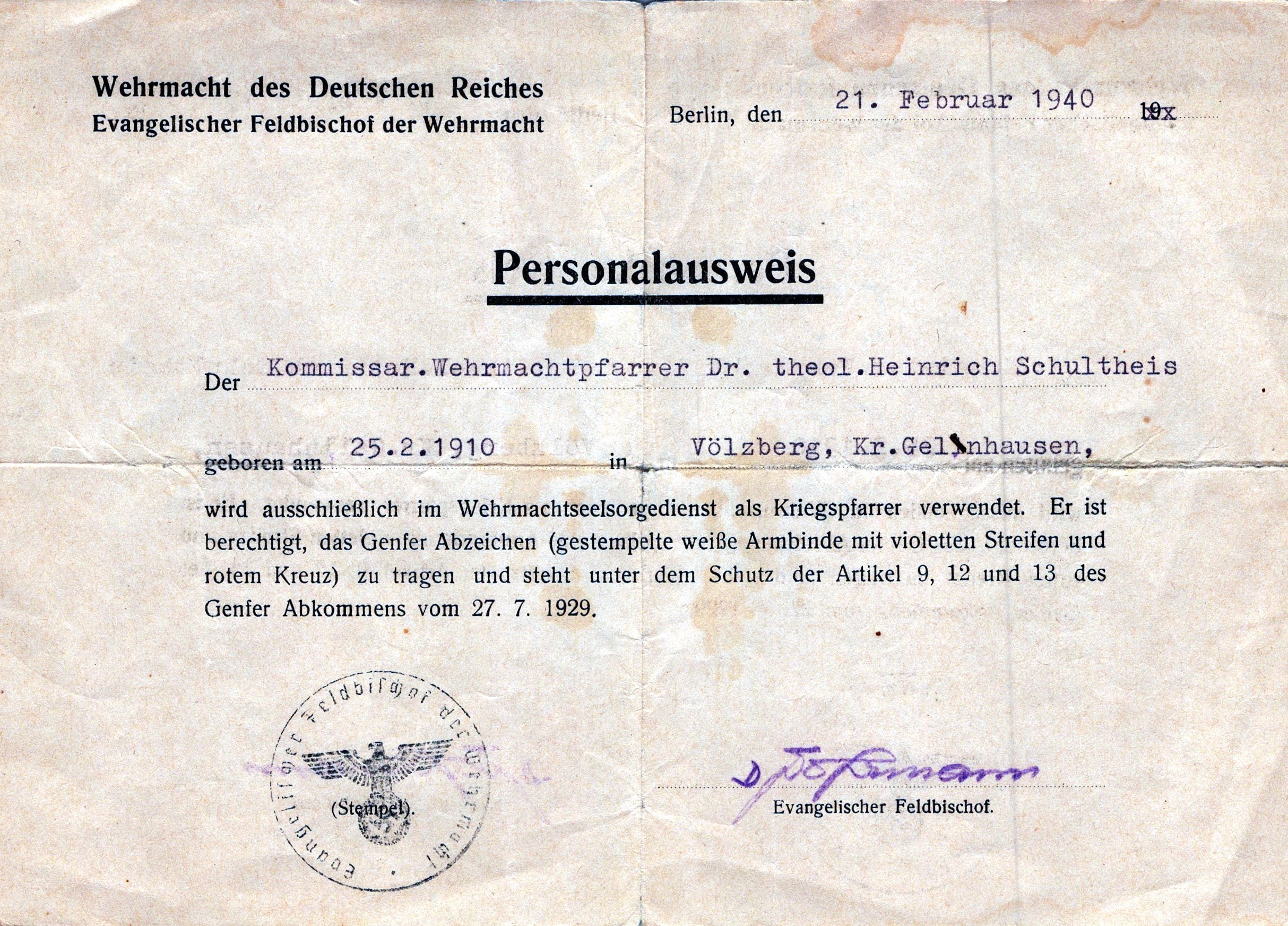
The archive includes appointment documents, orders, identification papers, military travel documents, a driver’s license, an award certificate, pastoral reports, correspondence, casualty and burial records, photographs, prisoner-of-war paperwork, and postwar documents.
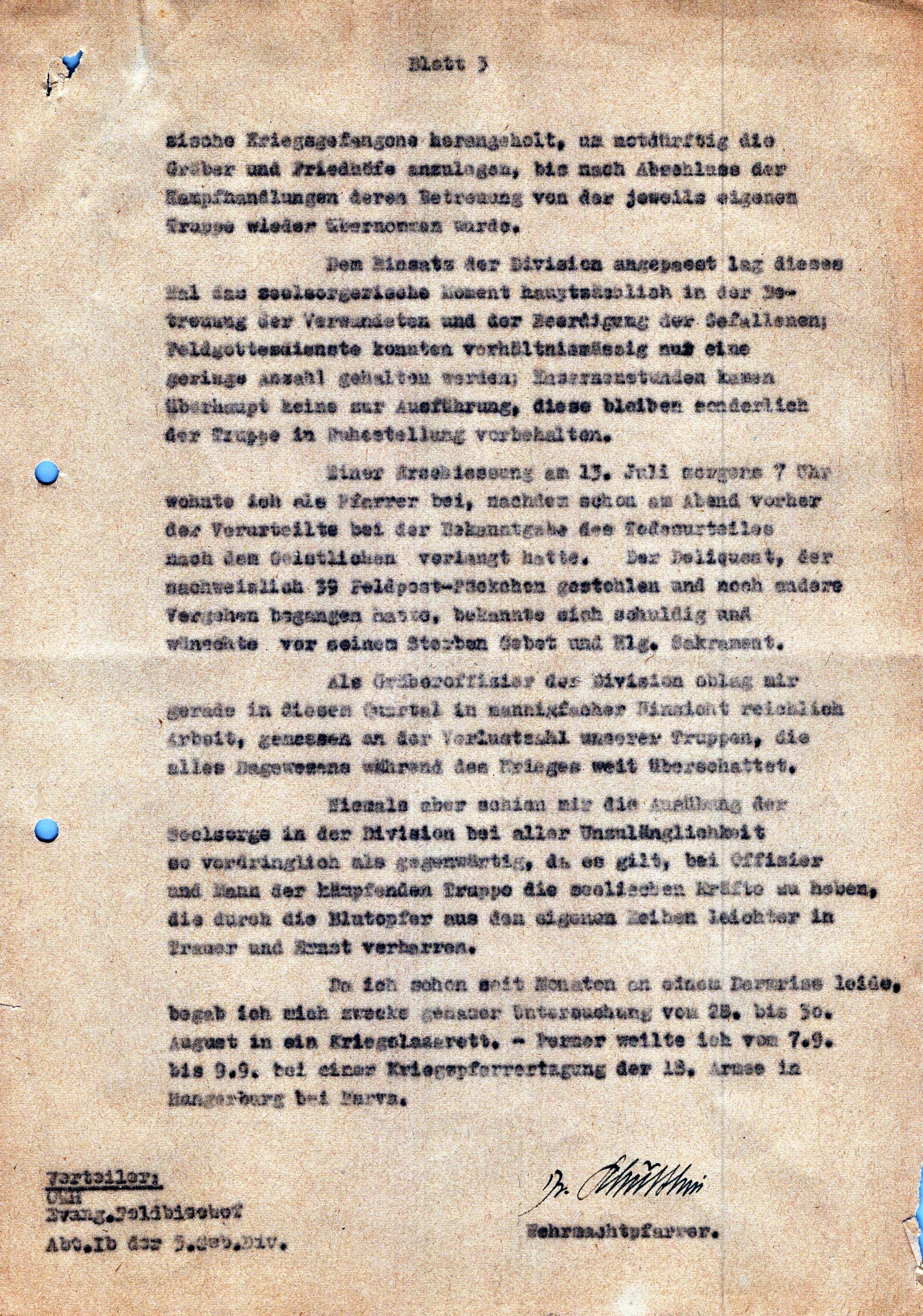
The reports contain historically important descriptions of frontline religious services, military discipline, executions, burial practices, casualty recording, relationships among denominations, conflicts between Christian ministry and NSDAP ideology, and the difficulties of providing pastoral care during active military operations.
Document Summary
Page 1 contains Schultheis’ “Im Namen des Deutschen Volkes” appointment as a Wehrmacht chaplain. It represents the equivalent of an officer appointment or commission and appears to carry a facsimile Führer signature.
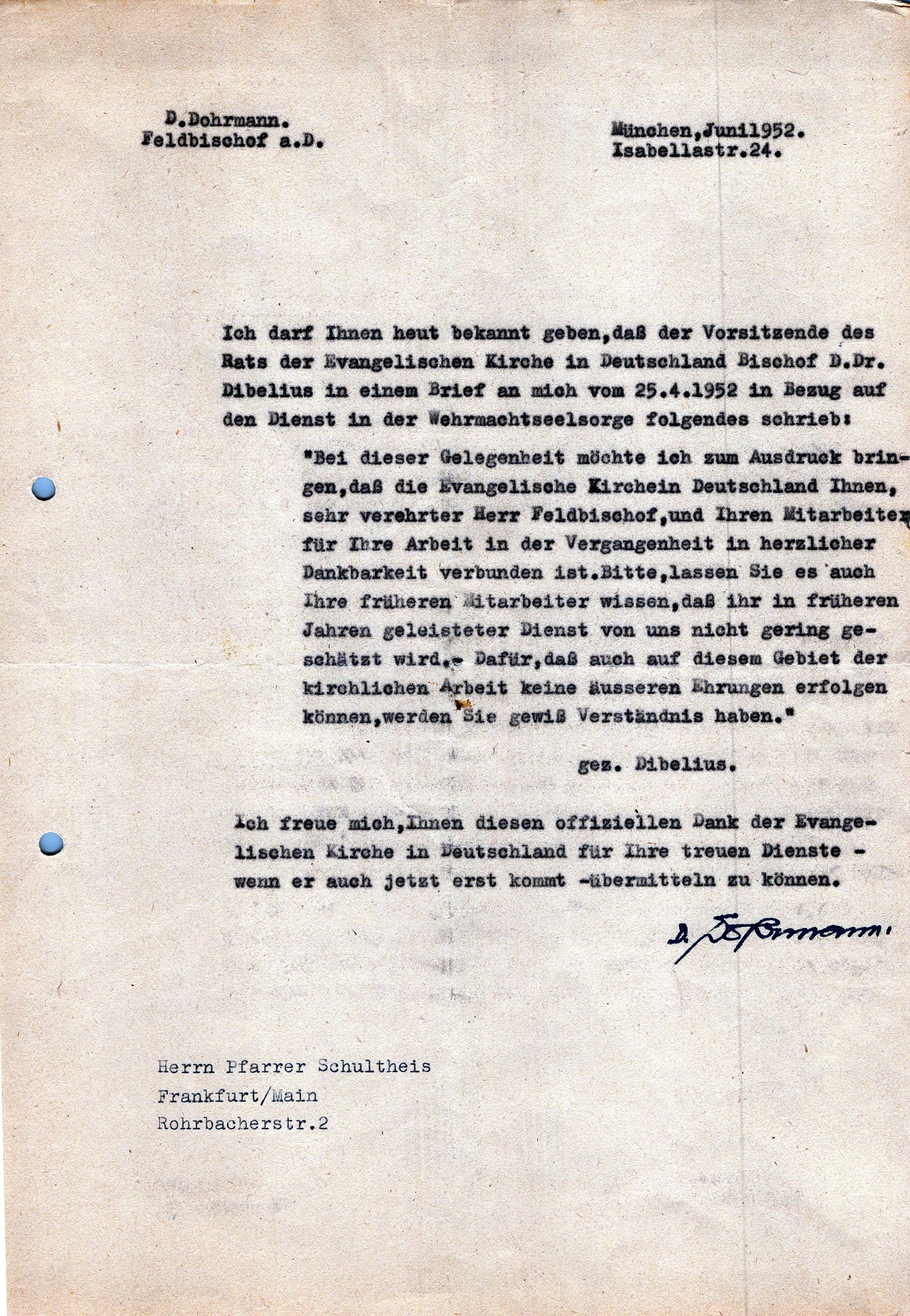
Page 3 contains a 1952 letter from retired Lutheran Field Bishop Dohrmann expressing thanks and recognition for the Lutheran chaplains who served in the Wehrmacht. The letter references Bishop F. K. Otto Dibelius.
Page 4 contains a 1951 letter written by Schultheis to a Herr Propst. Schultheis discusses plans to visit the German military cemetery at Pomezia near Rome for Good Friday on behalf of the German War Graves Commission. He also refers to establishing military cemeteries while serving with the 5th Mountain Division during 1943 and 1944.
Page 5 is Schultheis’ official release from prisoner-of-war status.
Page 6 contains part of a report concerning executions. Schultheis wrote about the need to notify the parents of condemned soldiers, the importance of a chaplain attending court proceedings and the pronouncement of a death sentence, and the spiritual care provided to a condemned man before execution. He also discussed offering final words of comfort at the execution post while avoiding prayers that the condemned person did not wish to hear.
Page 7 contains orders formally assigning Schultheis as a Wehrmacht chaplain in Frankfurt am Main.
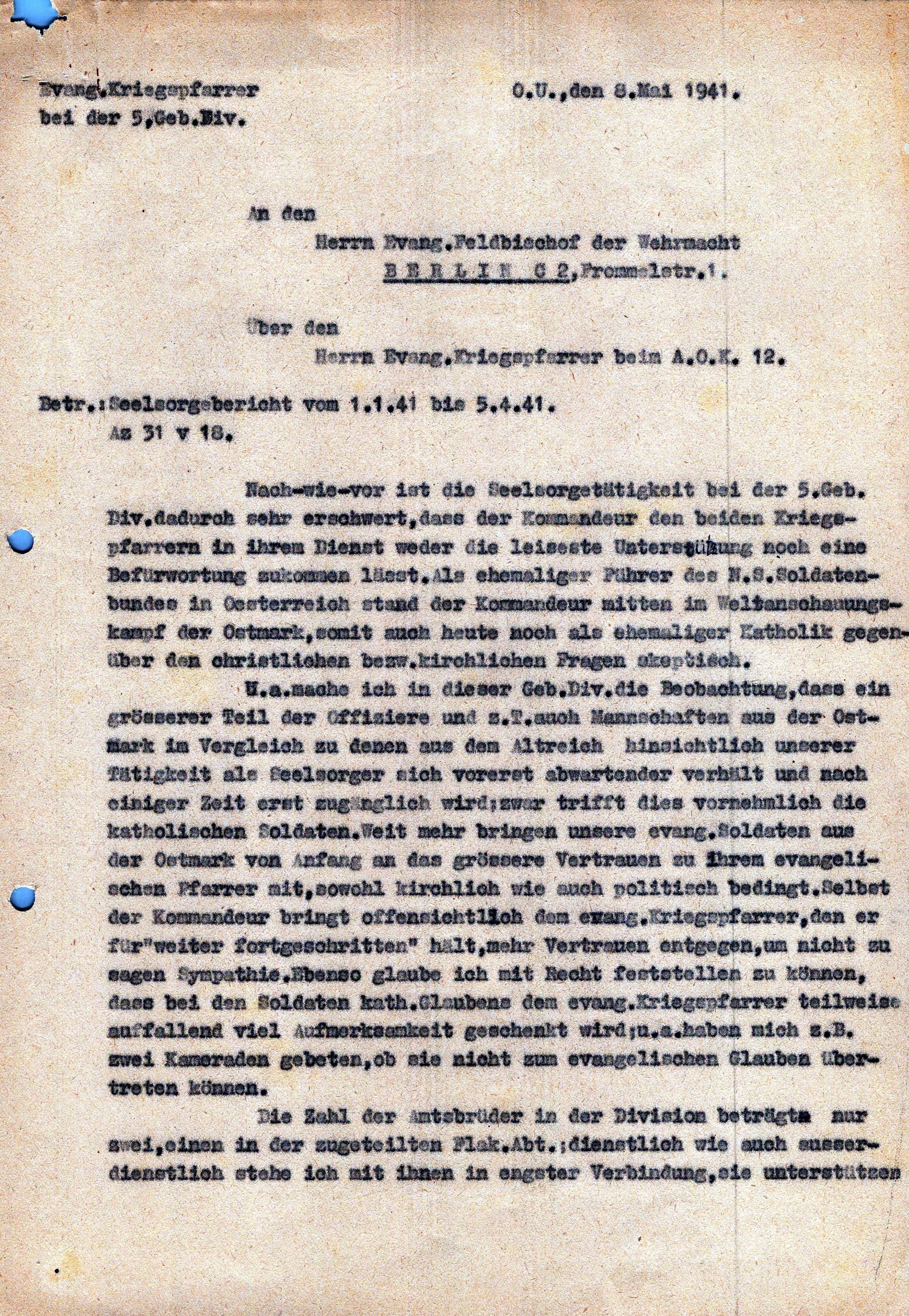
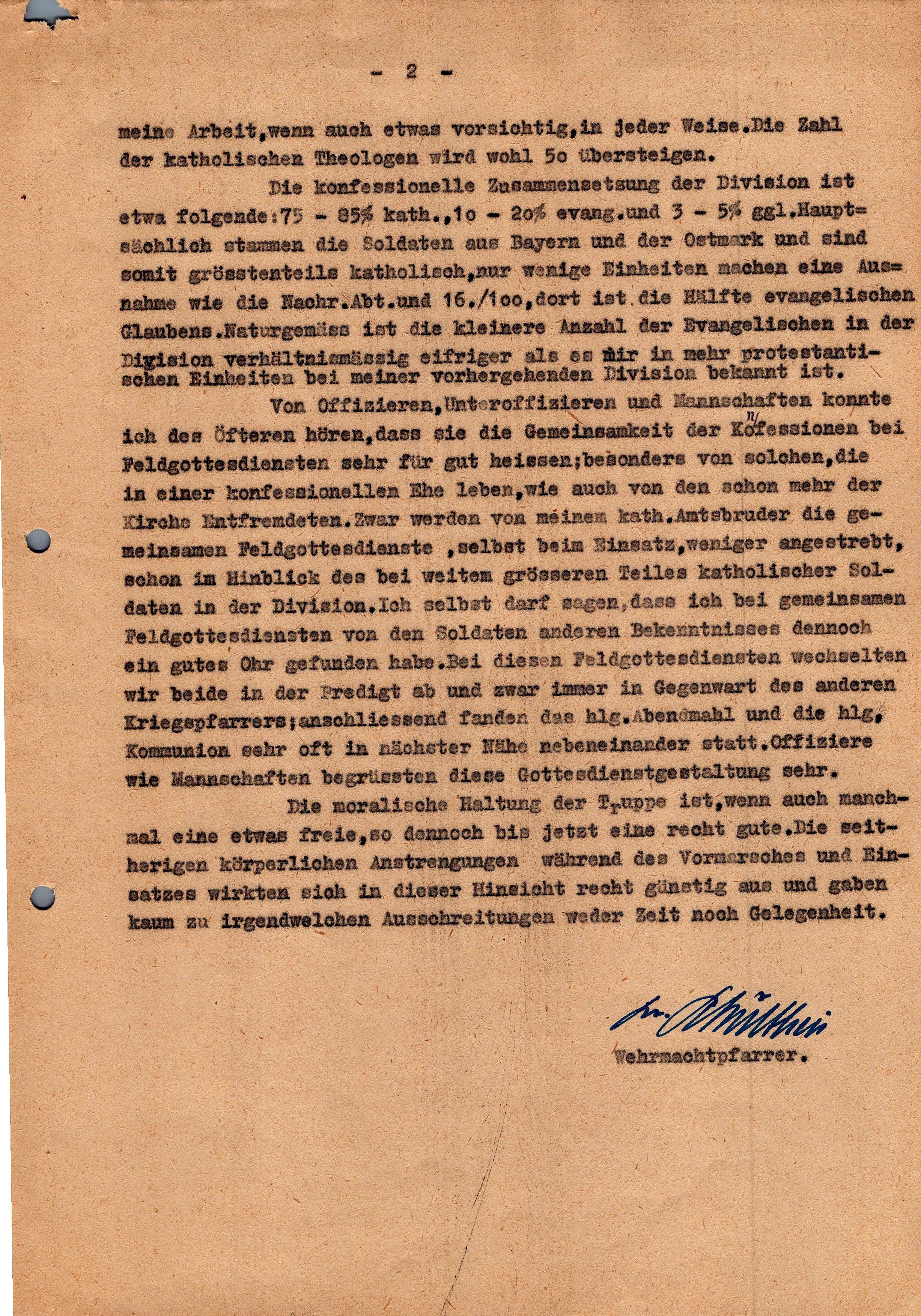
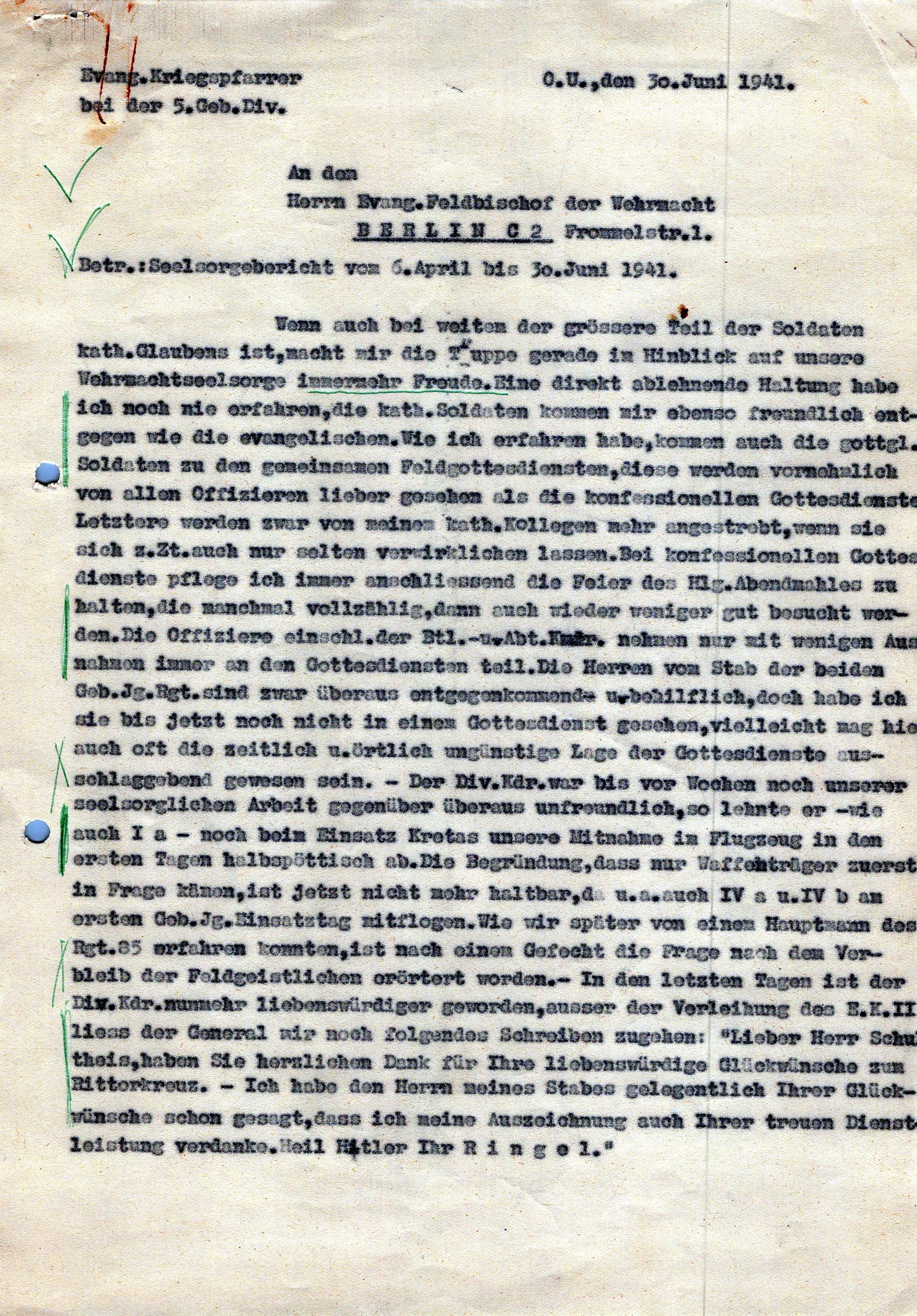
Pages 8 and 9 contain his pastoral report for January 1 through April 5, 1941. Schultheis describes difficulties caused by division commander Julius Ringel’s skepticism toward Christianity and the church. He records the division as approximately 75 to 85 percent Catholic, 10 to 20 percent Lutheran, and 3 to 5 percent generally religious without denominational affiliation.
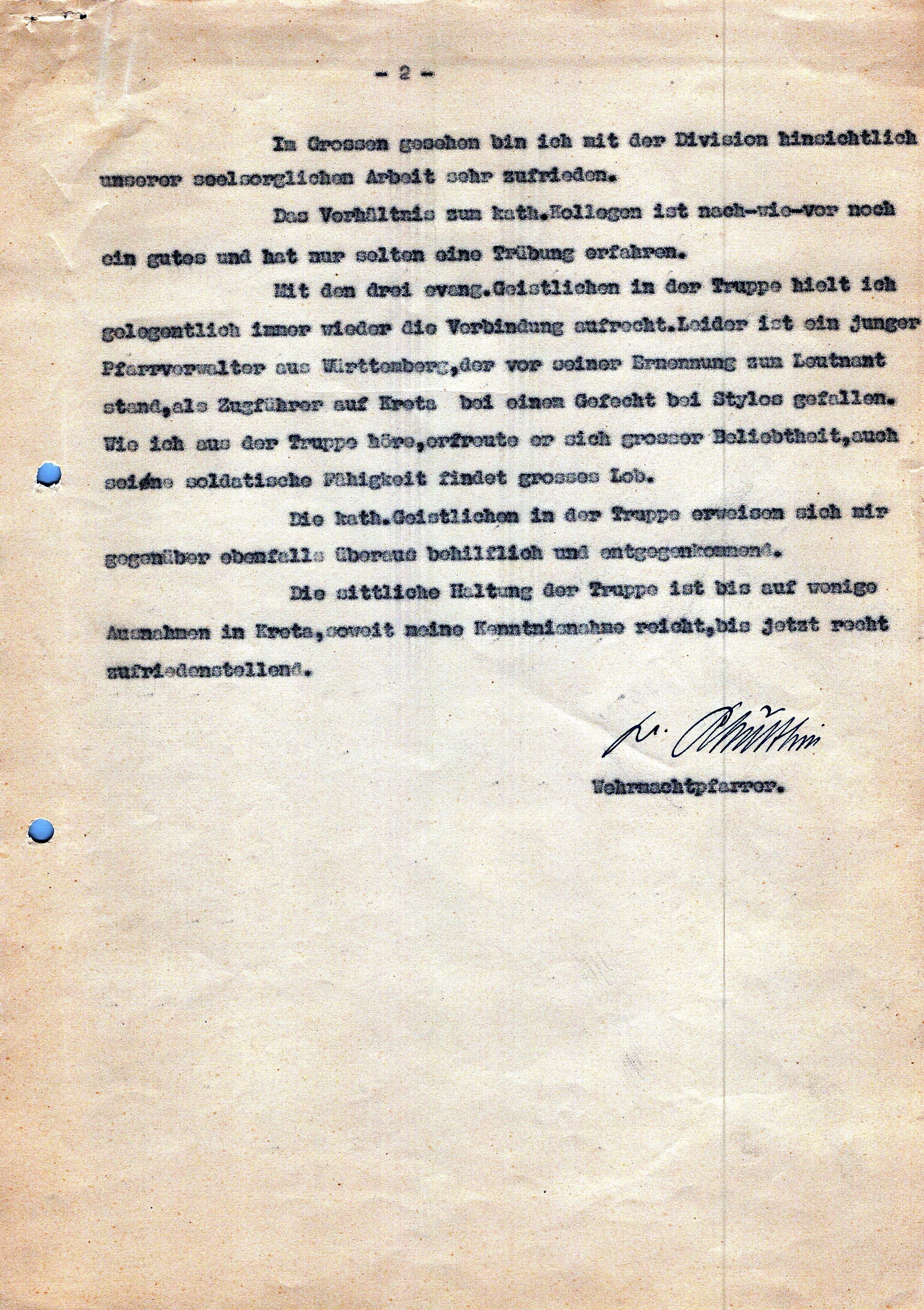
Page 10 contains part of the report covering April 6 through June 30, 1941. Schultheis describes entering combat on April 6 near the Rupel Pass, coming under machine-gun fire, assisting wounded men at a field aid station, ministering in field hospitals, and conducting burials during the advance into Greece. He also complains that mechanical problems with his passenger car restricted his ability to conduct services.
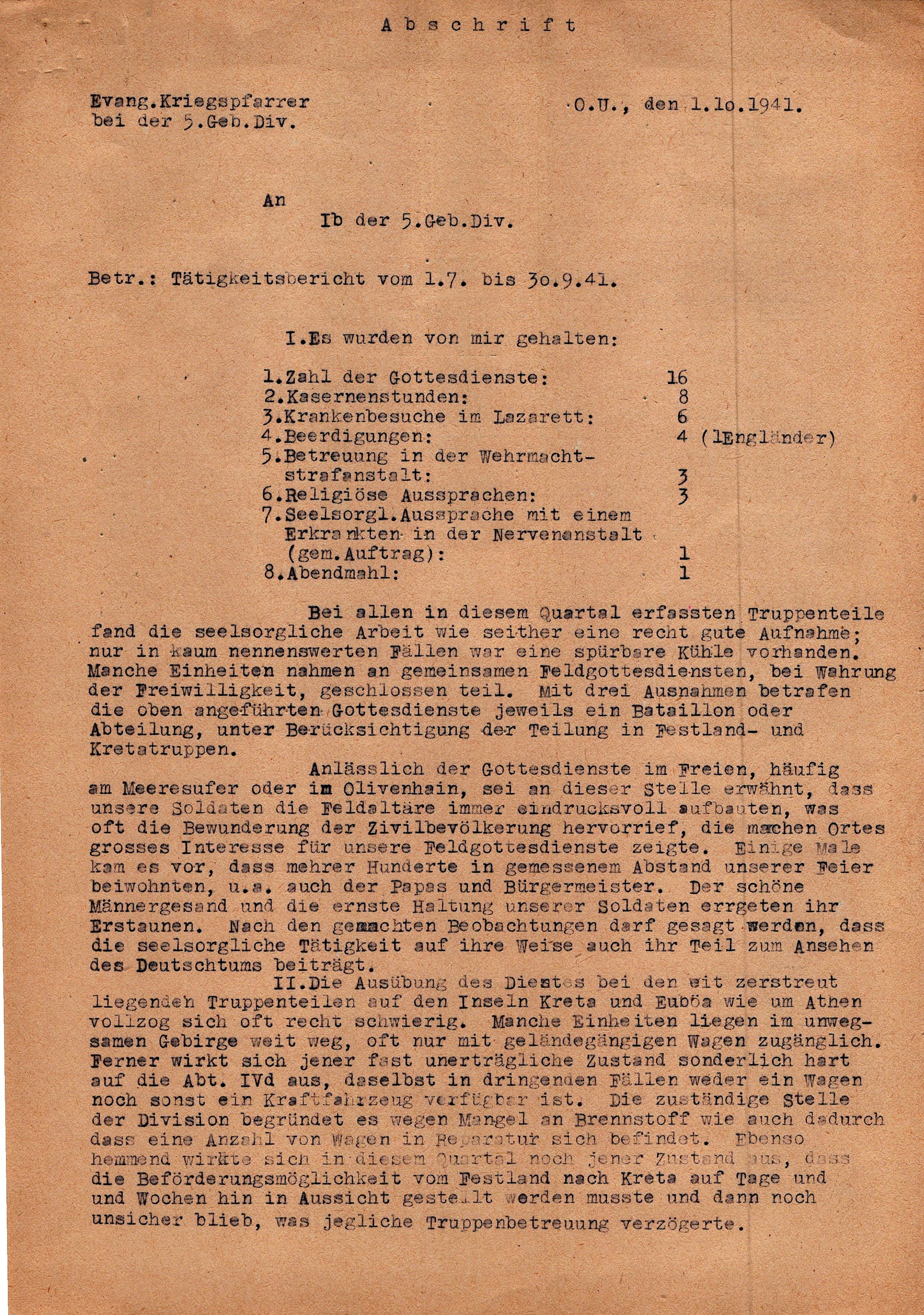
Page 11 contains the first page of his July 1 through September 30, 1941, report from Crete. Schultheis records the number of services, burials, and other pastoral duties and states that participation was generally voluntary and positive. His principal difficulty was reaching widely dispersed units in the Cretan mountains with an inadequate fuel allocation.
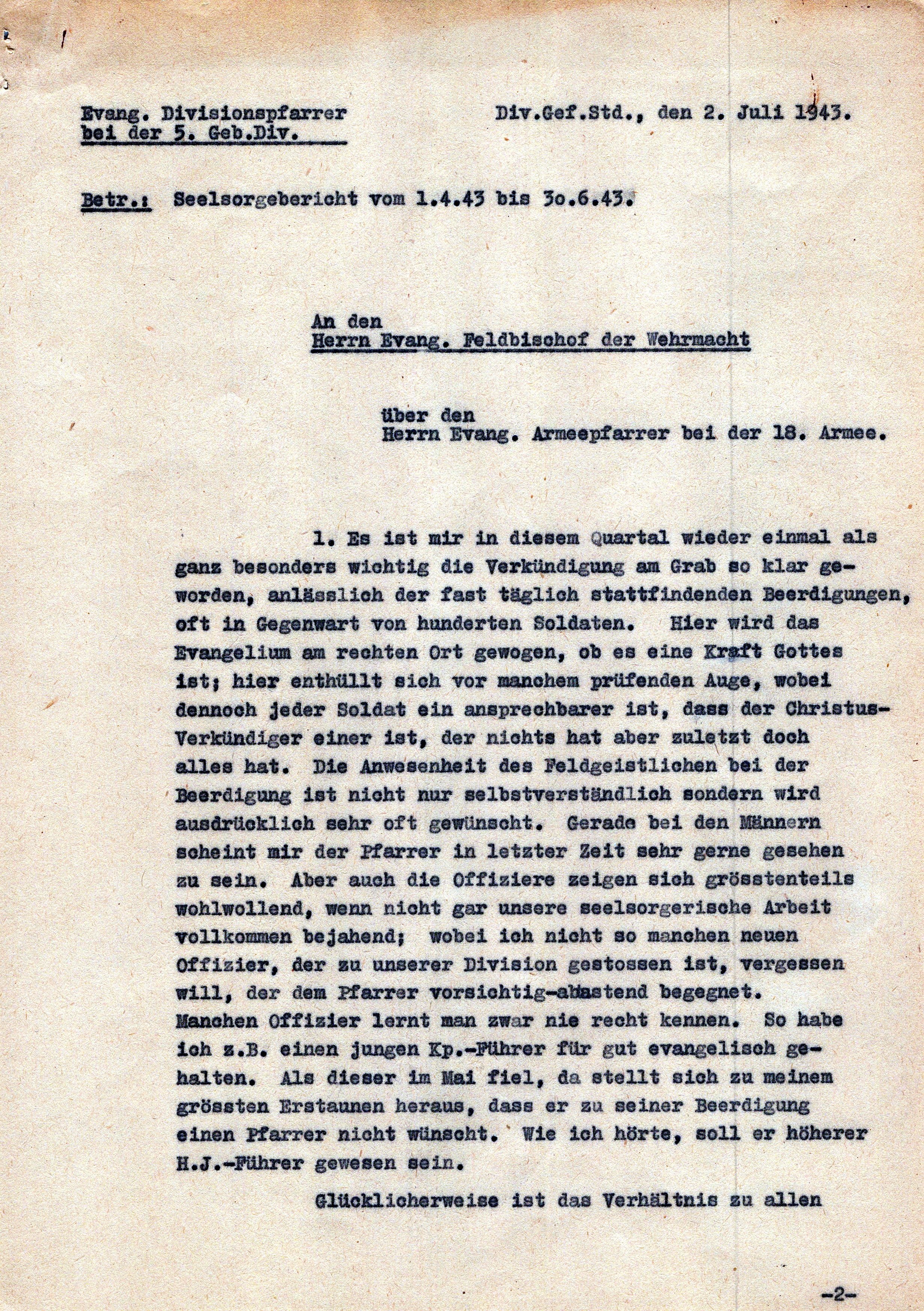
Page 12 contains the first page of his April 1 through June 30, 1943, report describing static warfare along the Neva Front near Leningrad and improvements to the trench and bunker system.
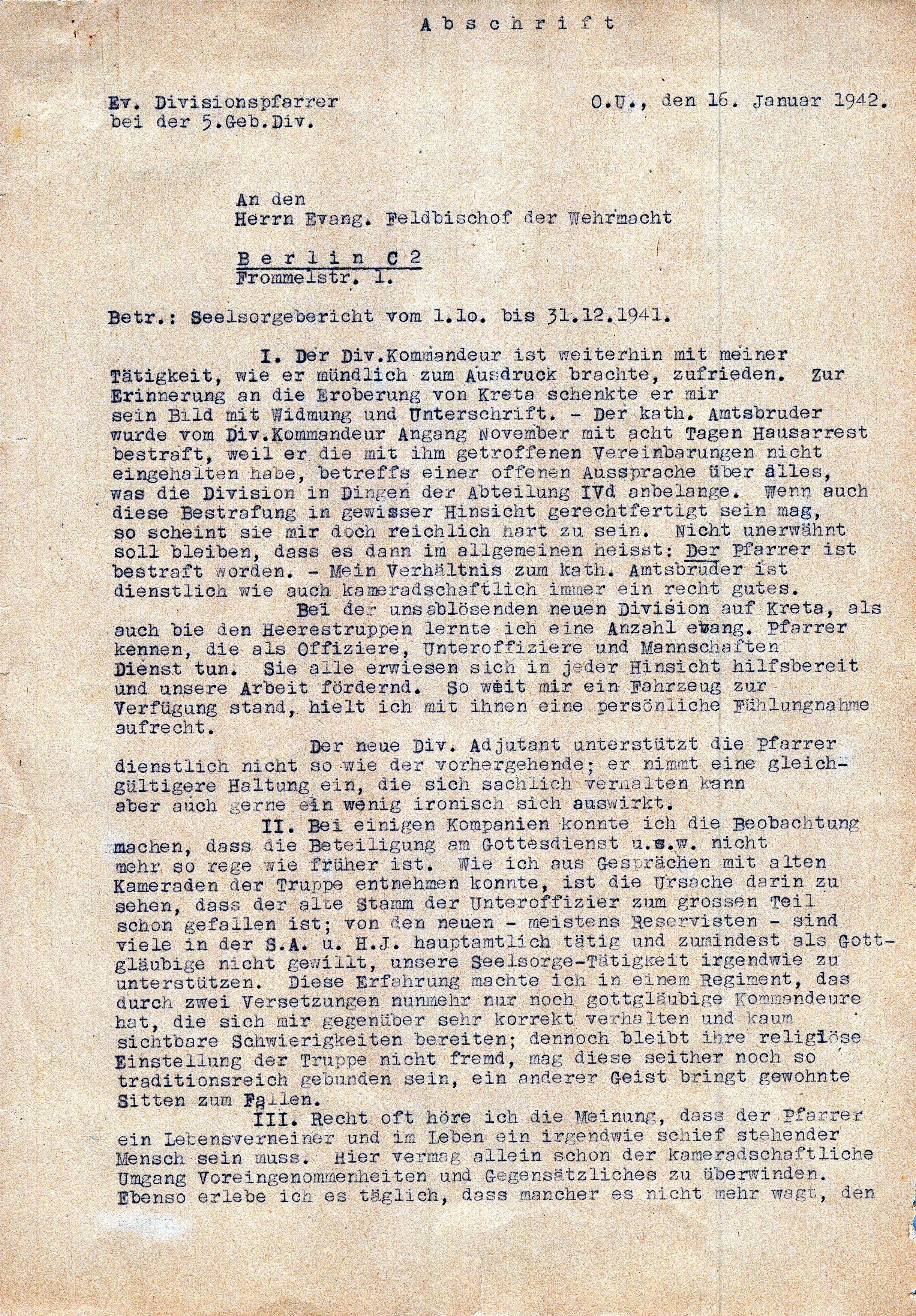
Another document identified as page 12 contains the first page of the October 1 through December 31, 1941, report. Schultheis describes positive relations with the Greek Orthodox Church and the difficulties caused by the division being divided among Crete, mainland Greece, and mounted formations. He ministered to members of the Heer, Kriegsmarine, and Luftwaffe but no longer had a vehicle.
Pages 14 and 15 contain a fragmentary report, probably dating from 1942 in Russia. Schultheis discusses services with artillery and Jäger formations and states that his most demanding responsibility was burying soldiers killed in action. Even during relatively quiet static warfare, casualties continued regularly.
Pages 16 through 18 contain the July 1 through September 30, 1942, report. Schultheis describes the division’s hardest and most costly combat to that point, sitting with dying men and praying with them, and increasing resistance to his chaplaincy work from the divisional command. The second page contains a copy of his complaint to Army Group North, while the third contains the commanding general’s request for clarification from subordinate commanders.
Page 19 contains the beginning of the January 1 through March 31, 1942, report, covering Schultheis’ return from Greece to Germany and Austria.
Page 20 contains the first page of the April 1 through June 30, 1942, report. Schultheis reached his division outside Leningrad on May 1, 1942, and described the transition to static warfare. He also identified a suitable location at Szablino-Uljanowka for a divisional cemetery.
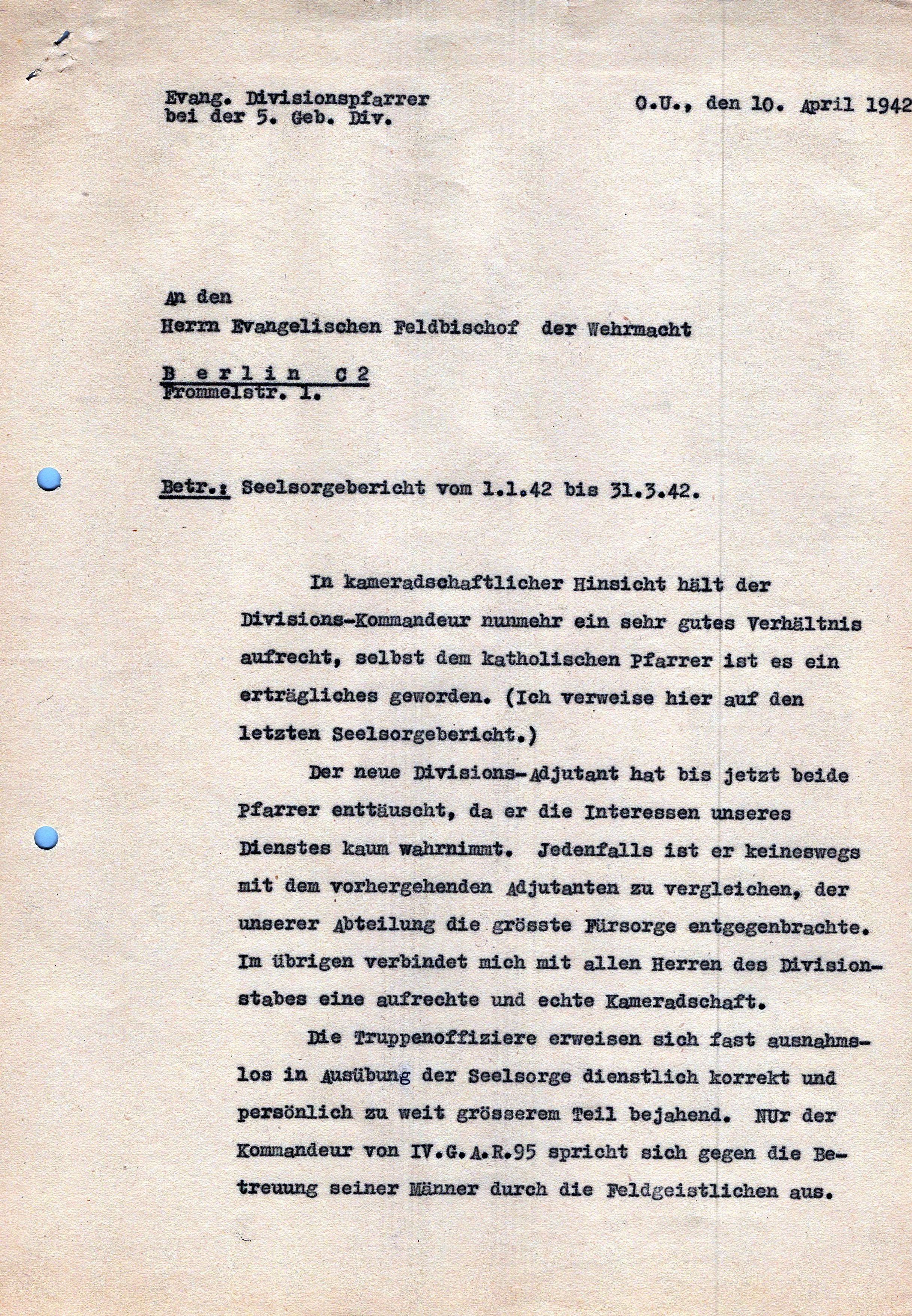
Page 21 is a report to the Lutheran Field Bishop of the Wehrmacht covering January 1 through March 31, 1942. Schultheis complains that the new divisional adjutant showed little interest in supporting the chaplains or their mission.
Pages 24 through 26 contain another portion of the July 1 through September 30, 1941, report from Crete. Schultheis discusses the division’s religious composition, his working relationship with Catholic chaplains, and moral conditions on the island. He also mentions soldiers hospitalized with venereal disease who had probably contracted it at a military brothel.
Pages 27 through 30 contain the April 1 through June 30, 1942, report from the Pavlovsk area near Leningrad. Schultheis is now identified as divisional Lutheran chaplain. He discusses requesting transfer to a Panzer division or Luftwaffe formation with a larger Lutheran population, the development of trench warfare, and his burial of 57 soldiers. He also addresses relationships between German soldiers and Russian women and the opening of another brothel in the area.
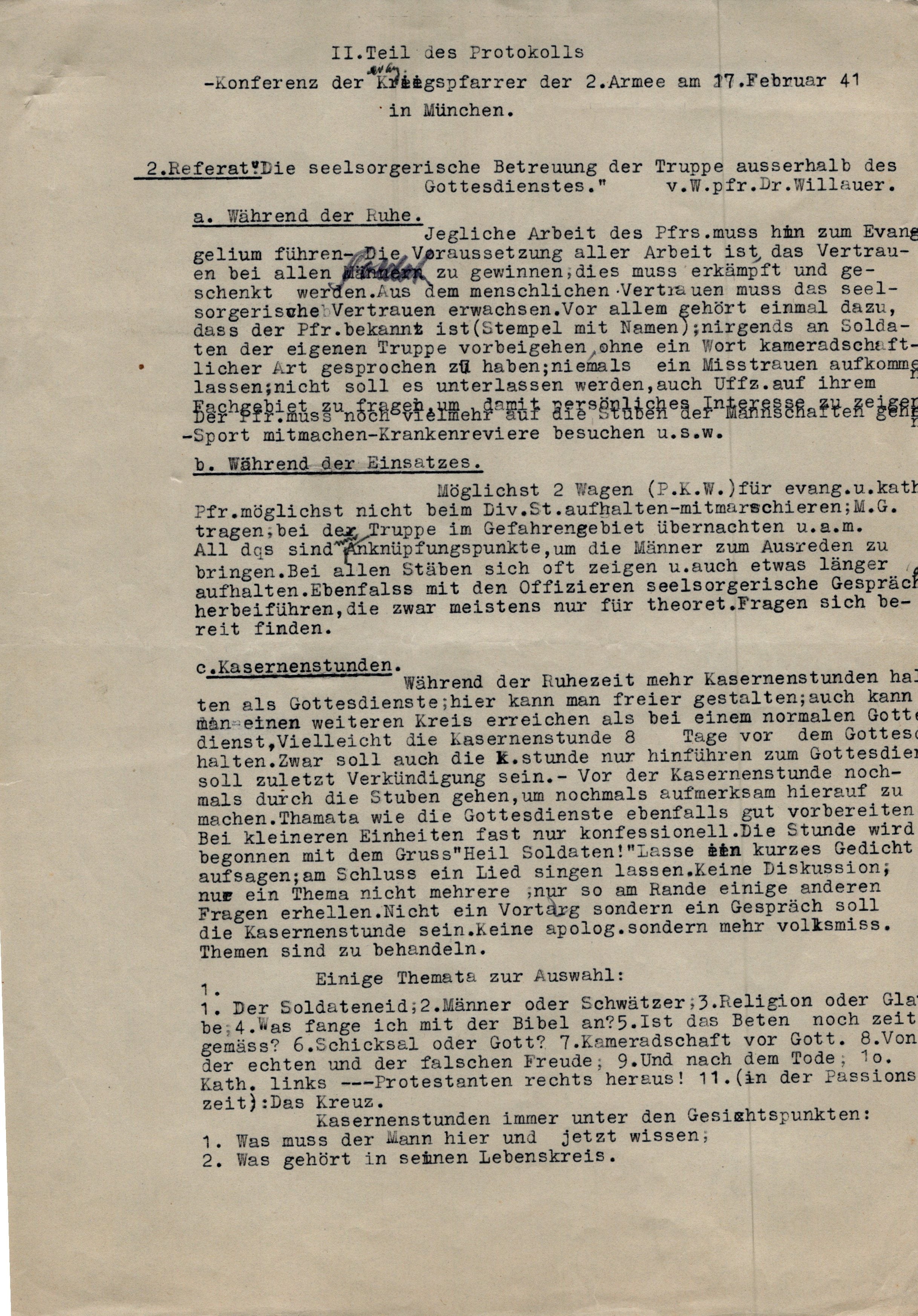
Page 32 contains part of the program from a February 1941 conference of 2nd Army military chaplains. The conference addressed the duties of chaplains behind the front, during combat operations, and at military installations.
Pages 33 through 36 contain a report for April 1 through June 30, 1942. Schultheis expresses concern over declining interest in having chaplains present at nearly daily burial services. He describes the death of a company commander who had specifically requested that no chaplain attend his funeral and notes that the officer had previously been a Hitler Youth leader. He also discusses the level of support received from divisional commanders and the opening of another brothel, which he stated most of his division avoided.
Page 37 contains the December 15 through December 31, 1940, report. Schultheis comments on the division commander’s lack of religious interest and describes Christmas and New Year’s services.
Pages 38 and 39 contain the report covering October 1 through December 15, 1940. At this stage, Schultheis was still in Germany and was primarily ministering to French and British prisoners of war.
Pages 40 and 41 contain part of the July 1 through September 30, 1942, report from Russia. The surviving text is difficult to read.
Pages 42 through 52 contain the original photographs. Page 44 shows General Julius Ringel.
Page 53 contains Schultheis’ personal identification card issued by the Lutheran Field Bishop of the Wehrmacht. It establishes his protected status as a noncombatant under the Geneva Convention.
Page 54 is Schultheis’ military discharge certificate documenting his release from prior service as a private on July 9, 1938.
Page 55 contains a Wehrmacht rail travel document for transportation to Gnesen in Posen.
Pages 56 and 57 contain Schultheis’ Wehrmacht driver’s license.
Page 58 is the original Iron Cross Second Class award certificate named to Schultheis and signed by General der Flieger Kurt Student.
Pages 59 and 60 contain another portion of the April 6 through June 30, 1941, report. It includes correspondence from Julius Ringel thanking Schultheis for congratulating him upon receiving the Knight’s Cross. Ringel stated that he passed the congratulations to his staff because he credited their loyal service with making the award possible.
Page 62 contains part of a report in which Schultheis describes ministering to a soldier sentenced to death for stealing 39 military postal packages intended for other servicemen. Schultheis prayed with the condemned man and administered the sacrament before the execution.
Pages 63 through 66 contain the Verzeichnis der Beerdigten, a roster of German soldiers buried under Schultheis’ supervision between April 1 and June 30, 1943. It formed part of his second-quarter 1943 report and reflects his duties as divisional graves registration officer.
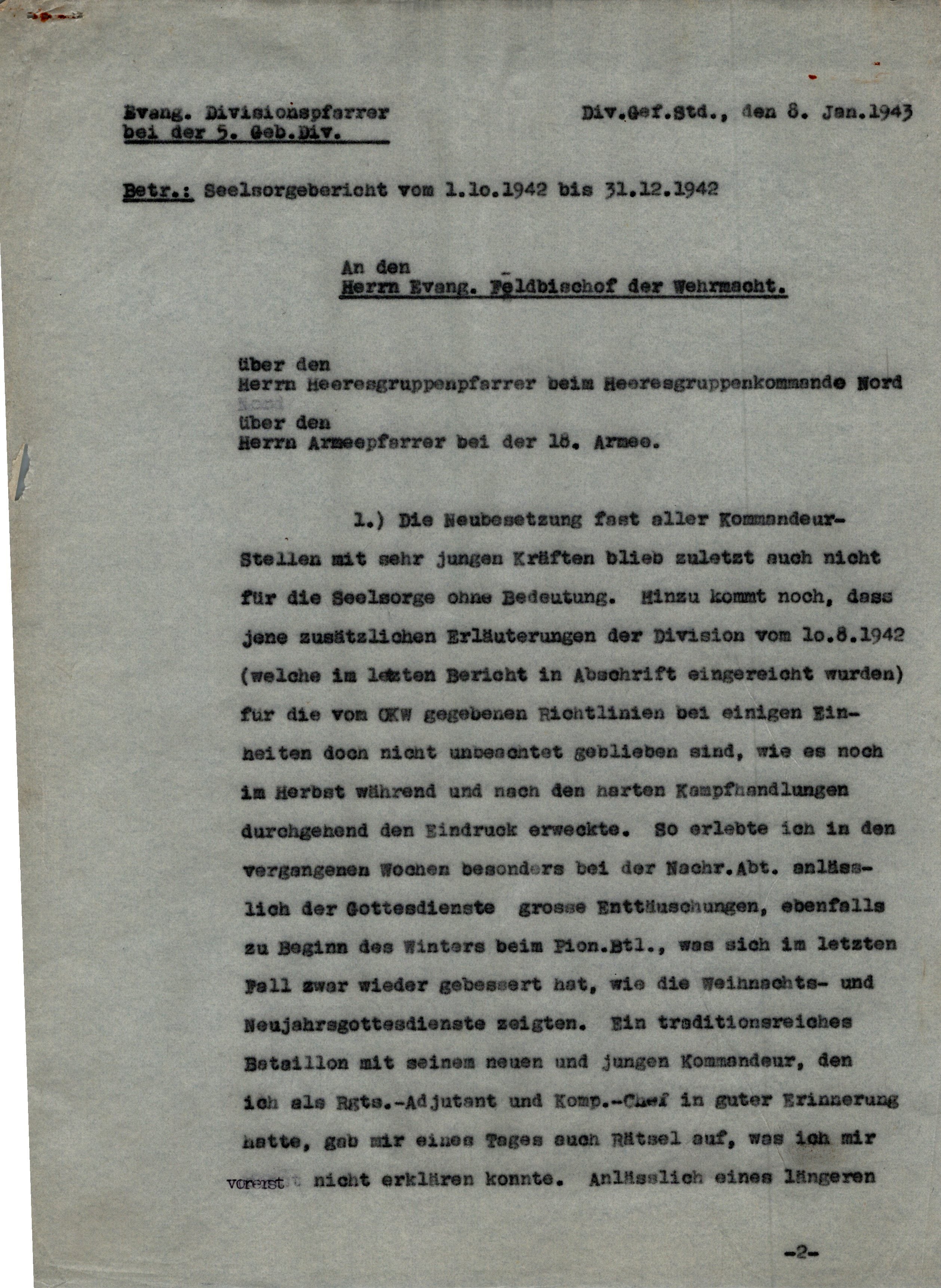
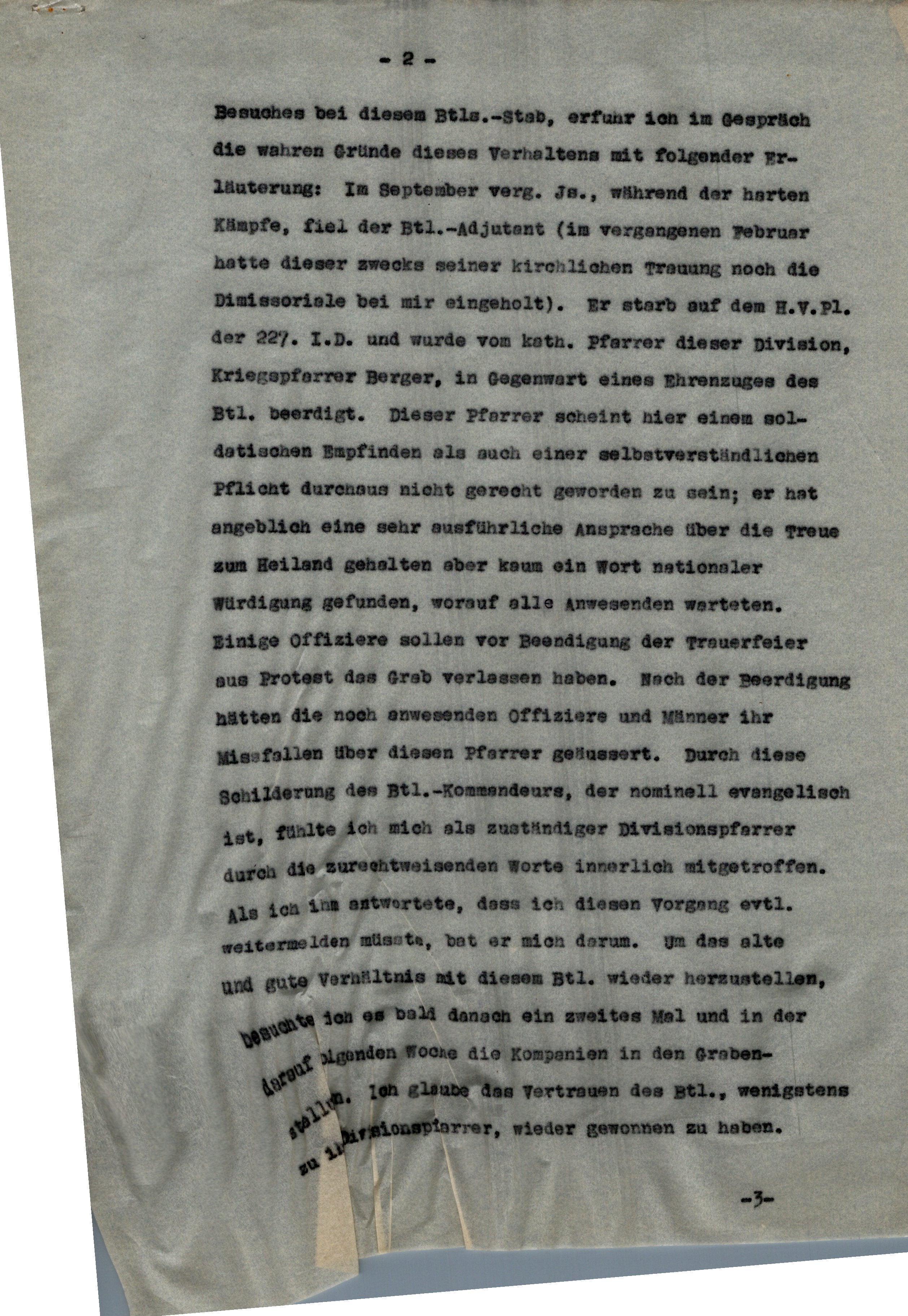
Pages 67 through 72 contain a report to the Lutheran Field Bishop covering October 1 through December 31, 1942. Schultheis describes a Catholic chaplain’s graveside service for an officer killed in action, which some soldiers and officers criticized for lacking sufficient patriotic content. He also refers to a “pastoral gap” created by an SS division positioned on the division’s left flank.
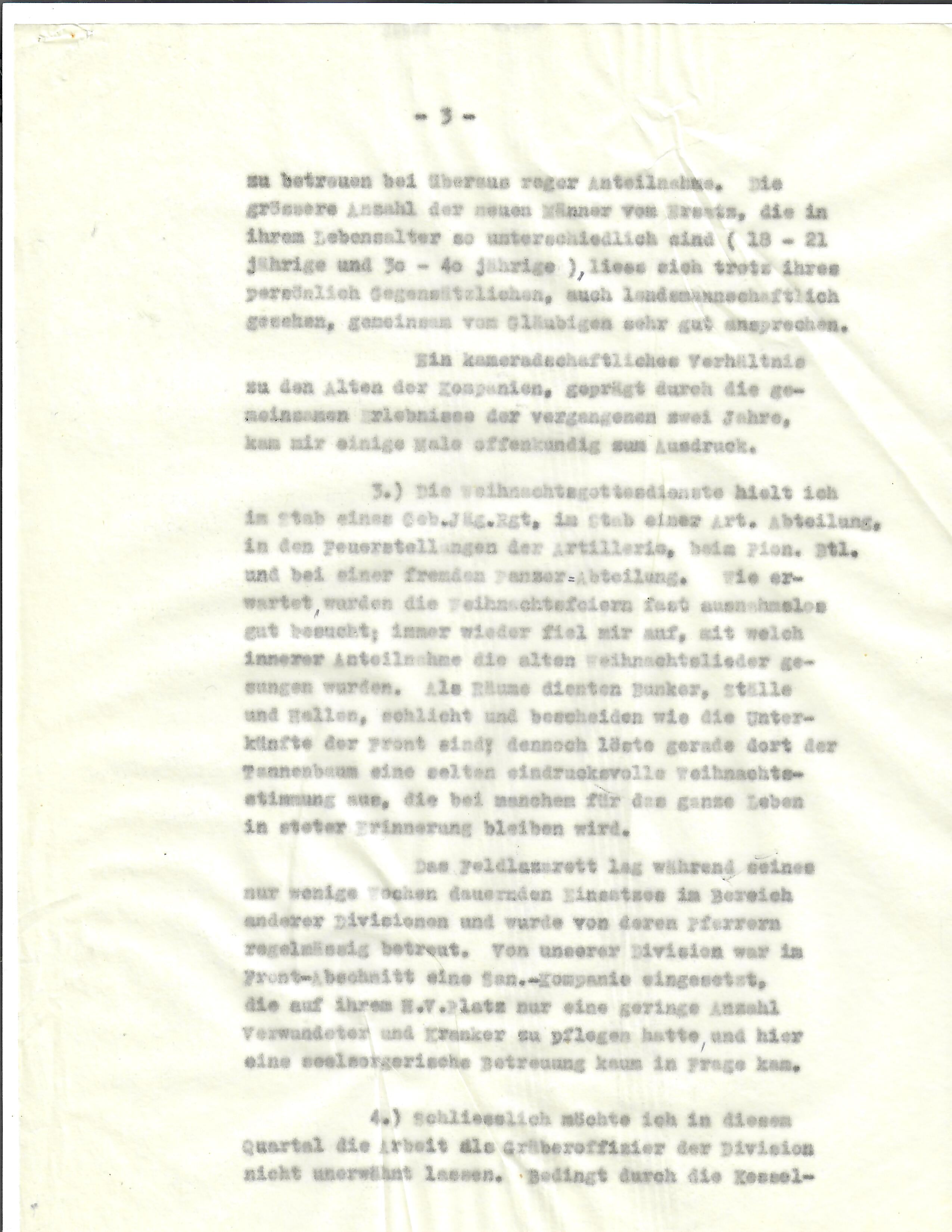
Pages 73 through 76 contain another report of pastoral activities for the fourth quarter of 1942. Schultheis discusses difficulty traveling in muddy frontline conditions, visits to men in forward positions, and the problems created when battalions from the same regiment were separated and reassigned. He also describes Christmas services held in artillery positions with songs and a Christmas tree. The report states that the division’s recorded graves had reached approximately 1,000, with perhaps another 300 casualties still to be added.
Page 78 is a certificate for a gold badge or medal of comradeship issued by a postwar Gebirgsjäger veterans’ association.
Condition
The visor cap is in near-excellent overall condition and presents exceptionally well. The wool body retains an attractive saddle shape with no significant moth damage or staining observed. The sweatband shows expected wear from use, while the interior silk lining and full celluloid maker’s diamond remain particularly impressive.
The photographs, documents, identification tag, and loose collar tab show varying degrees of age, handling, folding, toning, edge wear, creasing, and storage wear. Their individual condition should be reviewed carefully in the accompanying photographs.
The documents have been kept together as a historical archive and should be handled with appropriate care. Some handwritten and typed pages are difficult to read, and portions of the surviving reports are incomplete or arranged out of chronological order.
Named German WWII chaplain material is exceptionally difficult to locate. A complete archive containing a visor cap, photographic evidence, official appointment papers, wartime identification, an identification tag, pastoral reports, casualty lists, and a combat decoration certificate would be remarkable under any circumstances.
The presence of an original Battle of Crete Iron Cross certificate signed by Kurt Student elevates this grouping into an entirely different category.
Even more importantly, the collection preserves Schultheis’ own words. His reports document not only military operations but also burial practices, religious services, executions, relations among Catholic, Lutheran, and Orthodox clergy, moral conditions among troops, ideological conflicts with commanders, and the emotional burden of ministering to wounded and dying soldiers.
The cap and insignia provide immediate visual impact, while the photographs and documents allow years of serious historical study. Together, they form an irreplaceable personal archive tracing one chaplain’s service from prisoner-of-war ministry in Germany through the campaigns in Greece and Crete, the trenches outside Leningrad, and his postwar work with German military cemeteries.
A museum-quality, one-of-a-kind archive whose named visor cap, photographic identification, Kurt Student-signed Battle of Crete award certificate, and extensive firsthand documentation make it one of the most historically substantial German military chaplain groupings we have encountered.
- This product is available for international shipping. Shipping not available to: Australia, France, or Germany
- Not eligible for payment with Paypal or Amazon
- Due to legal restrictions this item cannot be shipped to Australia, France or Germany. This is not a comprehensive list and other countries may be added in the future.


We Buy Military Antiques
Our team expert buyers travels the world to pay fair prices for entire estate collections to singular items.
START SELLING TODAY
