


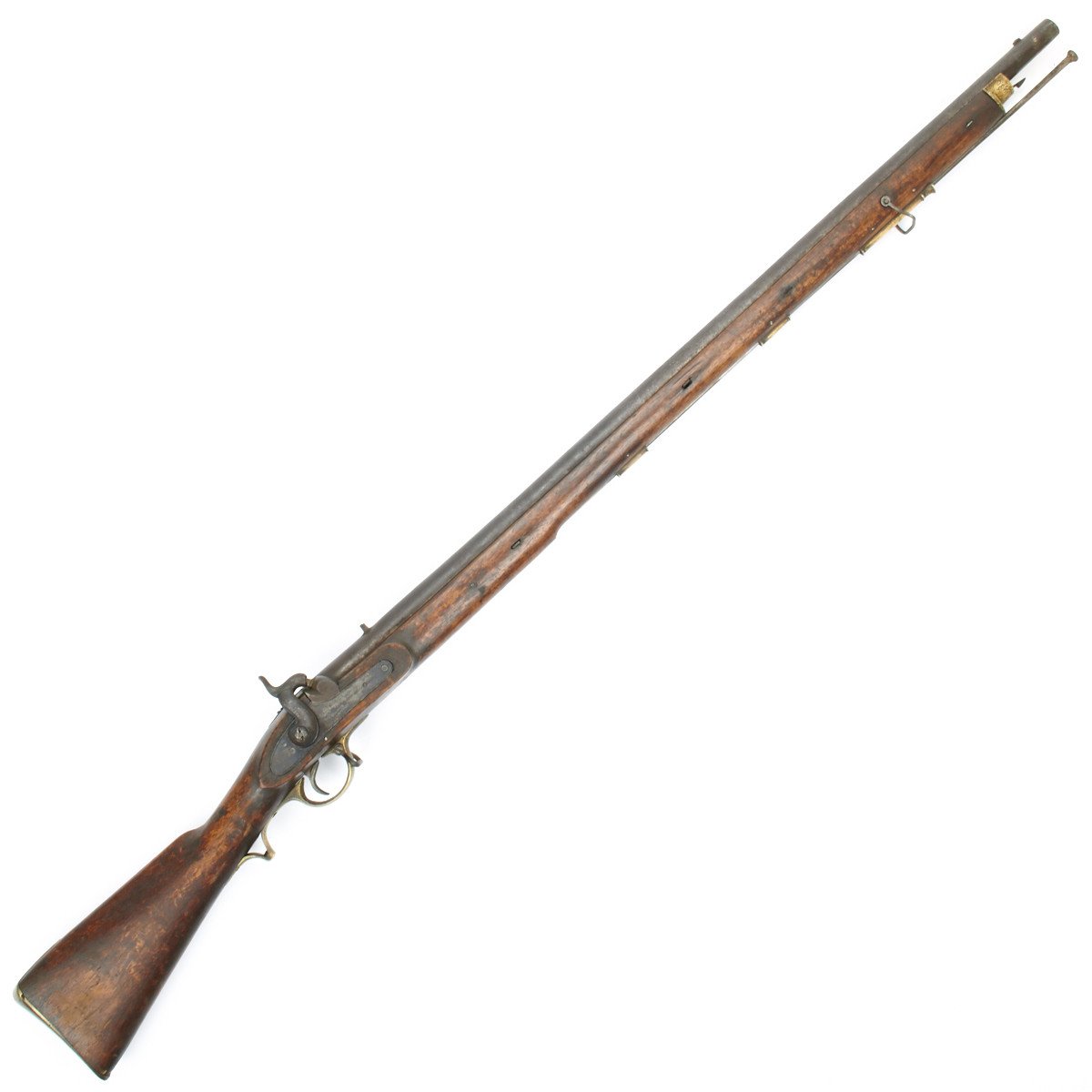
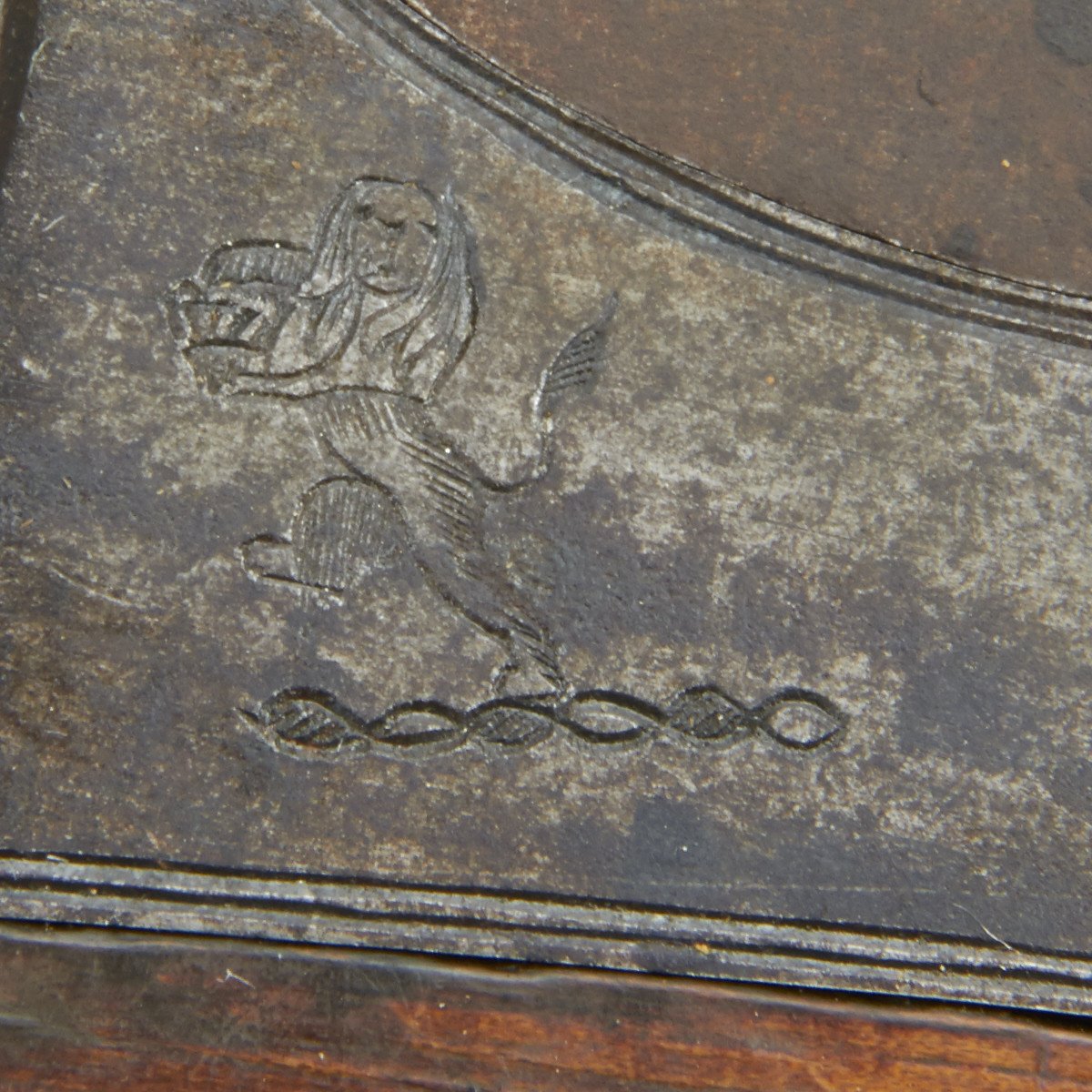
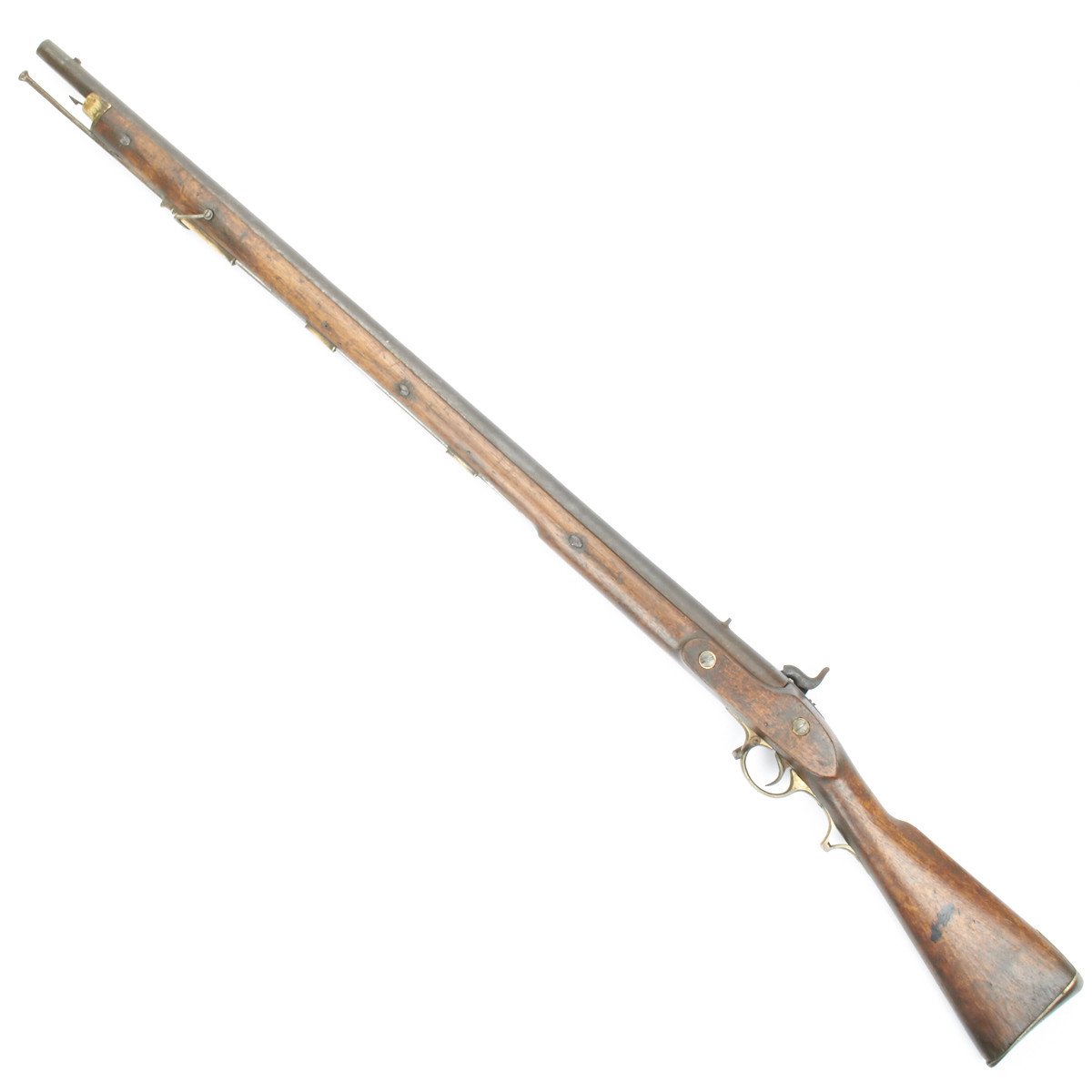
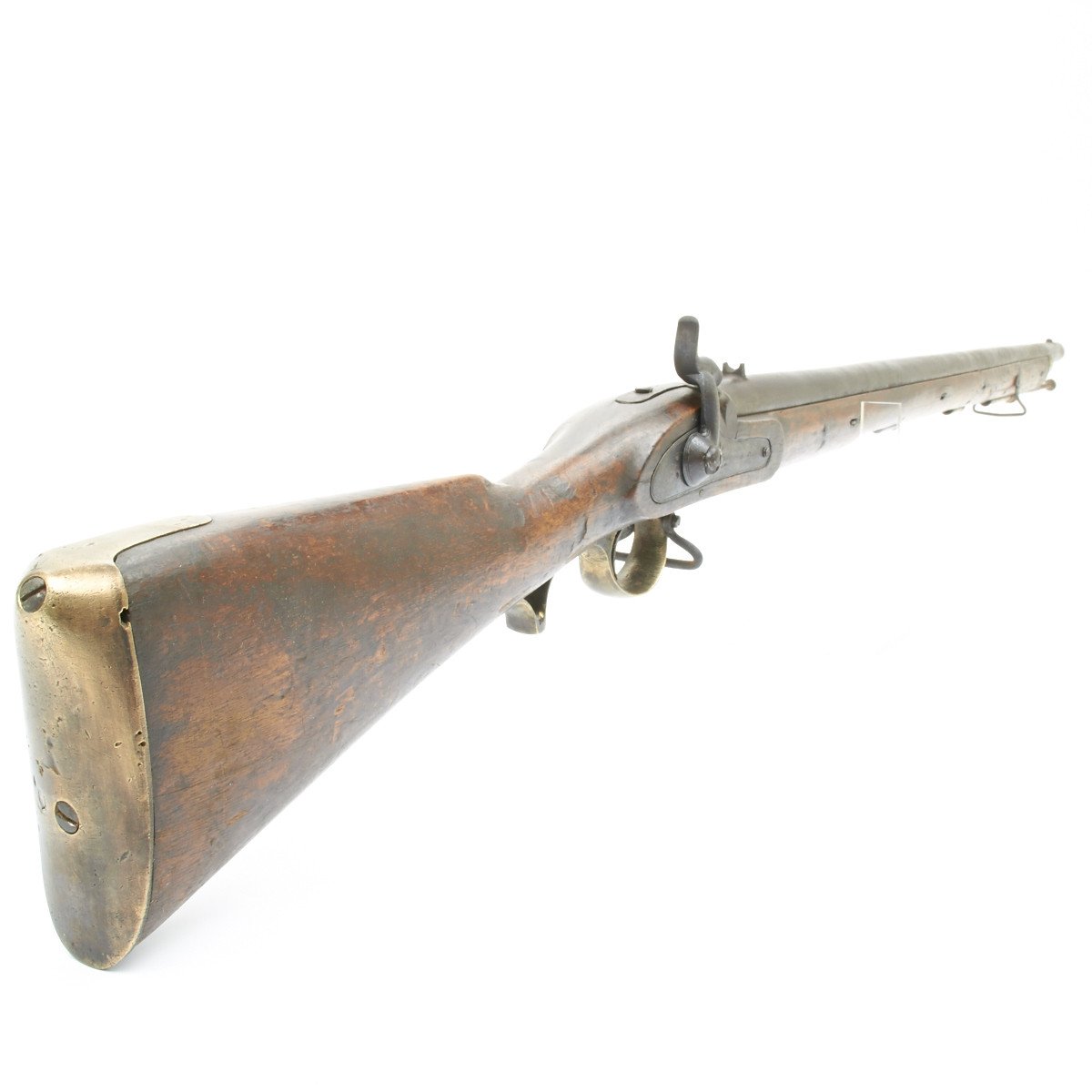
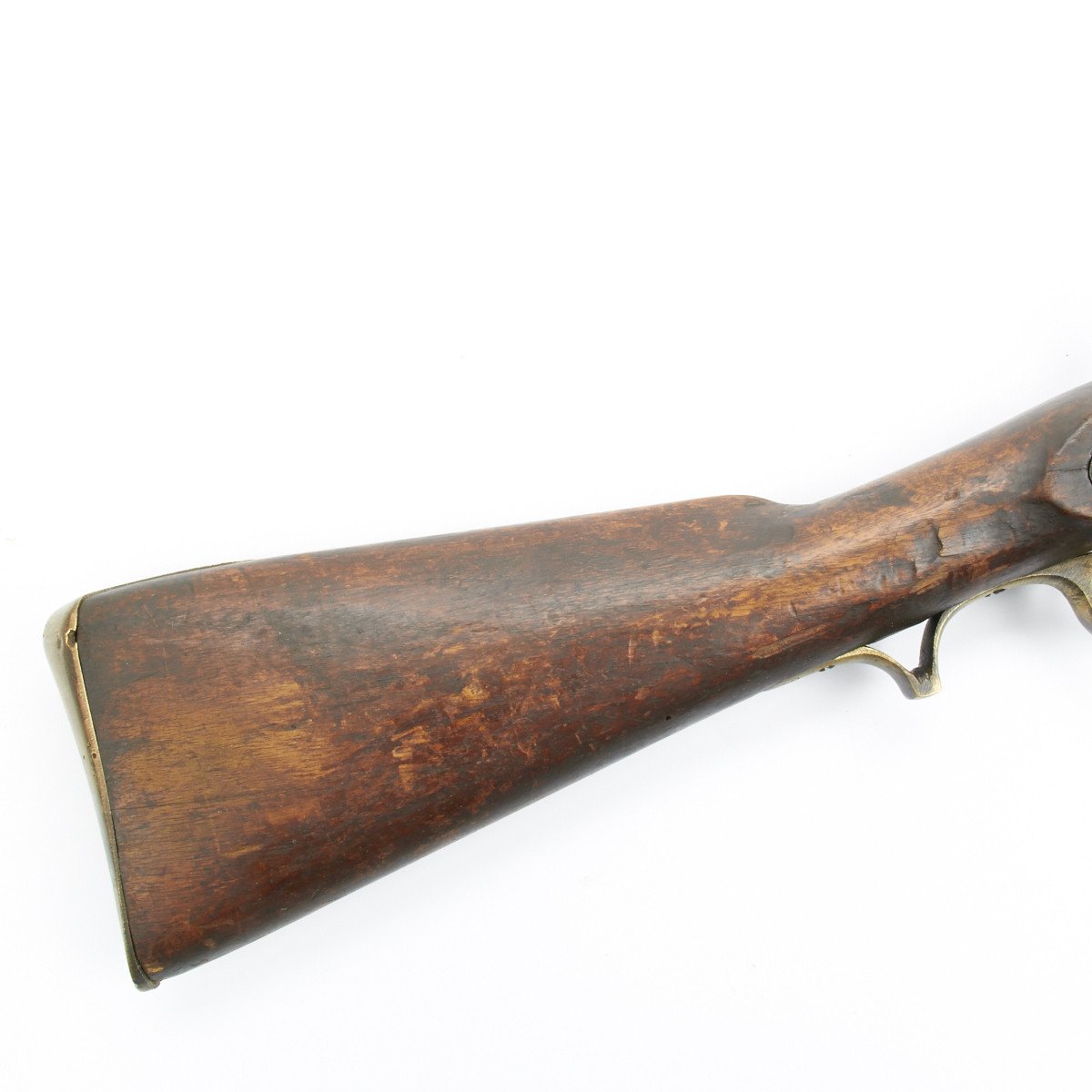
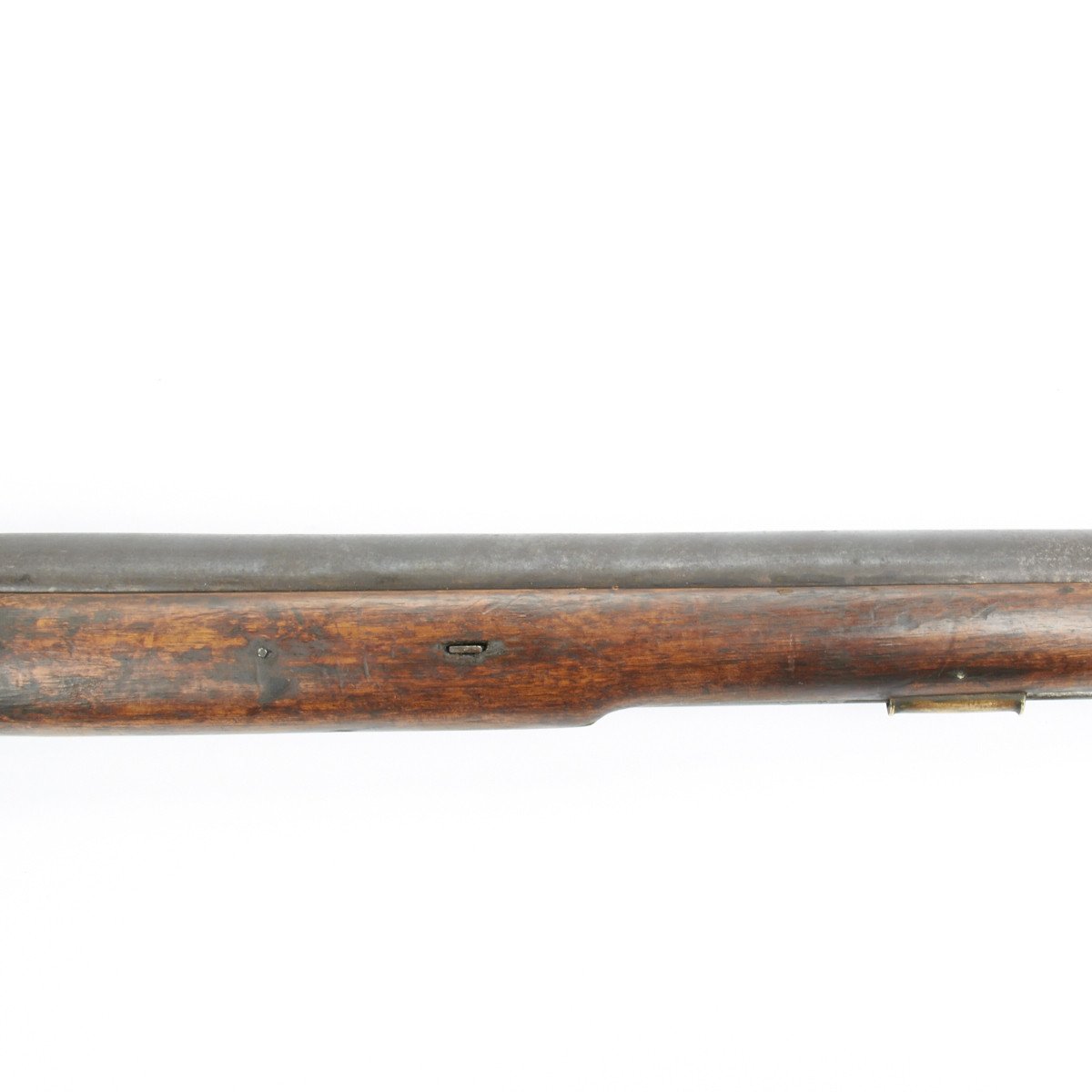
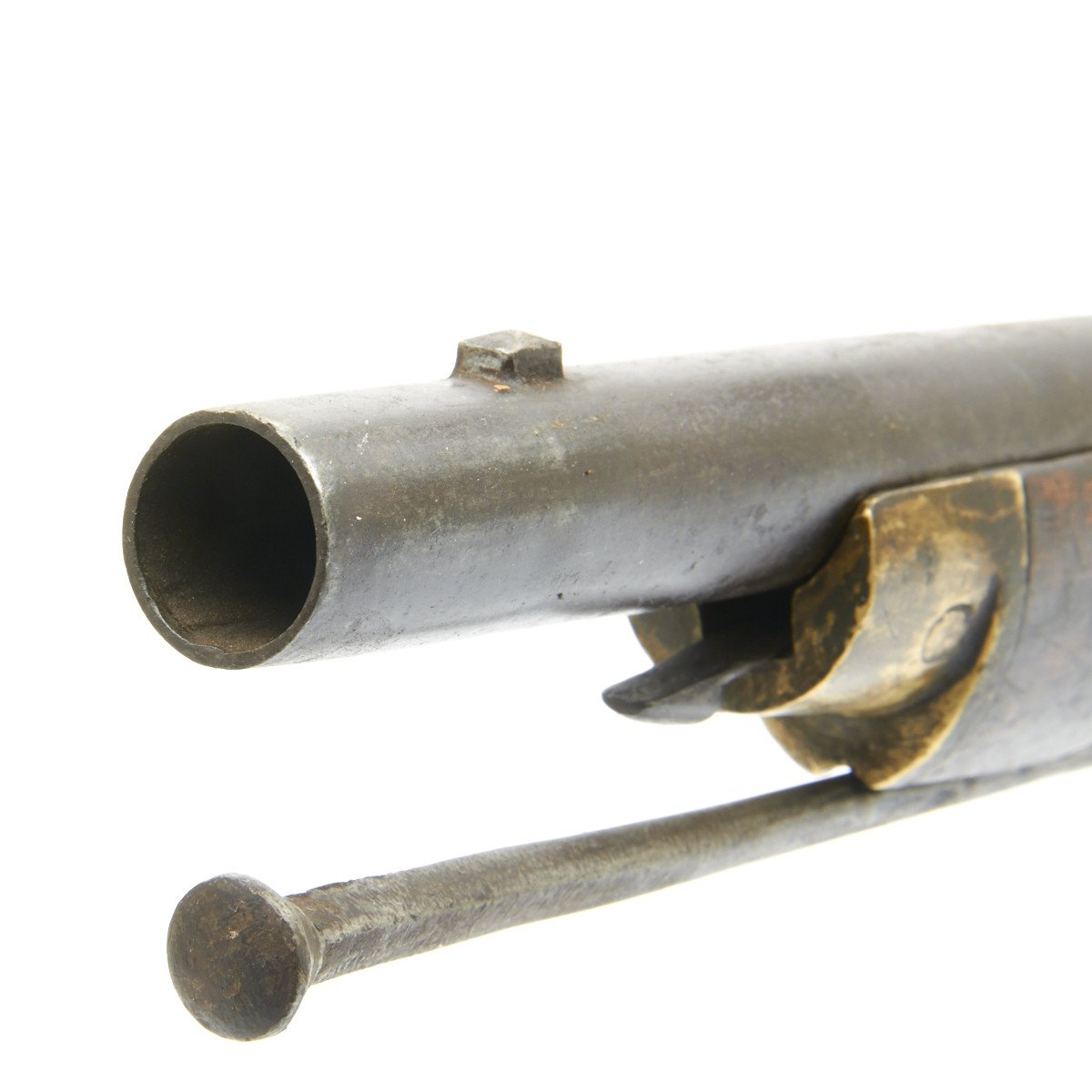
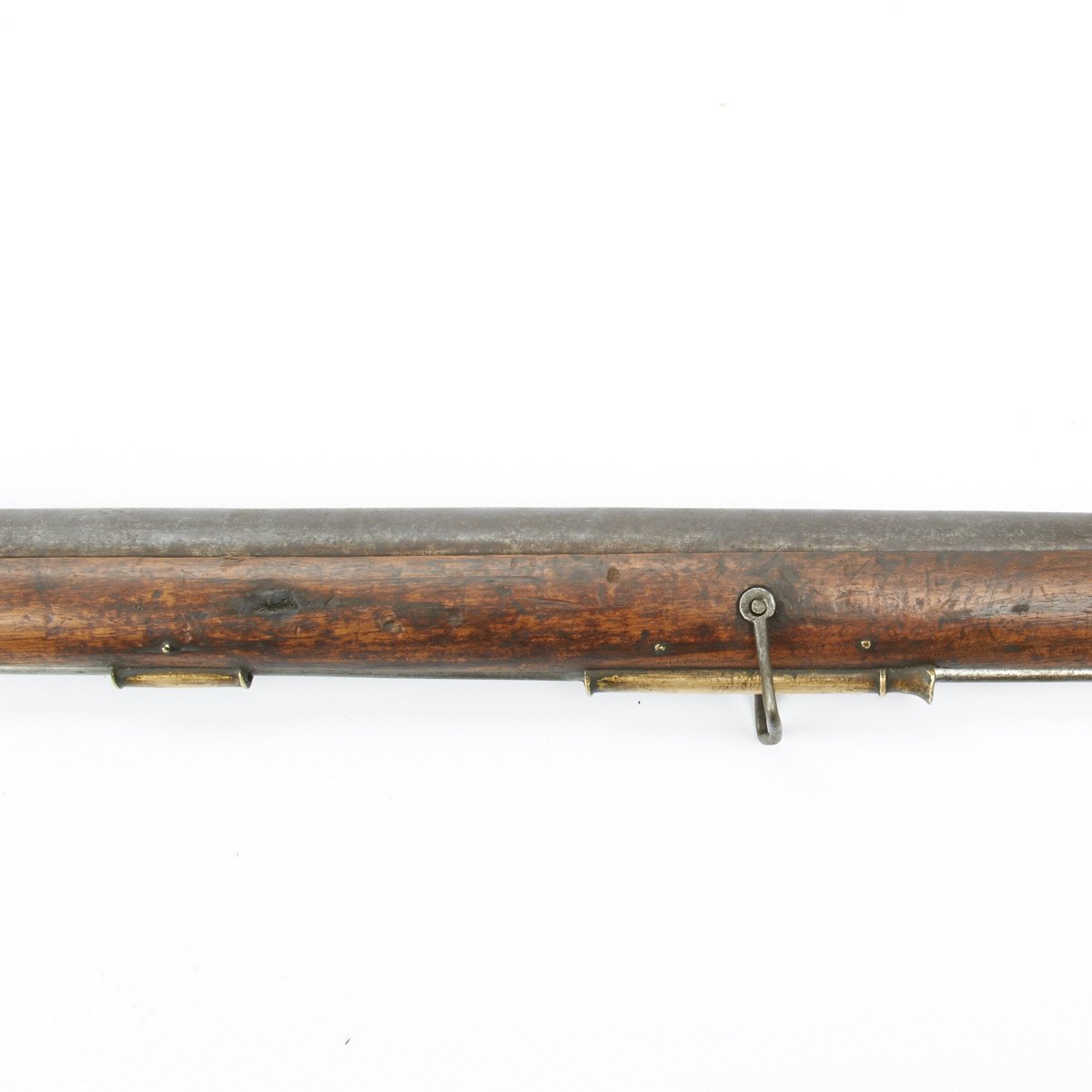
Original British East India Company Model F Percussion Musket in .75 Bore - Circa 1845-1851
In stock

-
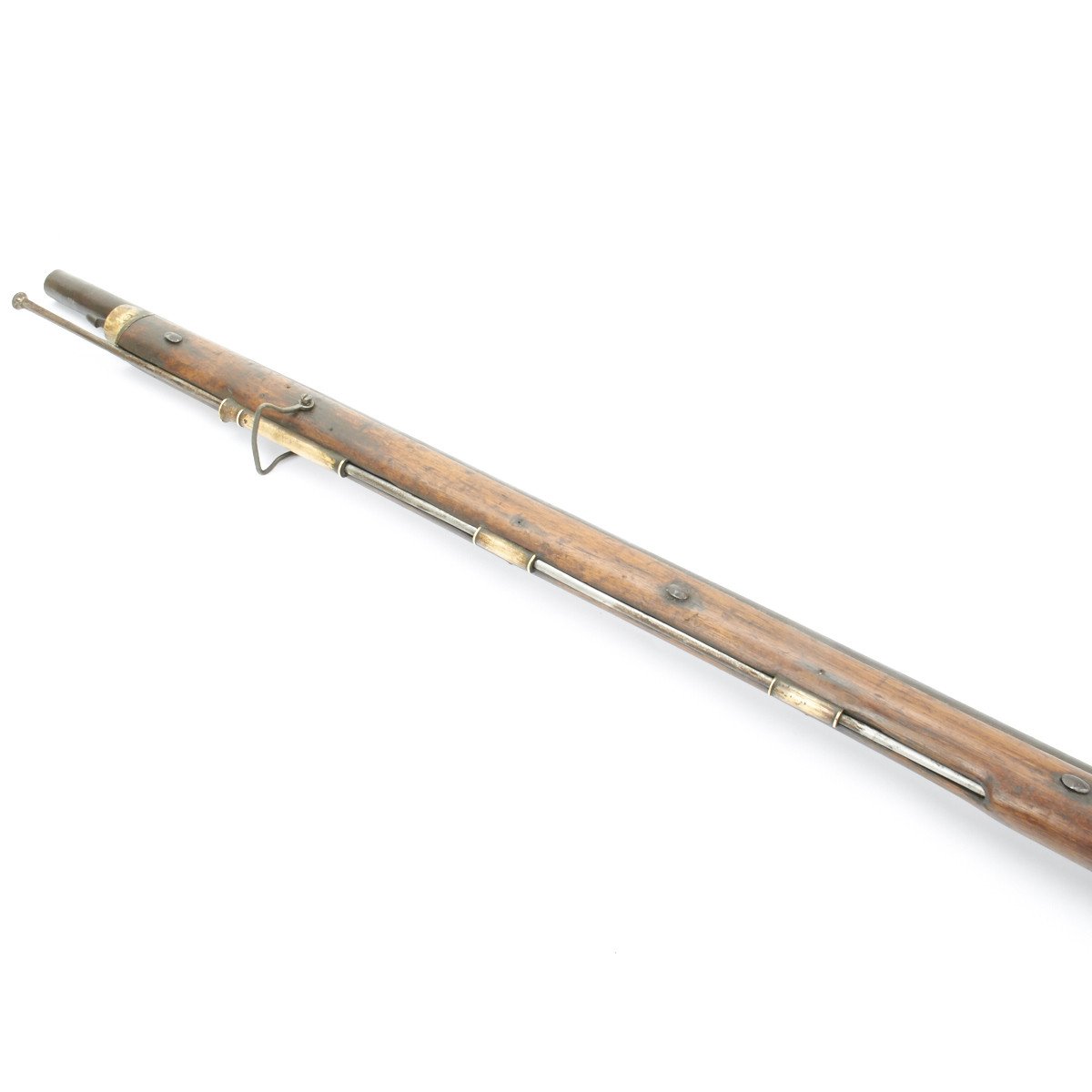
Original Item: Only One Available. This is a very desirable original British East India Company Model F percussion musket, one of the final and most refined smoothbore percussion musket patterns developed for the Honourable East India Company before the widespread adoption of rifled arms. Chambered in approximately .75 bore with the standard 39" barrel, the Model F represents the culmination of decades of East India Company musket development and is particularly important because it was purpose built as a percussion arm rather than converted from an earlier flintlock musket.
The East India Company was remarkably progressive in its adoption of percussion ignition. By the late 1820s the Company had largely ceased procuring new flintlock muskets and began moving toward the newer percussion system, which offered greater reliability in wet weather and eliminated the exposed priming powder and flint of the older lock.
The lineage of the Model F can be traced back to the East India Company’s adoption of the shortened 39" barrel musket in 1771, well before the British government adopted the familiar 39" India Pattern Brown Bess in the 1790s.
That early East India Company pattern helped establish the shorter musket configuration that became standard throughout the British military world.
By the 1830s and 1840s, percussion ignition was replacing the flintlock, and the East India Company developed a succession of musket patterns generally classified today as Models A through F.
The earlier Models A and B were flintlock muskets converted to percussion.
The later Models C and D were purpose built percussion arms but retained older pattern lock and furniture features.
The Models E and F incorporated the newer percussion lock system and represented the most advanced form of the East India Company’s smoothbore percussion musket.
The Model F was manufactured or “set up” during approximately 1845-1851.
Unlike converted muskets, it was designed from the outset for percussion ignition.
One important improvement was the elimination of the earlier screw-on breech arrangement associated with some converted patterns.
Advances in manufacturing allowed the percussion bolster or nipple lump to be securely attached directly to the breech area, producing a simpler and more robust system.
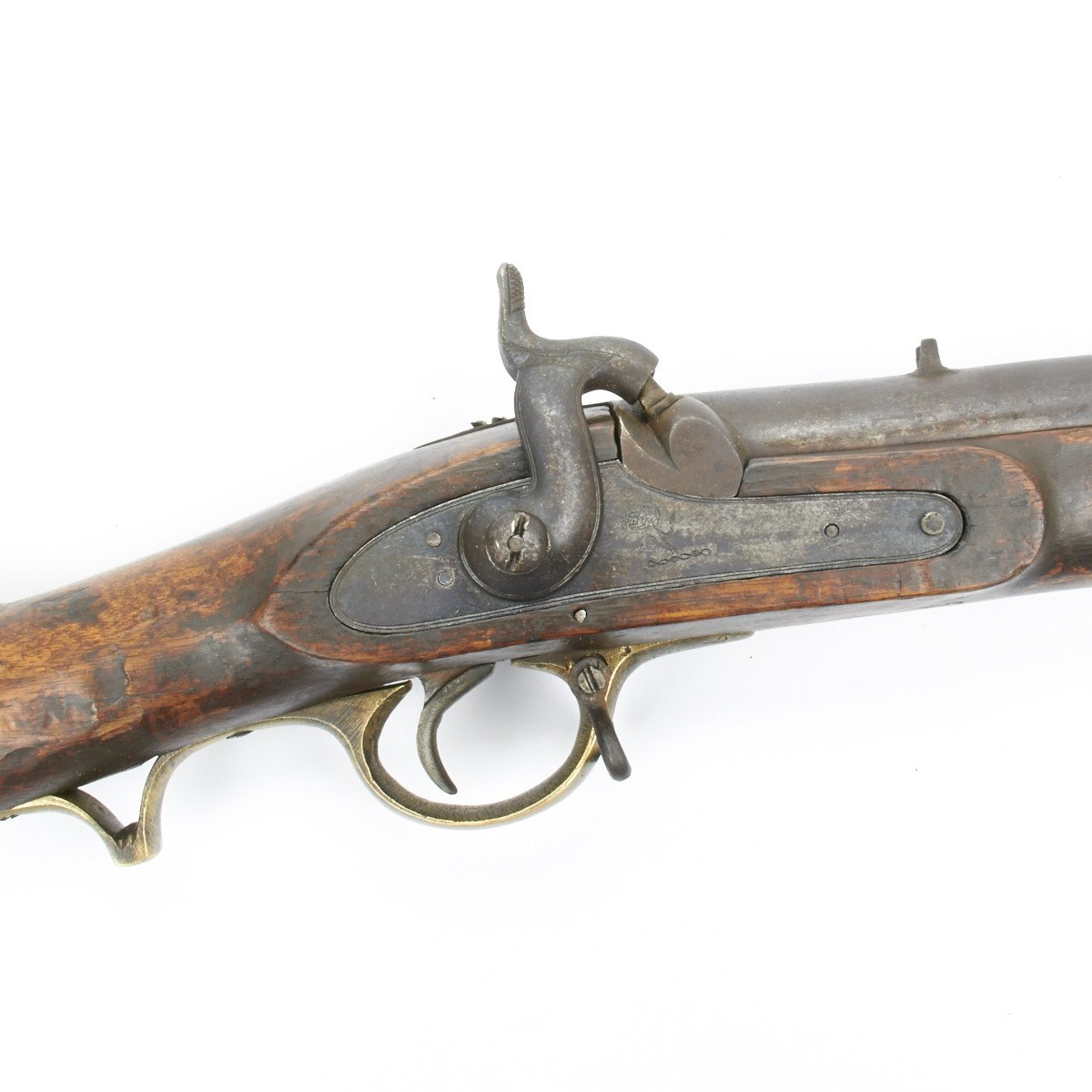
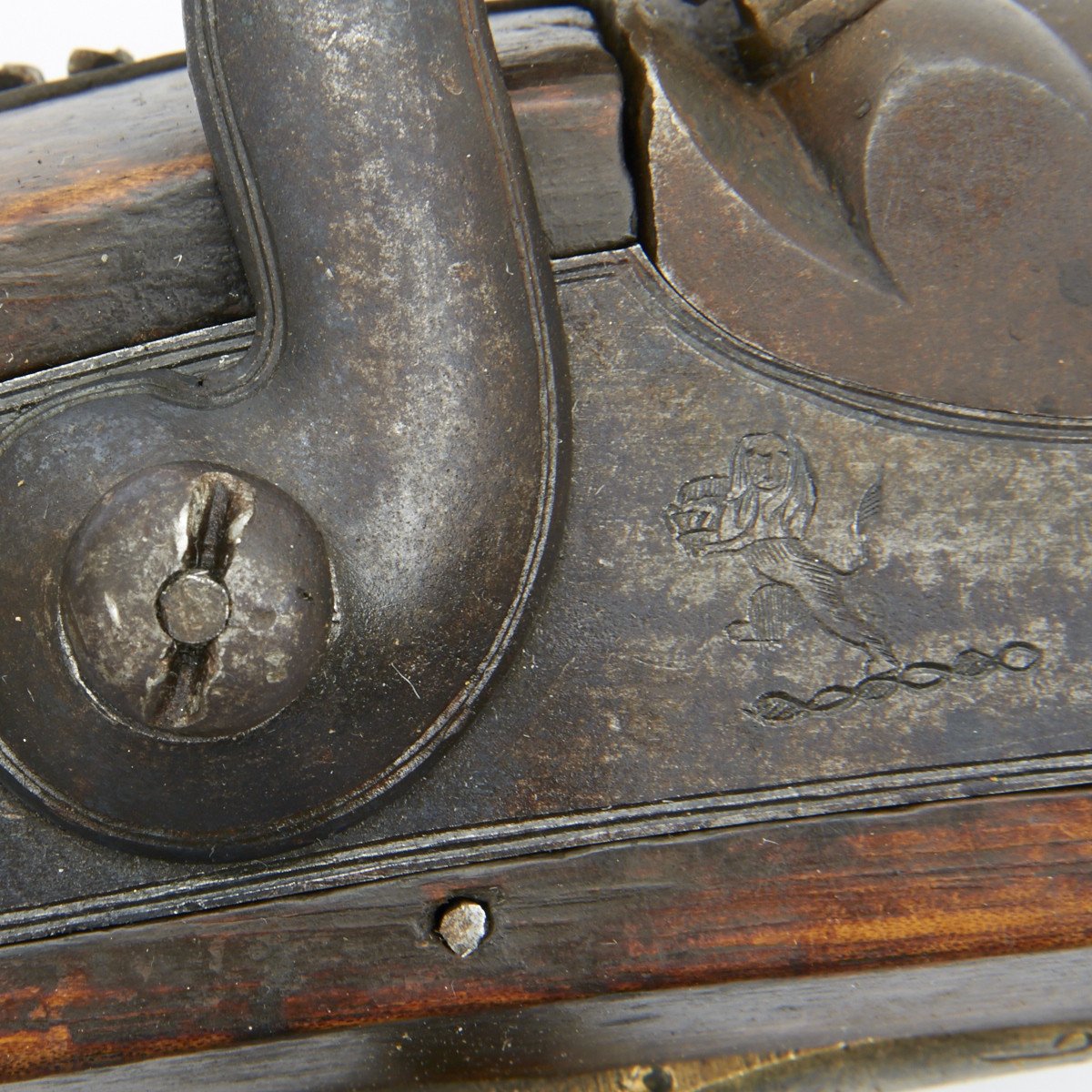
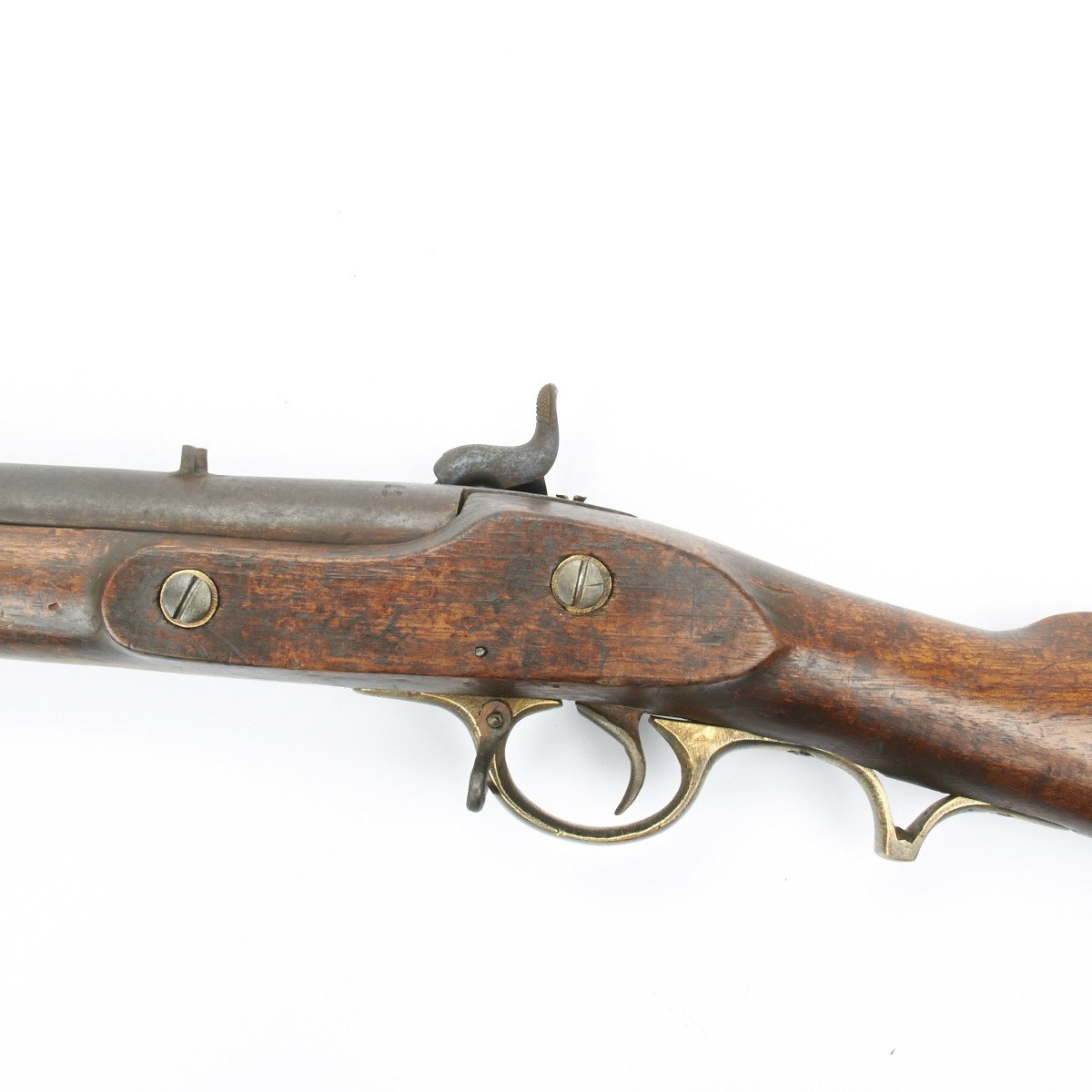
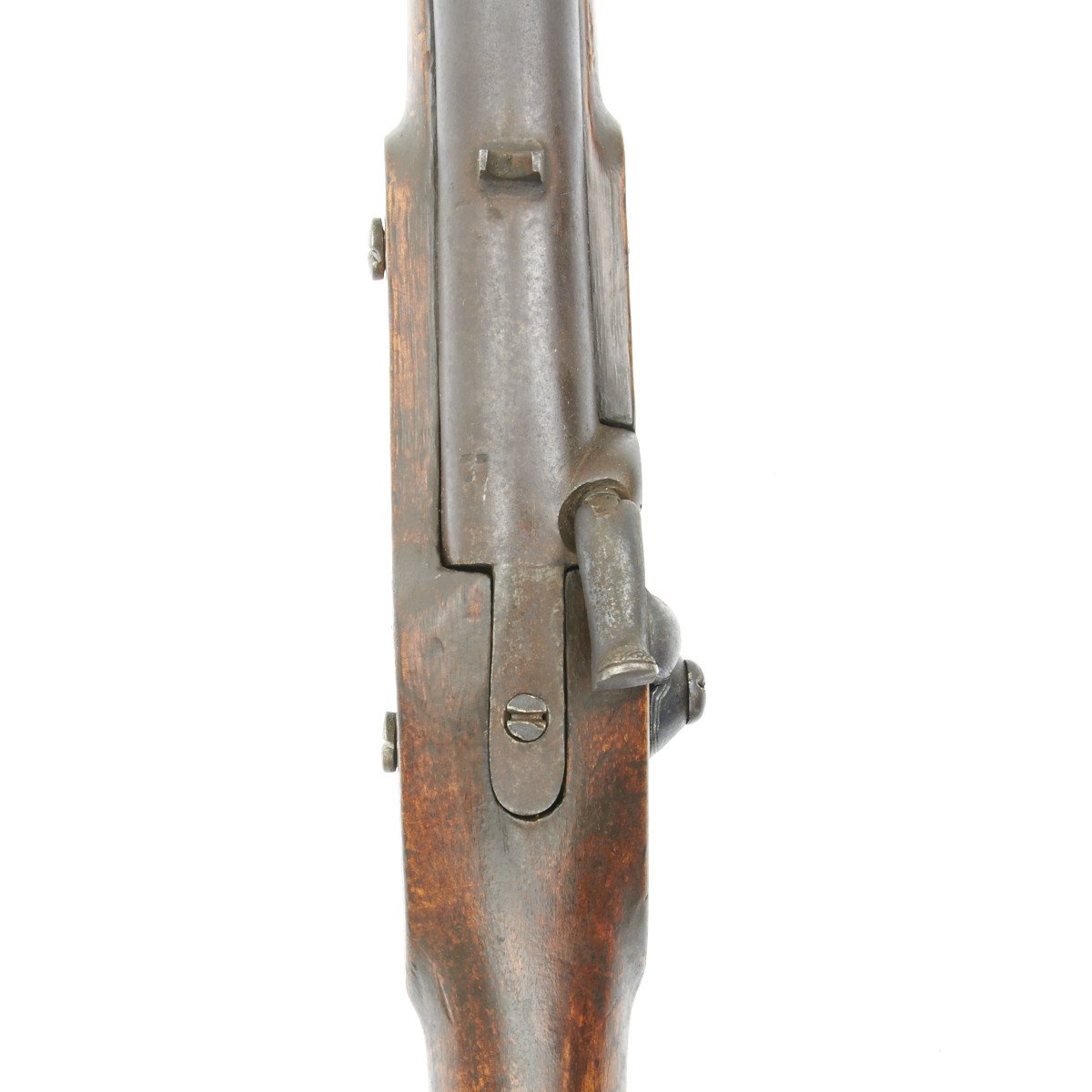
The Model F also incorporated the so-called new series lock.
On this lock, the mainspring was retained differently from earlier patterns, eliminating the older screw arrangement at the narrow end of the spring.
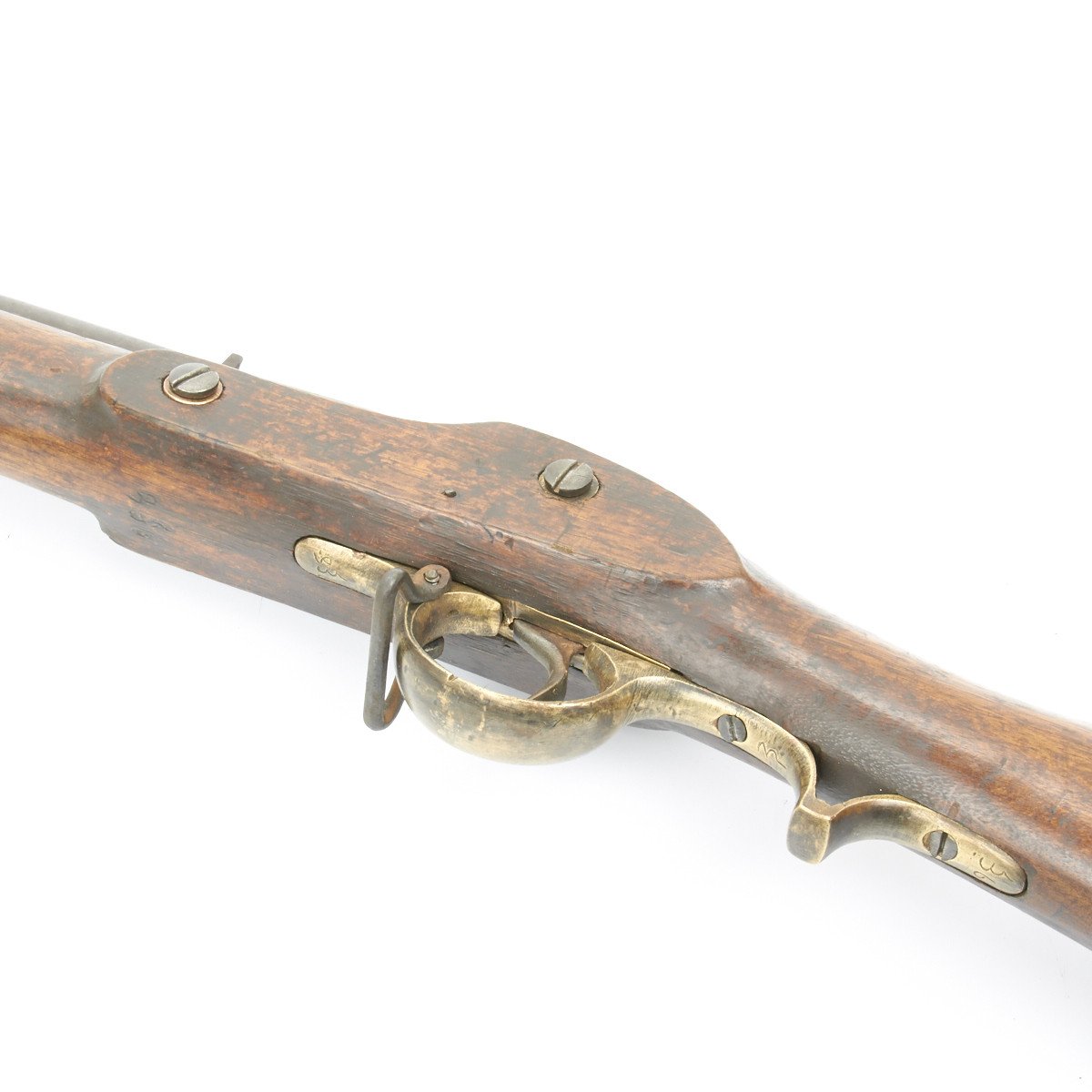
The trigger was mounted in a box integral with the trigger plate rather than being pinned directly through the stock.
The traditional sideplate was also eliminated in favor of separate side nail cups.
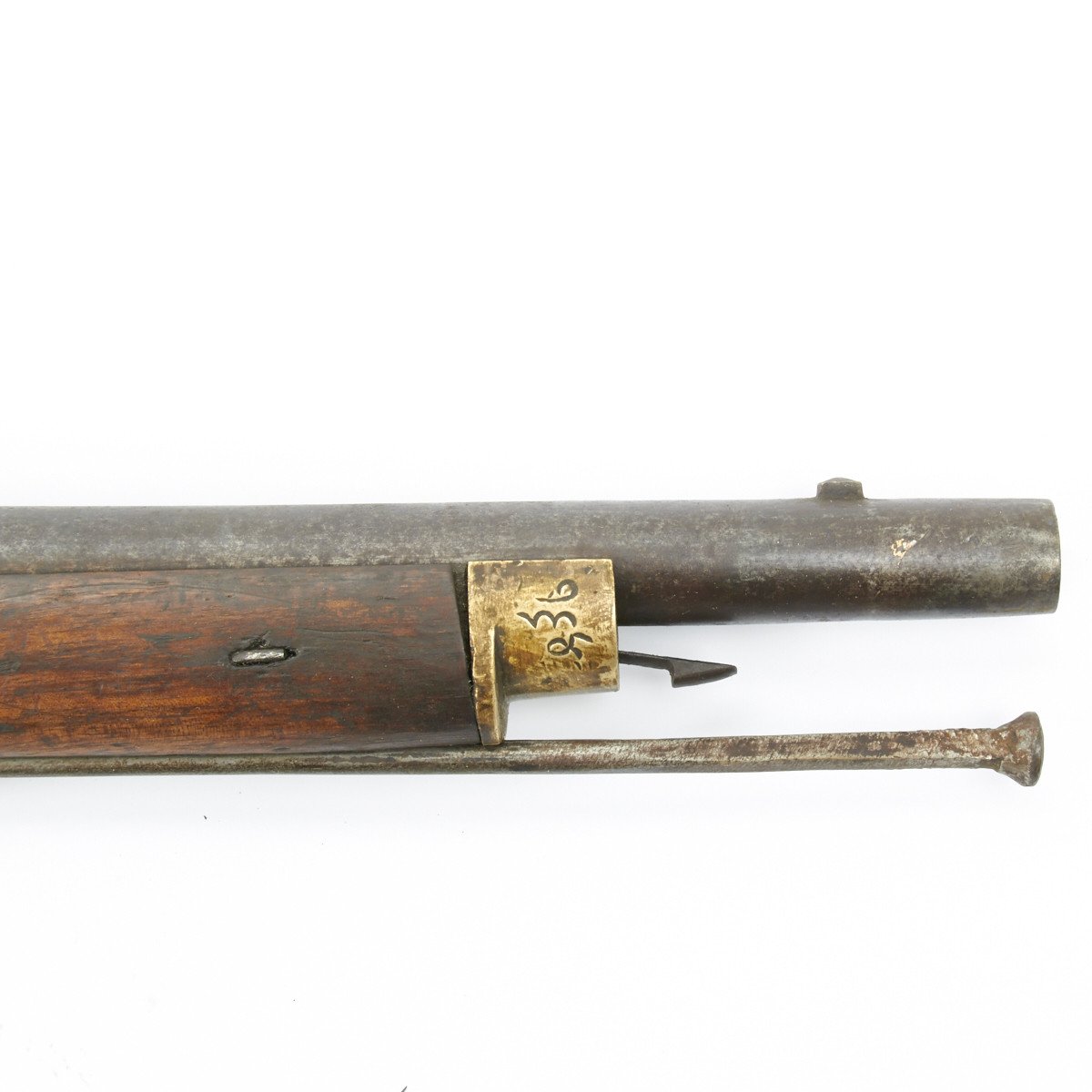
One of the defining features of the Model F is its distinctive East India Company bayonet catch.
This helps distinguish it from the closely related Model E, which used the Hanoverian style catch.
The differences between the various East India Company percussion musket models can be subtle, but they are important to collectors.
The Model F can generally be distinguished by the combination of its new series lock, later trigger arrangement, side nail cups, purpose built percussion construction, and Model F bayonet catch.
The musket retains the classic proportions of the earlier Brown Bess family, with its approximately 39" smoothbore barrel and .75 caliber bore.
It was designed for use with the scarce East India Company Pattern F socket bayonet, a pattern that is now extremely difficult to locate in original condition.
Reproduction Pattern F socket bayonets and reproduction Sappers & Miners style sword bayonets have been produced for display with these muskets, but an original Pattern F bayonet remains a highly desirable accessory in its own right.
The East India Company’s percussion muskets are historically important because they reflect the rapid technological transition taking place in British and colonial military arms during the first half of the 19th century.
In only a few decades, military small arms moved from flintlock smoothbores to purpose built percussion muskets and then quickly onward to rifled percussion arms.
The Model F sits directly within that transition.
It retains the large bore, smoothbore form of the Brown Bess tradition while incorporating the modern percussion ignition system that would dominate military firearms until the rise of metallic cartridge breechloaders.
For the collector, the Model F is particularly desirable because it represents the final development of the East India Company’s smoothbore percussion musket family and is closely related in concept and construction to British military arms of the 1840s.
It would make an excellent addition to an East India Company, British Empire, percussion musket, colonial arms, Indian Mutiny era, or advanced 19th century military firearms collection.
NOTE: "Cleaned and Complete" antique guns are often cleaned to order, so these may not be available for same-day expedited shipping. International orders of antique firearms MUST be shipped using UPS WW Services (courier). USPS Priority Mail international will not accept these.
- This product is available for international shipping.
- Not eligible for payment with Paypal or Amazon
IMA considers all of our antique guns as non-firing, inoperable and/or inert. Title 18, U.S. Code, Section 921(a)(16) defines antique firearms as all guns made prior to 1899. This law exempts antique firearms from any form of gun control or special engineering because they are not legally considered firearms. No FFL, C&R or any license is required to possess, transport, sell or trade Antique guns. All rifles and muskets sold by IMA that were manufactured prior to 1899 are considered Antiques by the US BATF (United States Bureau of Alcohol, Tobacco & Firearms). Therefore, all of IMA's Antique guns may be shipped to all US States and most nations around the world.
These antique guns are not sold in "live" condition. They are sold as collector's items or as "wall hangers". Any attempt at restoring an antique gun to be operational is strongly discouraged and is done so at the risk of the customer. By purchasing an antique gun from IMA you thereby release IMA, its employees and corporate officers from any and all liability associated with use of our Antique guns.
Pre-1899 Manufacture, no licenses required, allowed to ship to almost any deliverable address across the globe. Please note that for international shipping, these MUST be shipped using UPS WW Services.


We Buy Military Antiques
Our team expert buyers travels the world to pay fair prices for entire estate collections to singular items.
START SELLING TODAY
